
Why Croc-Embossed Bags Are Everywhere This Fall—and What Genuine Crocodile Adds

Share
Why Croc-Embossed Bags Are Everywhere in Fall 2026—and What Genuine Crocodile Leather Adds
Runway and retail coverage for Fall 2026 places croc-embossed and crocodile-look bags among the season’s prominent accessories, with versions shown by Chanel, Prada, Celine, Gucci, and other fashion houses.
Why croc-embossed bags are having a strong fall season
Croc-embossed bags offer the visual rhythm associated with crocodilian scales without requiring crocodilian leather. The pattern is pressed into another material, commonly cowhide leather or a synthetic base, so the finished bag can reproduce the broad scale layout, raised surface, and high-contrast finish at a different price point.
That flexibility helps explain the trend’s wide presence. Designers can apply a crocodilian-style pattern to structured handbags, compact shoulder bags, totes, and briefcases while changing the color, gloss, scale size, and base material. A dark embossed finish may read as formal, while a lighter or more irregular print can suit casual clothing.
The term “croc-embossed” describes the surface treatment rather than the animal source. A product described only as croc, crocodile-look, or crocodile-effect should not be assumed to contain crocodile leather. The material description should identify whether the bag uses cowhide, synthetic material, alligator leather, crocodile leather, or another skin.
What genuine crocodile leather adds
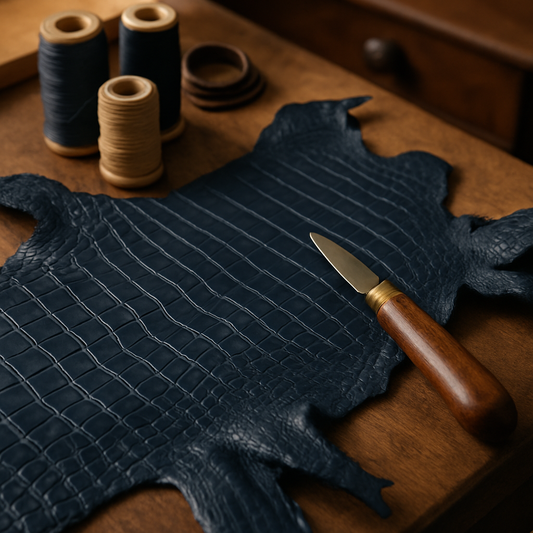
Genuine crocodile leather has a scale layout created by the animal’s hide rather than pressed into a substitute material. Each hide has its own arrangement of scales, transitions between larger belly areas and smaller side scales, and possible natural marks. That variation gives crocodile leather a surface with physical depth and a pattern that is not simply repeated by a machine across every panel.
The feel can also differ. On a finished genuine crocodile panel, the scale structure, leather substance, and finish interact under the hand. However, touch alone does not authenticate a skin. A sensory impression, visible pattern, or glossy finish should be treated as one observation rather than proof of species or origin.
Species also matter. Alligator and crocodile are distinct animals. Crocodile scales commonly show small sensory pores, often called integumentary sensory organs or ISOs, while alligator scales generally do not. Alligator belly leather is often recognized for a comparatively regular, balanced scale pattern. Crocodile patterning varies more by species and can show greater visual variation. Alligator may also have an umbilical scar that crocodile typically lacks.
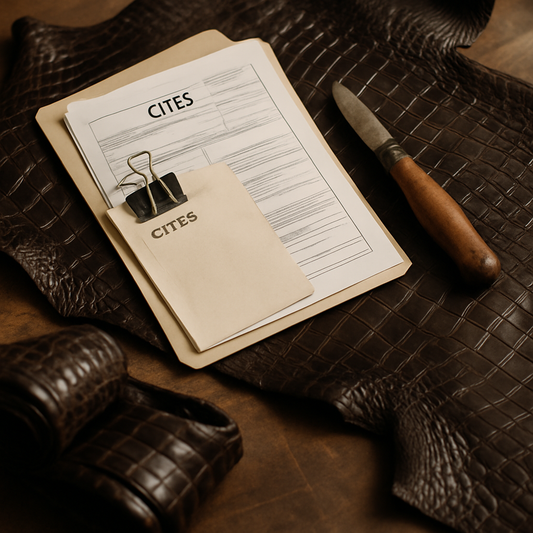
These details can help with description and inspection, but pattern alone is not a reliable species-authentication method. Documentation, supplier information, and applicable regulatory records need to be considered together. CITES paperwork may be required for international commercial trade in certain crocodilian products, but CITES documentation by itself does not prove authenticity or establish that an item is admissible in every destination. U.S. buyers should also check wildlife import rules and species-specific restrictions.
Embossed versus genuine crocodile leather: the practical difference
- Surface origin: Embossing presses a crocodilian-style pattern into another material; genuine crocodile leather uses an actual crocodile hide.
- Pattern: Embossed layouts can be made regular and repeated. Genuine hides show the animal’s own scale arrangement, which varies across the skin and from one hide to another.
- Material identification: “Crocodile-look” describes appearance. “Crocodile leather” should be reserved for a product identified as crocodile leather.
- Value factors: Genuine leather pricing can reflect usable area, scale regularity, blemishes, cut, tanning, construction, and finishing. A visually attractive pattern alone does not establish species, grade, or price.
- Grades: A, B, C, and similar labels are not one universal industry standard. Tanners and suppliers may use their own systems, so ask what a stated grade measures.
Visual grade should not be confused with durability. A hide with a cleaner or more regular appearance is not automatically stronger, and an irregular area is not automatically unsuitable. The panel’s location, thickness, construction, edge treatment, and how the finished bag is used all affect practical performance.
How we assess genuine crocodile bags in the workshop
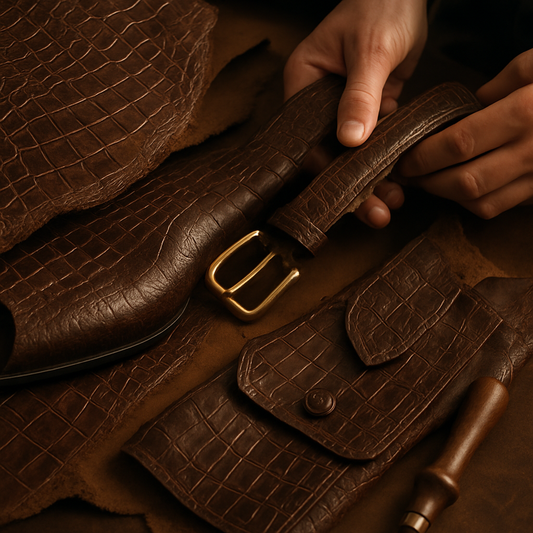
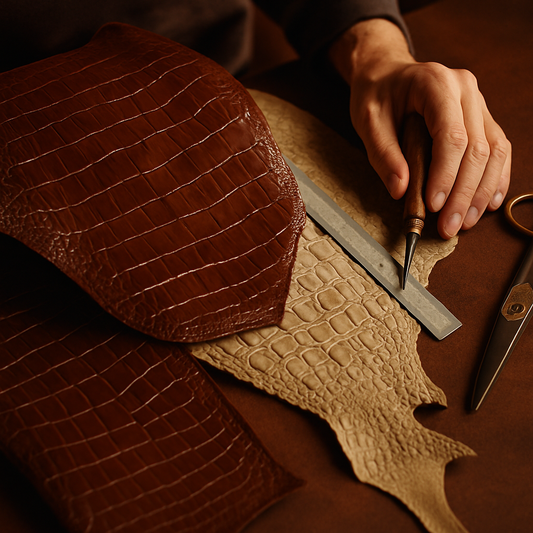
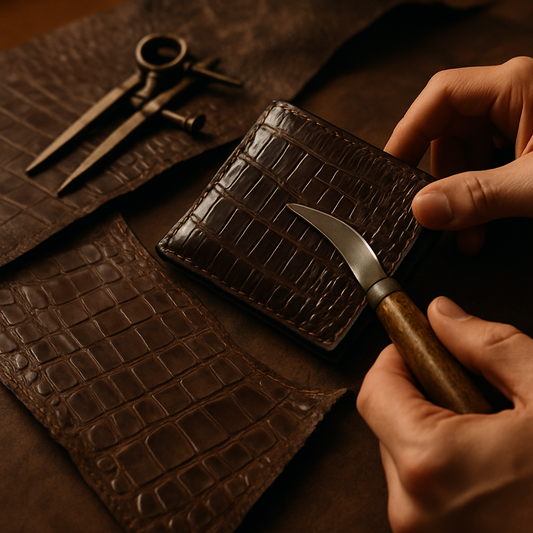
At CrocodileViet, we manufacture our own crocodile and alligator leather goods in-house. For a bag, we assess the usable parts of the hide against the panel layout because scale direction and cut affect both appearance and how efficiently the material is used. This matters especially on a front panel, where an uneven transition or visible blemish may be more noticeable than it would be on a small gusset.
We also distinguish species in the product description rather than using “croc” as a shortcut. That keeps crocodile leather, alligator leather, and embossed alternatives from being treated as interchangeable materials. Buyers seeking a genuine crocodile handbag should ask for the stated species and the documentation available for the intended market.
Price: what you are actually paying for
The price of a crocodile leather bag depends on more than the word “genuine.” Concrete factors include the amount of usable hide, the size and placement of belly scales, visible marks, the cut required for each panel, leather thickness, tanning and finishing, lining, hardware, edge work, closures, internal compartments, and labor.
A large structured bag may require more usable material and create more demanding panel-matching decisions than a compact handbag. A clean central belly section can also command a different price from a design that intentionally uses side scales or natural variation. Since grading labels vary by supplier, compare the specific measurements and material description rather than assuming that two bags marked with the same letter grade are equivalent.
Fit and sizing for a crocodile handbag or briefcase
Start with the bag’s length, height, and width, then compare those measurements with what you carry daily. A laptop, tablet, document folder, water bottle, or camera may need more internal width than the exterior silhouette suggests because lining, pockets, and gussets reduce usable space.
For a shoulder or crossbody bag, check strap length at its shortest and longest settings, especially if you plan to wear it over a coat. Handle drop matters for carrying by hand or over the forearm. For briefcases, compare the stated dimensions with the document size and laptop dimensions rather than relying on a “large” or “medium” label.
If you are ordering remotely, send your preferred exterior dimensions, the items you carry, and photographs or measurements of a current bag that fits well. Also state whether you need a wide opening, a deeper gusset, a long strap, or space for a larger device. This gives the workshop useful information without guessing from height alone.
Care for crocodile leather
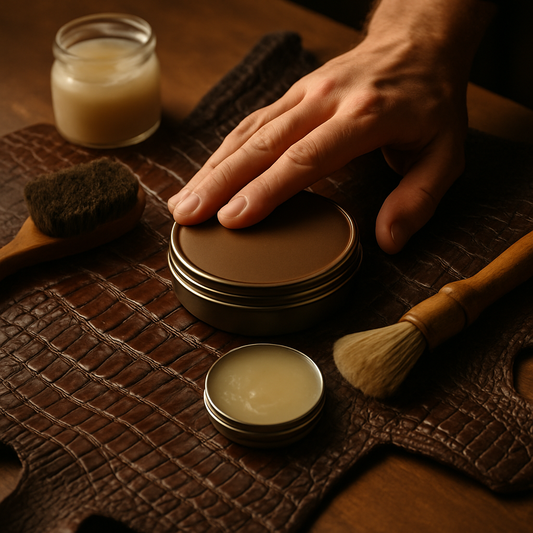
Use a dry, soft cloth as the default for removing light dust and fingerprints. Keep the bag away from prolonged moisture, strong heat, and direct sun, and allow it to dry naturally if it becomes damp. Do not apply household polish, alcohol-based cleaner, or an untested leather product; finishes differ between skins and can react differently.
Store the bag with its shape supported, without compressing the scale surface under heavy items. A breathable dust cover is preferable to sealed plastic for longer storage. There is no useful fixed cleaning schedule: wipe it when needed, and seek product-specific care advice before conditioning or treating the leather.
Styling croc-embossed and genuine crocodile bags
A croc-embossed bag can work with plain wool tailoring, denim, knitwear, or a simple coat because the surface already supplies visual texture. Keep the rest of the outfit relatively calm if the bag has large, high-contrast scales or a bright finish. A smaller embossed shoulder bag can also offset relaxed clothing without requiring matching crocodilian accessories.
Genuine crocodile leather often suits outfits where the bag’s material can be seen clearly: a restrained suit, a clean shirt-and-trouser combination, or a simple evening look. The best color depends on the wardrobe around it. Black and dark brown tend to coordinate with formal clothing, while lighter shades can show scale variation more clearly and may suit neutral separates.
For business use, handle size, document capacity, and interior organization should be assessed alongside the leather. How to Choose Alligator Handbag for Business Wear offers a related comparison of those practical considerations.
Frequently Asked Questions
Are croc-embossed bags made from real crocodile leather?
Not necessarily. Croc-embossed means a crocodilian-style pattern has been pressed into another material, often cowhide leather or synthetic material. Check the product’s material description for the actual base.
What does genuine crocodile leather add to a handbag?
It provides an actual crocodile hide with its own scale arrangement, physical depth, and natural variation. It does not mean that every pattern, grade label, or sensory feature independently proves species or origin.
How can crocodile leather be distinguished from alligator leather?
Crocodile scales commonly show small sensory pores, while alligator scales generally do not. Alligator belly scales are often comparatively regular and balanced, and alligator may show an umbilical scar that crocodile typically lacks. These observations should be supported by product and regulatory documentation.
Does a higher visual grade mean a crocodile bag will last longer?
No single conclusion follows from visual grade. Grading systems vary by supplier or tannery, and appearance is separate from durability. Construction, leather thickness, finishing, hardware, and care also influence practical service life.
Browse CrocodileViet’s in-house crocodile and alligator leather bags in the CrocodileViet bag collection. For measurements, material questions, or remote-order details, contact us through WhatsApp.