
Crocodile Leather’s Fall 2026 Runway Return: Real Croc, Embossed Finish, or Both?

Share
Crocodile Leather’s Fall 2026 Runway Return: Genuine Crocodile or Embossed Texture?
Fall 2026 runway coverage points mainly to a croc-embossed texture, not proof that the featured pieces use genuine crocodile leather.
That distinction matters because “crocodile print runway” coverage can describe several different products: genuine crocodile skin, embossed cowhide or calfskin, synthetic material, or accessories styled to imitate crocodilian scales. The crocodile leather fall 2026 trend is therefore best understood as a visual direction with more than one material route.
What the Fall 2026 trend actually promises
The runway message is about scale texture, shine, structured accessories, and the recognisable appearance of crocodilian skin. It does not, by itself, confirm the species or material used in a particular bag, shoe, belt, or jacket.
A product described as “crocodile effect,” “croc print,” or “croc-embossed” generally communicates an appearance. It may use leather with a pressed pattern or a non-leather base. “Genuine crocodile leather” should refer to crocodile skin, but product descriptions sometimes use crocodile terminology broadly, so the material statement deserves closer checking.
At CrocodileViet, we treat that wording distinction as important because a customer choosing genuine crocodile expects a different material, surface, price structure, and care approach from someone buying an embossed finish. In our product descriptions and customer discussions, identifying the material first helps prevent a visual trend from being mistaken for a species claim.
Genuine crocodile leather versus croc-embossed leather
| Decision factor | Genuine crocodile leather | Croc-embossed leather or imitation |
|---|---|---|
| What creates the pattern? | The scale pattern is part of the crocodile skin. | A crocodilian-style pattern is pressed, printed, coated, or moulded onto another material. |
| Pattern consistency | Natural variation, scars, pores, and scale transitions can occur across the skin. | The repeated pattern may look more regular across a panel, depending on the embossing method. |
| Product description to seek | The listing should identify crocodile as the material and state the relevant product details. | The listing should identify the base material and describe the surface as embossed, printed, coated, or synthetic. |
| Price drivers | Species, usable belly area, skin size, pattern area, defects, tanning, construction, and workshop labour all affect price. | Base material, embossing, finishing, construction, brand positioning, and labour are the main factors. |
| Care considerations | Use care suited to the finished crocodile skin and avoid products that can block or dry the surface. | Care depends on the underlying leather or synthetic material and its coating. |
Neither surface should be judged only by how dramatic the scales appear. A visual grade describes pattern area and defects rather than proving durability. Grading labels also vary by supplier or tannery; one seller’s numbered grade should not automatically be compared with another seller’s grade as though the systems were identical.
How to recognise genuine crocodile material without relying on one clue
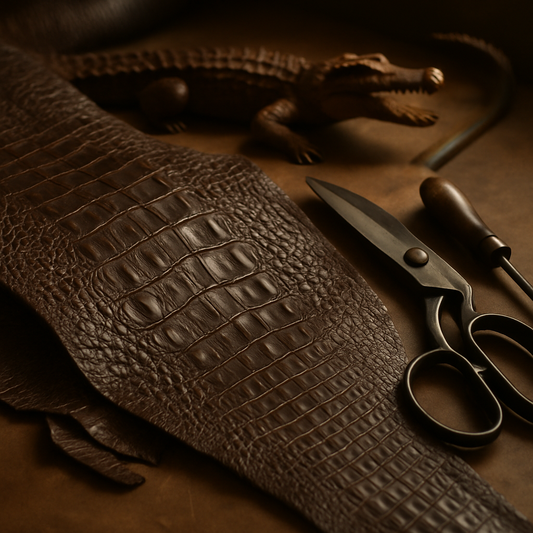
Natural crocodile skin can show variation in scale size, spacing, colour, and surface marks. Sensory pores, sometimes called integumentary sensory organs or ISOs, may be visible, but one sensory feature alone does not establish authenticity. Product documentation, material disclosure, and the seller’s ability to explain the skin are more useful than a quick visual test.
It is also worth separating crocodile from alligator terminology. They are distinct crocodilians, and belly-scale patterns can help with identification, but species and individual skins vary. Alligator bellies commonly show a comparatively regular, balanced scale pattern and often have an umbilical scar. Crocodile scale transitions can vary more gradually between belly and flank areas, while crocodile typically lacks that alligator umbilical scar. These observations are clues rather than absolute rules.
Visible pores do not reliably identify crocodile because both crocodile and alligator may have sensory pores. Likewise, a regular pattern does not prove that a panel is embossed. A reliable material description should state whether the item is crocodile skin, another crocodilian material, or leather with an embossed finish.
For international purchases, CITES regulations may require export, re-export, or import permits or certificates, depending on the product, country, and applicable exemptions. CITES compliance concerns regulated trade; it does not, by itself, prove that a particular item is genuine.
Why prices can differ across genuine crocodile products
Price is affected by more than the word “crocodile.” Important factors include the usable belly width or length, the size of the pattern area, scars, stains, cuts, holes, bony buttons called osteoderms, and how much of the skin can be used without joining or avoiding defects.
Measurement conventions also differ by material type and market. Crocodile skins are commonly priced by belly width, while American alligator skins are a notable exception often sold by length at auction. A finished wallet, shoe, or bag also includes lining, hardware, cutting loss, assembly, edge work, and workshop labour. Comparing two prices without comparing these details can produce a misleading result.
Fit and sizing for crocodile shoes and accessories
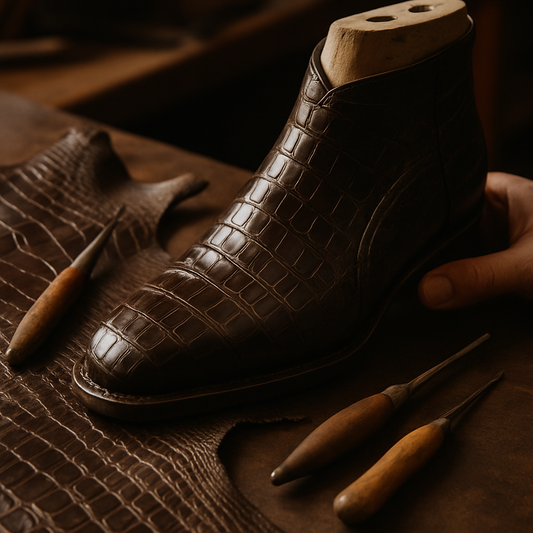
For croc-embossed shoes or genuine crocodile shoes, check both foot length and width rather than relying only on EU, US, or UK size labels. Conversion charts can vary by last and by brand. A broad forefoot, high instep, or wide-fit requirement may need a different last even when the nominal length is correct.
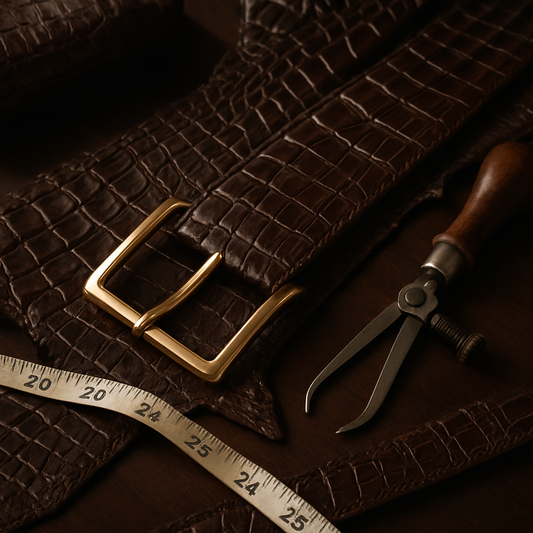
For remote measurements, record heel-to-toe length while standing, the widest forefoot measurement, and the instep circumference. Send both feet if a workshop requests them, since modest differences between left and right feet are common. For belts and other fitted goods, provide the measurement around the place where the item will sit, not just the total length of an existing belt.
Scale layout can also affect the finished appearance. A large belly-scale panel may look different from a smaller-scale flank area, so ask which part of the crocodile skin is being used when pattern placement matters to the design.
Care for genuine crocodile and embossed surfaces
For routine dust, start with a clean, dry, soft cloth. Wipe lightly rather than rubbing across the scales. Keep the item away from prolonged moisture, strong heat, and direct intense sunlight, since these conditions can affect colour, finish, and flexibility.
Do not apply a generic leather conditioner until you know whether the surface is genuine crocodile, coated leather, or synthetic. Products made for smooth cowhide may not suit a finished crocodile surface. There is no useful fixed care schedule for every item; frequency depends on handling, climate, finish, and storage. If the surface becomes wet or develops a finish problem, professional advice is safer than adding several products at once.
How to wear the crocodile leather fall 2026 trend
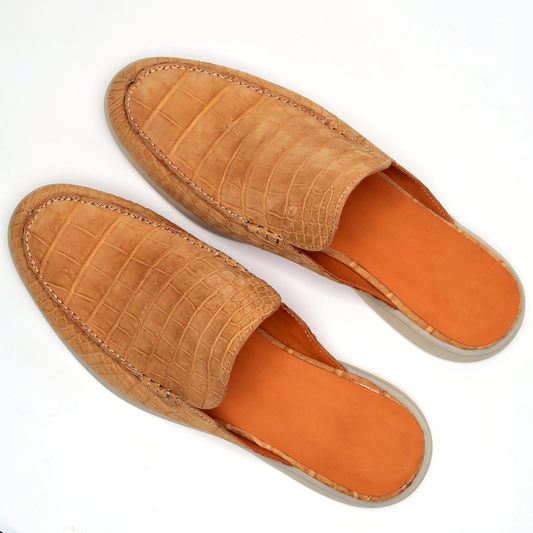
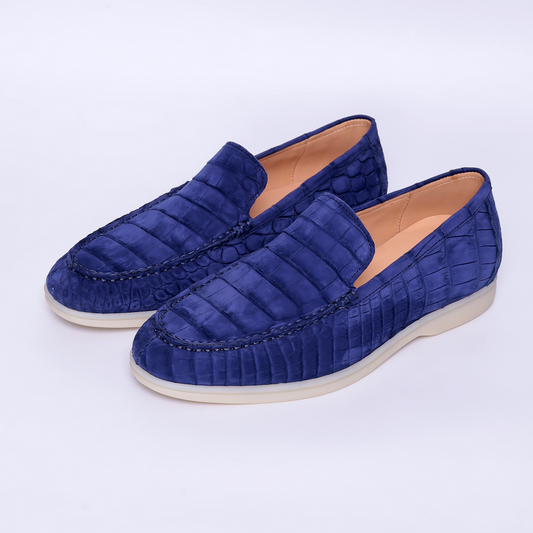
For a restrained runway-inspired outfit, use one crocodilian-textured item as the focal material: a structured handbag with plain tailoring, croc-embossed loafers with solid-colour trousers, or a textured belt with a simple jacket. Matching every accessory to the same scale pattern can make the texture visually crowded.
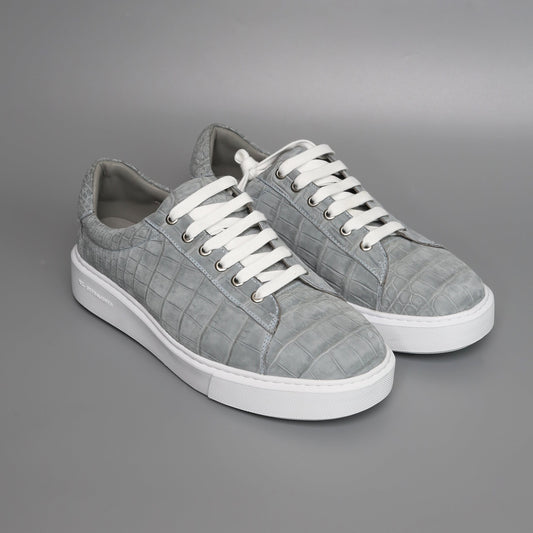
Colour also changes the effect. Dark brown, black, and deep burgundy can work with business clothing, while lighter tan or muted colours can make the scale pattern more visible in casual combinations. If the item is genuine crocodile, let the skin variation show rather than expecting it to resemble a mechanically repeated print.
Frequently Asked Questions
Does the Fall 2026 crocodile trend mean runway products use real crocodile?
No single runway report confirms that every product uses genuine crocodile. The coverage primarily identifies a croc-embossed or crocodilian-style texture, so each product’s material description must be checked separately.
How can I tell genuine crocodile leather from a croc-embossed finish?
Look for a clear material statement, natural variation, and supplier information rather than relying on one pore, scale, or colour clue. A responsible listing should identify crocodile skin or state the base material and embossing process.
What affects the price of genuine crocodile leather?
Price can reflect species, usable belly area, skin measurements, pattern area, scars, stains, cuts, holes, osteoderms, tanning, construction, hardware, labour, and the supplier’s grading system.
Are crocodile shoes sized differently from ordinary leather shoes?
The size label may use the same EU, US, or UK systems, but the last and material construction still affect fit. Measure length, forefoot width, and instep, especially when ordering a wide fit or buying remotely.
To compare genuine crocodile products and material options, visit the CrocodileViet crocodile leather collection. For sizing, material questions, or custom details, contact CrocodileViet through WhatsApp.