
Patina Alligator Leather: Complete Guide for 2026–2027

シェア
Patina on Alligator Leather: A Complete Guide for 2026–2027
Patina on American alligator leather is a gradual change in surface color, sheen, and character caused by use, light exposure, handling, and the finish applied to the hide. It may appear as a softer gloss on raised scales, slight darkening in frequently handled areas, or a more relaxed visual depth across the belly pattern.
In leather terminology, patina is not simply wear. A rubbed edge, cracked coating, stain, or deep scratch is damage; patina is the controlled-looking change that can develop while the leather and its finish remain sound. Whether it becomes visible depends heavily on the original finish, the color, how the item is used, and how it is cleaned.
This article refers specifically to leather from the American alligator. Species naming matters in both product labeling and regulated trade documentation, so “alligator leather” should not be used as a catch-all term for unrelated crocodilian skins.
How Patina Develops on Alligator Leather
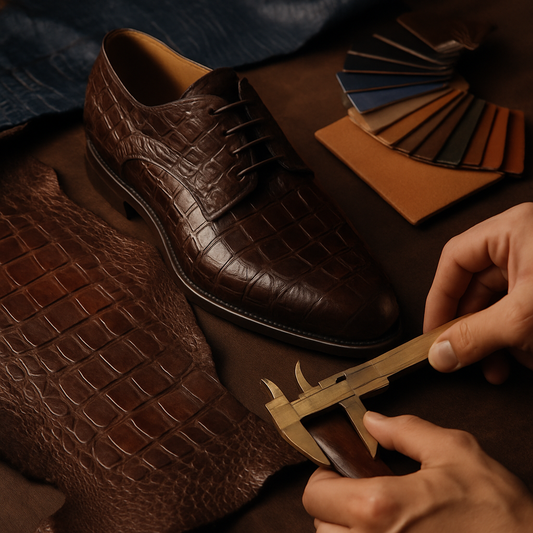
Alligator leather has a scale structure that affects how light moves across its surface. The belly area is especially valued for its comparatively regular, balanced, tile-like scale arrangement. On a well-matched panel, those scales create an orderly rhythm rather than the pronounced directional texture found in more heavily sculpted areas of a hide.
Patina develops differently on individual scales because scales receive different amounts of contact. On footwear, the vamp and toe crease area may show changes before the quarters. On a wallet or small accessory, the edges and handling zones may become visually deeper first. A leather item used occasionally and stored away from direct light can change far more slowly than one carried or worn frequently.
The finish is the main control point. A high-gloss finish reflects light strongly from day one, so small surface marks, dust, and rubbing may be more visible. A matte or low-lustre finish diffuses light, often making small changes appear quieter. Neither finish automatically produces better patina; they simply reveal use in different ways.
| Decision factor | Effect on visible patina | What to assess before buying or commissioning |
|---|---|---|
| Finish level | Gloss highlights reflections and fine surface changes; matte finishes show a softer shift in tone. | View the leather under daylight and indoor light, not only under showroom lighting. |
| Color depth | Darker colors can mask minor marks while still developing richer-looking handling zones; lighter colors may show tonal change sooner. | Ask whether color variation is part of the dyeing and finishing character or a defect. |
| Scale placement | A regular belly layout can make changes easier to notice because the pattern is visually structured. | Check that the most visible panel has scales arranged in a deliberate, balanced way. |
| Daily contact | Frequent flexing, skin oils, friction, and light exposure can speed visible change. | Match the finish to the intended use rather than expecting identical aging from every item. |
Patina, Finish Wear, and Damage Are Different Things
A useful way to assess aging is to look for consistency. A gentle increase in sheen on contact points, a mild deepening of color, or a smoother visual surface can be part of normal use. In contrast, peeling topcoat, exposed pale areas beneath a colored finish, sticky residue, sharp cracking at flex points, or hard-edged stains call for professional assessment.
Alligator leather is not improved by aggressive polishing. Heavy waxes can settle around scale edges, alter the intended sheen, and make later cleaning more difficult. Products designed broadly for smooth bovine leather may also be unsuitable for a finished alligator surface. The finish supplier or maker’s care instructions should take priority over generic leather-care advice.
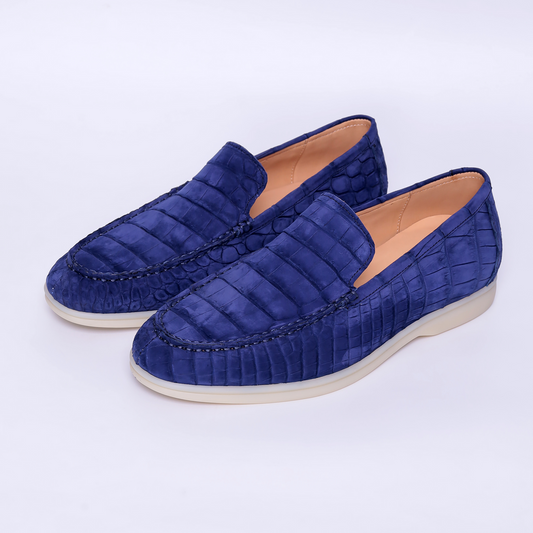
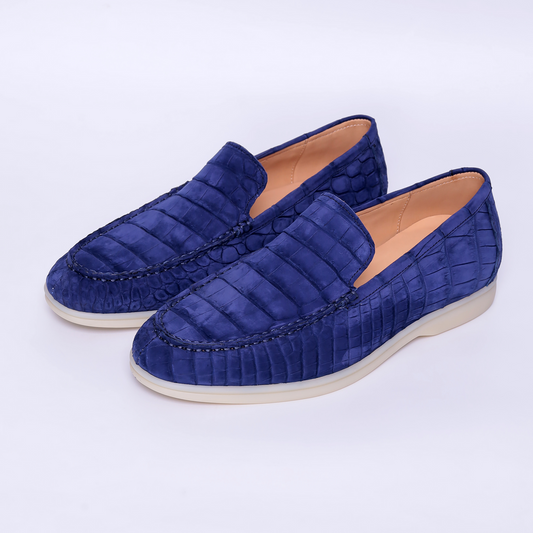
At CrocodileViet, we assess the visible belly panel before assigning it to a prominent shoe area because the scale rhythm across the vamp affects how the pair reads from the front and from above. This is also relevant to patina: a controlled scale layout helps future surface changes look coherent rather than random.
Why Belly Selection Matters for a Patina-Focused Piece
Hide size is generally described by belly width in centimeters, measured across the smooth belly area between the flank scutes rather than by the hide’s overall length. Belly width matters because it indicates how much usable, relatively flat scale area is available for visible panels.
For an item intended to age attractively, usable area matters more than a dramatic-looking hide photograph. A large hide may still have limited clean belly area after scars, scratches, shading irregularities, and scale deformities are taken into account. These characteristics may be acceptable in less visible components, but they influence where a maker can place the cleanest panels.
Many suppliers use a 1-to-5 belly grading system, with Grade 1 generally indicating the cleanest belly and lower grades reflecting more numerous or more substantial defect clusters. These labels are not universal standards: suppliers and tanneries may apply their own thresholds. Importantly, belly grading evaluates the belly section; the back and tail do not determine that grade.
Visual grade and durability are separate questions. A lower visual grade may have marks that restrict placement on a highly visible vamp, while a clean-looking panel still needs sound construction, a suitable finish, and appropriate care. Grade describes the visible belly condition, not a promise about how an item will wear.
What Affects the Price of Patina Alligator Leather Goods
A price difference should be traceable to identifiable inputs rather than a vague claim of better leather. For alligator goods, the major factors commonly include:
- Species identification: American alligator should be labeled accurately, particularly where documentation is relevant.
- Hide grade: Cleaner belly panels usually offer more options for highly visible sections.
- Usable belly area: A wider belly can provide more workable material with regular scales.
- Scale matching: Matching the visible scale rhythm across paired shoe vamps or adjacent panels can require more selective cutting.
- Construction: Pattern complexity, lining, edge treatment, reinforcement, and assembly all affect labor and material use.
- Handwork: Hand-led cutting, shaping, finishing, and inspection add labor where the maker needs to position scales intentionally.
For a patina-focused commission, ask which area of the hide will be visible and why it was selected. “Belly leather” alone does not explain scale size, symmetry, shade variation, or how much clean area was available for the pattern.
Choosing a Finish Based on How You Want It to Age
High-gloss alligator
A shiny finish emphasizes the geometry of the scales and produces strong highlights. It can suit formal shoes, evening accessories, and occasions where the surface is viewed under controlled indoor light. It also asks for more disciplined handling because fingerprints, dust, and fine rub marks can be easier to see.
Matte or low-lustre alligator
A matte finish reduces sharp reflections and can make the scale pattern appear more textural. It works well with tailored wool, brushed cotton, denim, suede, and other materials that have a quieter surface. A matte finish should not be treated as unfinished leather: it may still include a protective coating, and cleaning methods should respect that coating.
Mid-sheen alligator
A restrained sheen sits between the two extremes. It can show the belly scales clearly without the mirror-like reflection of a polished finish. This direction may suit business wear, smart casual outfits, and pieces intended for regular rotation.
There is no single finish that ages best for every owner. A person who prefers visible shine may enjoy the gradual change of gloss, while someone who wants less visual contrast from everyday contact may prefer a lower-lustre surface.
Styling Patina Alligator Leather
Business and formal settings
- Black, deep brown, charcoal, navy, and dark olive tailoring can provide a restrained background for glossy or mid-sheen alligator shoes.
- A belt should relate in color temperature and finish level, but it does not need to be an exact visual copy of the footwear.
- For formal events, a cleaner, more polished surface often reads more deliberately than leather with obvious dry marks or edge wear.
Smart casual settings
- Matte alligator can sit well with dark denim, wool trousers, unstructured jackets, and textured knitwear.
- Brown and earth-toned alligator often works with tobacco, stone, olive, cream, and indigo clothing.
- Let the scale pattern carry visual interest; heavily patterned trousers or prominent logos can compete with it.
Frequent-use rotation
- Rotate footwear rather than wearing the same pair through repeated wet, dusty, or high-friction conditions.
- Select a finish that suits the environments where the item will actually be used, not only the look desired on the first day.
- Keep expectations realistic: visible patina is shaped by the owner’s routine as much as by the leather itself.
Fit and Sizing for Alligator Leather Shoes
If patina alligator leather is being considered for shoes, fit protects both comfort and the visible surface. Leather can flex, but it should not be expected to compensate for a substantially wrong length, width, or instep shape. Excessive pressure across the vamp can stress the finish and concentrate creasing in one area.
EU, US, and UK shoe sizes use different systems, so a stated size alone is incomplete. Confirm the corresponding length, the width designation where available, whether the last is intended for a wide fit, and the amount of room over the instep. Toe shape also changes usable internal space: a sharply tapered shoe may feel shorter than its listed size suggests.
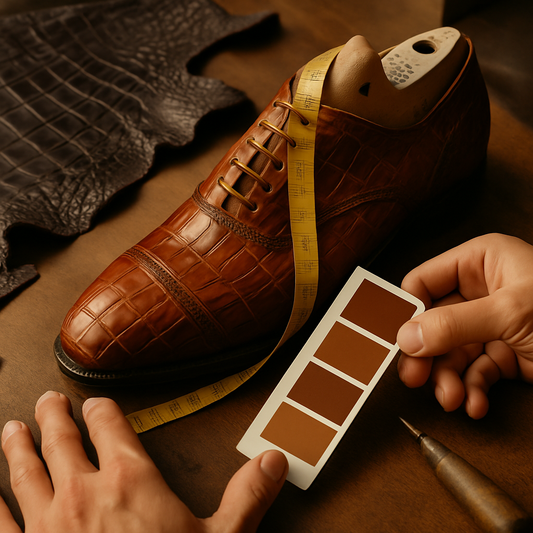
In-person try-on and remote measurement are equally useful routes. In person, assess heel hold, toe room, forefoot pressure, and instep contact while standing and walking. For a remote order, provide foot length, widest forefoot measurement, instep circumference, usual size in EU/US/UK systems, and notes about wide feet, orthotics, or one foot being larger. Measurements allow a more informed discussion than relying on a single familiar size.
Care That Supports a Healthy Patina
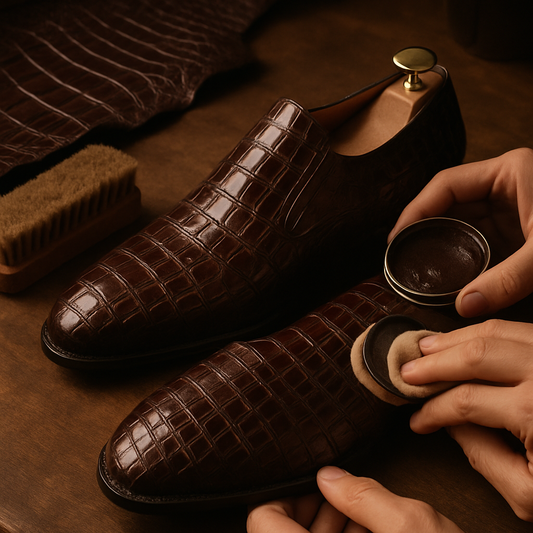
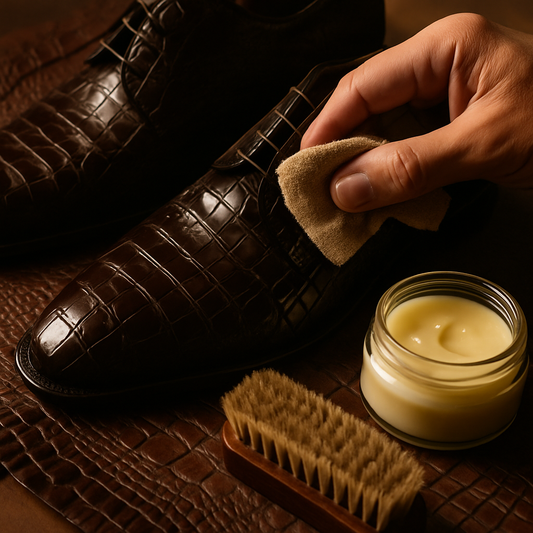
Use a clean, dry, soft cloth as the default cleaning method. Wipe lightly along the surface without pressing product into the scale edges. This removes ordinary dust and handling residue without introducing unnecessary moisture.
Use a slightly damp cloth only as a last resort for a localized mark, and test the method on an inconspicuous area first if the maker has not supplied specific instructions. Do not soak alligator leather, scrub it with abrasive cloths, or apply household cleaners. If the item becomes wet, blot it gently and allow it to dry at room temperature away from direct heat.
Conditioner should be used only when the leather and its finish actually call for it, following product-specific advice from the maker or finish supplier. A fixed conditioning calendar is less useful than observing the surface: changes in dryness, stiffness, dull patches, or finish behavior should be evaluated in context.
For shoes, use correctly sized shoe trees after wear to support the shape while moisture from ordinary use dissipates. Trees should support the shoe without forcing the vamp outward, since overexpansion can alter the way the scales sit at the flex point.
Documentation and Responsible Trade
American alligator has been listed in CITES Appendix II, which permits controlled trade under regulated conditions. Compliance depends on the scientific species, current listing requirements, destination-country rules, and matching permits or certificates. Product photographs and invoices alone do not establish trade compliance.
For skins exported from the United States, required CITES tagging is a practical requirement; an untagged skin does not meet the conditions for US export. Documentation can support a legal-trade review, but it should not be treated as a visual test of the leather or a substitute for accurate species labeling.
Final Considerations
Patina alligator leather is best chosen with the finish, scale layout, expected use, and care routine in mind. The most satisfying change over time usually comes from a finish that suits the owner’s real routine, a belly panel selected for its visible scale structure, and cleaning that protects rather than repeatedly strips or coats the surface.
For alligator footwear made with scale placement and fit in mind, view CrocodileViet’s shoe collection. You can also contact CrocodileViet through WhatsApp to discuss sizing, finish preference, and the intended use of a pair.