
How Crocodile Leather Boots Men Are Made: From Hide Selection to Hand Finishing

Share
How Crocodile Leather Boots Men Are Made: From Hide Selection to Hand Finishing
A pair of men’s crocodile leather boots begins with a selected crocodilian hide. The hide is then tanned, dyed, finished, cut for the boot’s visible panels, and assembled into footwear.
The scale layout, usable area, defects, color requirements, boot design, and final fit all influence how a hide becomes a finished pair of boots.
1. Identifying the Hide and Its Usable Area
The first distinction is species. Crocodile leather, alligator leather, and caiman leather are separate materials. Embossed cowhide and synthetic reptile-pattern material are imitations, not crocodilian hide. A scale pattern can provide visual clues, but it is not a reliable species test by itself. Species documentation is the appropriate basis for identification and regulated trade.
The location of the hide also matters. “Belly” or “ventral” refers to the underside, where the scales are generally flatter and more regular. “Flank” describes the side area, while the raised scutes along the back belong to a different section and should not be described as belly leather.
Alligator belly leather is typically recognized for its comparatively regular, balanced scale pattern. Crocodile leather can vary more by species and may show small sensory-pore marks, often called ISOs, within the scales. Alligator hides may also show an umbilical scar, while crocodile hides generally lack that feature. These traits help with visual assessment, but one sensory feature or scar is not proof of authenticity or species.
The central belly area and surrounding hide are assessed because a boot pattern needs enough usable leather for its panels, and visible defects can affect where those panels are placed. The same hide may contain areas suitable for prominent vamp panels and other areas better suited to smaller components.
2. How Hide Grade Affects Boot Planning
Hide grading is not a single worldwide Grade 1–4 system. Labels and criteria vary by species, supplier, tannery, market, and intended product. In one documented grading approach, a higher grade has a largely blemish-free central area with well-presented square scales. Scars, defects, or a lower usable cutting yield can reduce the grade under that particular scheme.
For boots, grade is closely connected to cutting yield and defect location. A hide with an attractive central section may be suitable for a large vamp, while a hide with more visible marks may require smaller pattern pieces or a design that places those marks away from the most visible areas. This is why visual grade should not be confused with durability. A lower visual grade does not automatically mean the leather is weak, and a higher visual grade does not by itself establish construction quality.
Before processing and cutting, the hide is matched to the boot design. A crocodile Chelsea boot, for example, has visible side panels that may require a consistent scale direction across the elastic-sided silhouette. A boot with a separate vamp, quarters, and shaft may allow the pattern to use different sections of the hide more selectively.
3. Tanning, Dyeing, and Finishing the Leather
After the hide has been selected and graded, it goes through tanning before it is cut into boot panels. Tanning stabilizes the hide and prepares it for further dyeing and finishing. Crocodilian leather does not follow one universal tanning process across every producer, so the finished feel, surface appearance, color depth, and flexibility can differ by tannery and specification.
Dyeing affects how the scale pattern is read. A darker finish can create stronger contrast between the scale plates, while a lighter or more transparent treatment may show more variation within the hide. Natural variation is expected because each skin has its own structure and marking pattern. Color should therefore be judged from the actual leather or reliable product photographs, not from the color name alone.
Finishing prepares the leather for its intended role. Boot panels need enough flexibility for movement while retaining a stable surface. The final result depends on the hide, tanning and finishing choices, panel thickness, lining, and boot construction. The crocodile section is usually only part of the boot; other components may be conventional leather, elastic, rubber, textile, or other non-crocodilian materials.
4. Pattern Placement and Cutting
Once the leather has been tanned, dyed, and finished, it is assessed and cut for the individual boot panels. This stage determines how the scales run across the vamp, quarters, shaft, pull tabs, or other visible components.
Balanced placement matters because adjacent panels are seen together when the boot is worn. The scale direction should work with the shape of the pattern rather than abruptly changing without a design reason. At the same time, the layout must respect the hide’s natural usable area. Trying to force every piece from one small section can create unnecessary waste or place defects in highly visible positions.
Cutting is planned around both appearance and yield because crocodilian hides are finite natural materials. A larger panel may need to be divided, or a pair may use carefully matched sections rather than one uninterrupted piece. The final layout depends on the boot pattern, available hide, and intended visual arrangement.
5. Assembly of the Boot Upper
Once the panels are ready, they are arranged into the boot upper according to the pattern. The visible crocodile sections must work with the less visible structural parts, including linings and supporting components. The design determines which areas of crocodile leather are exposed and which parts use another material.
Panel placement has a direct effect on the finished appearance. A vamp occupies a prominent position over the foot, while quarters shape the sides and heel area. On a boot with elastic panels, such as a Chelsea design, the crocodile sections may be combined with stretch material so the boot can be put on and removed without making every part of the upper rigid.
The material roles should remain clear during production because a product described as crocodile leather boots does not necessarily contain crocodile leather throughout the entire boot. The visible exotic panels, lining, sole, welt, elastic, and heel can all serve different functions.
6. Hand Finishing and Final Inspection
Hand finishing takes place after the main components have been prepared and assembled. It can include visual checking of the scale presentation, edge appearance, surface condition, and the relationship between paired boots. The precise finishing operations depend on the design and construction method.
A pair must be assessed as a pair, not only as two separate boots. The inspection can consider differences in panel placement, scale direction, color presentation, and visible marks that may become apparent when the boots are viewed side by side. A natural hide can contain variation, so the goal is a coherent pair rather than an artificial repetition of every scale.
Documentation is also part of responsible product handling. CITES requirements depend on the species, source, and trade route. International trade in regulated crocodilian skins or products may require permits or certificates, and guidance calls for individual tags on skins entering international trade. CITES paperwork supports regulated trade compliance; it does not, by itself, prove that a product is authentic.
What Affects the Price of Crocodile Leather Boots?
The price of crocodile leather boots depends on several concrete inputs:
- Species and hide source: Crocodile, alligator, and caiman are different materials, and documented sourcing can involve different requirements.
- Usable cutting yield: A hide with a larger, clear central area may provide more usable material for prominent panels, while defects can increase layout difficulty and waste.
- Panel coverage: Boots using crocodilian leather across larger visible sections require more material than designs using it only on selected panels.
- Construction: The upper pattern, lining, sole, heel, elastic, hardware, and assembly method all contribute to the finished cost.
- Finishing and customization: Color, surface treatment, toe shape, width, and special measurements can change the labor and material requirements.
There is no responsible way to quote a universal price from the word “crocodile” alone. The species, hide section, grade criteria used by the supplier, coverage, construction, and requested measurements need to be known first.
Frequently Asked Questions
Are crocodile and alligator leather boots made from the same hide?
No. Crocodile and alligator are distinct crocodilian materials, and caiman is separate as well. Alligator belly leather commonly has a more regular, balanced scale layout, while crocodile can vary more and may show sensory-pore marks. Species documentation is more reliable than appearance alone.
Does a higher hide grade mean the boots will last longer?
Not necessarily. Hide grading commonly relates to usable cutting yield and the location of visible defects, and grading labels vary by supplier and tannery. Durability also depends on tanning, leather thickness, construction, sole materials, fit, and care.
Can the whole boot be made from crocodile leather?
Usually, the crocodilian hide is selected for specific visible panels rather than every component. The lining, sole, heel, elastic, welt, and other structural parts may use conventional leather, rubber, textile, or other materials.
What should I send when ordering crocodile boots from a distance?
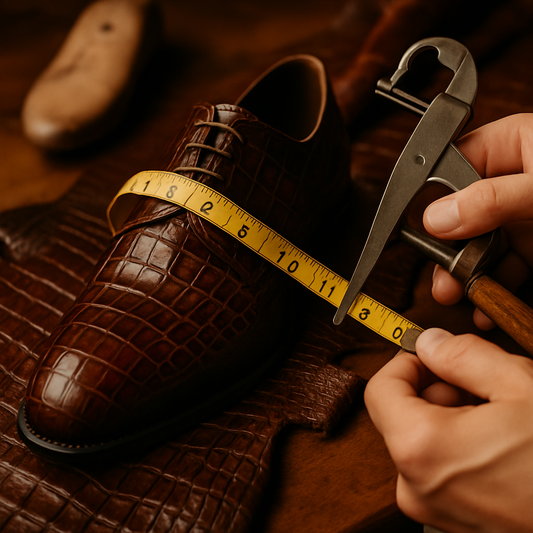
Send your usual EU, US, or UK size together with the length and width of both feet. Add ball circumference, instep circumference, ankle measurement for taller styles, and whether you need a wide fit. The maker’s measurement instructions should take priority over a simple size conversion.
Choose CrocodileViet Boots
View the CrocodileViet crocodile leather boots collection to review the boot styles presented there. For questions about sizing, hide details, or remote measurement, contact CrocodileViet through WhatsApp.