
7 Things to Check Before You Buy Custom Alligator Shoes Online

Share
7 Things to Check Before Buying Custom Alligator Shoes Online
Genuine alligator belly leather typically shows an elongated, webbed umbilical scar, a feature crocodile leather generally lacks.
That detail is only one part of checking custom alligator shoes online. A reliable order also depends on the species, the hide section, grading information, measurements, paperwork, price structure, and aftercare guidance. Because you cannot inspect the leather in person before ordering, ask for specific evidence rather than relying on product labels or close-up photos alone.
1. Confirm that the leather is genuine alligator
Ask whether “alligator” refers to genuine alligator hide or embossed calfskin. A printed scale design can imitate the appearance of alligator, but it is not alligator leather. A scale pattern by itself also does not establish the species.
Look for several identifying clues together. Alligator belly leather commonly has a comparatively regular, balanced scale arrangement, but the scales are not a definitive test and may still show some irregularity. The elongated umbilical scar on the belly is another useful clue. Crocodile skin often varies more by species and may show visible sensory pores, sometimes called ISOs, on the scales.
These details should support, not replace, written information about the leather source and species. If a seller is also offering a custom crocodile belt or other crocodilian product, the species should be identified separately rather than grouped under a broad “exotic leather” label.
2. Ask which part of the hide will be used
“Belly cut” means leather taken from the animal’s underside. It is generally the smoother, more pliable area used for fine leather goods and is the section many buyers expect for dress shoes. “Hornback” describes the ridged, bony back area; it is not a grade of belly leather.
Ask whether the visible vamp, quarters, and other upper sections will use belly leather, side leather, or a combination. This matters because scale size, spacing, texture, and flexibility can change across the hide. Request photos of the actual leather proposed for your shoes, not only a catalogue image of a previous pair.
Also check whether the pattern will be centered across the vamp. On a made-to-measure pair, placement affects the visual result and may affect material usage. At CrocodileViet, discussing hide placement before cutting helps us match the leather layout to the shoe pattern and reduce surprises in the finished pair.
3. Get the supplier’s grading criteria in writing
Terms such as “A grade” do not have one universally established definition across all suppliers and tanneries. Ask what the label covers: scale regularity, visible marks, thickness, surface finish, usable area, or something else.
Request clear photos of the actual hide or the leather reserved for your order. Check for scars, holes, wrinkles, uneven scale rows, color variation, and areas that may be hidden by the shoe pattern. A visual grade is not the same thing as durability. A hide that looks regular may still require suitable construction and wear care, while a hide with natural marks may remain serviceable.
For online ordering, written grading criteria are more useful than a grade letter without explanation. Keep the agreed description with your quotation or order record.
4. Separate the price into real cost factors
The price of custom alligator shoes can reflect several separate decisions:
- Leather species and usable area: alligator hide cost depends on the hide and how much suitable leather the pattern requires.
- Scale placement: centered or matched scales can require more careful planning and may leave more unused material.
- Shoe construction: the last, sole, welt or other construction choices, lining, hardware, and finishing can change labor and material costs.
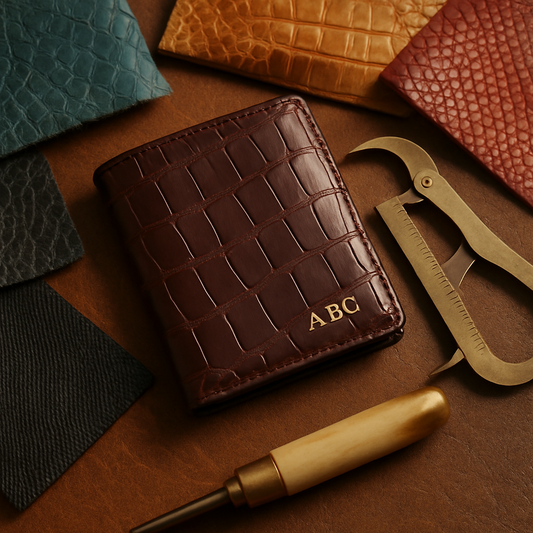
- Customization: a new last, unusual toe shape, special sole, initials, or a coordinated belt can add work.
- Shipping and documentation: international delivery, taxes, and species-related export or import documents may be handled separately.
Ask for an itemized quotation and confirm what happens if the leather shown before cutting differs from the agreed specification. Avoid treating a lower price as proof that the leather is inferior, or a higher price as proof of better durability; the included materials and work need to be compared directly.
5. Check species paperwork and trade requirements
CITES controls international trade in listed crocodilian species and products. CITES documentation can support lawful trade, but it does not by itself prove that a pair is authentic or that the leather is the species claimed.
Ask for the scientific name of the species and the export or import documents that apply to your origin and destination. Requirements depend on the species, source, and countries involved. The buyer may also need to confirm local import rules before placing the order.
Do not use one sensory feature, such as a scale pattern or a particular texture, as proof of authenticity. Species information, supplier records, photographs, and applicable documentation should be considered together.
6. Send measurements that work for a custom last
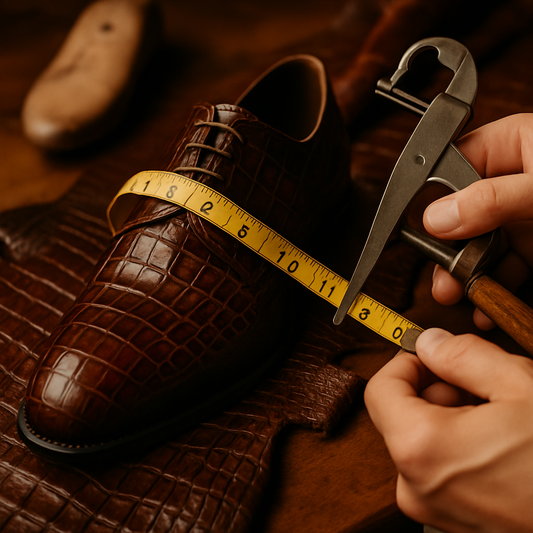
Length alone is not enough for custom shoes. Provide both-foot measurements because the left and right feet can differ. Useful measurements include heel-to-toe length, the widest forefoot width, ball girth, instep girth, heel girth, and the circumference around the ankle if the design rises above the ankle.
State your usual size in the relevant system, such as EU, US, or UK, but do not rely on that number as the main measurement. A US 9, UK 8, and EU 42 are not interchangeable across every brand or last. Tell the workshop whether you need a wide fit, have a high instep, use orthotics, or normally size up because of toe shape.
For remote orders, send measurements taken while standing, preferably at the end of the day when feet may be slightly larger. Photos of your feet beside a ruler can help clarify the measurements, but they should supplement—not replace—the numbers. If a fitting shell, tracing, or trial pair is offered, ask how adjustments will be handled before the final alligator leather is cut.
For office styling and last selection, How to Choose Bespoke Crocodile Leather Shoes for Business Wear provides related guidance, although the leather and order details must still be confirmed for your specific alligator pair.
7. Confirm care, color, and styling expectations
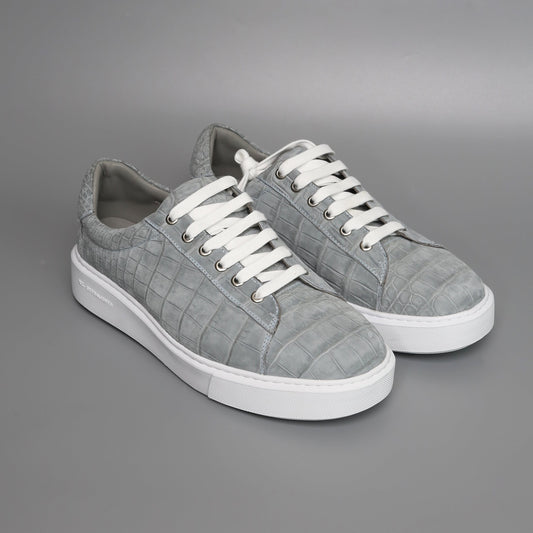
Before approving the order, confirm the color name, finish, toe shape, sole color, lining, laces, and hardware. Do not assume that a screen image represents the exact shade; monitor settings and leather variation can change how color appears. A color or variant should not be treated as available until the workshop confirms it.
For routine care, start with a dry, soft cloth to remove dust after wear. Keep the shoes away from prolonged moisture, direct heat, and heavily damp storage. Do not apply an unfamiliar cream, oil, or conditioner without checking that it is suitable for the specific finish, since products can darken or alter the surface. There is no useful fixed care schedule for every wearer; frequency depends on climate, rotation, exposure, and the leather finish.
Alligator shoes can work with tailored trousers, a restrained suit, or simpler clothing that leaves the texture visible without competing patterns. Match the formality of the last, sole, and color to the setting. If you are coordinating additional pieces such as a custom alligator watch strap, keeping the colors related rather than identical can produce a more natural result.
Frequently Asked Questions
How can I tell alligator leather from crocodile leather online?
Look for several clues rather than one test. Alligator belly leather often has a comparatively regular, balanced scale pattern and may show an elongated, webbed umbilical scar. Crocodile leather varies more by species and often shows visible sensory pores. Ask for the stated scientific name, actual hide photos, and applicable trade documents.
Is belly cut better than hornback for custom alligator shoes?
Belly cut is generally smoother and more pliable, which suits many shoe uppers. Hornback refers to the ridged, bony back area and creates a different appearance and handling requirement. Neither term alone establishes a universal quality grade; ask which section will be used on each part of the shoe.
What measurements should I send for custom alligator shoes?
Send both-foot length, forefoot width, ball girth, instep girth, and heel girth, along with your usual EU, US, or UK size. Mention wide-fit needs, a high instep, orthotics, or any size difference between your feet. Standing measurements and foot photographs beside a ruler can improve remote assessment.
What documents should I ask for when ordering online?
Ask for the species’ scientific name and the export or import documents applicable to your destination. CITES requirements depend on species, origin, and destination. Documentation supports lawful trade but does not, by itself, prove leather authenticity.
Request a custom quotation
For custom alligator shoes, send your preferred design, measurements, leather questions, and destination through CrocodileViet’s contact page. You can also mention your requirements on WhatsApp so the workshop can confirm leather, sizing, documents, and the quotation before production.