
How to Choose Crocodile Loafers For Men for Business Wear

Share
Choosing Men’s Crocodile Loafers for Business Wear
For business wear, crocodile loafers for men work best in black or deep brown with a polished finish and a clean, low-profile shape. These choices highlight the leather’s scale pattern without competing with tailoring.
A crocodile loafer can suit a formal office, client meeting, or business dinner. The cut of the hide, scale placement across the vamp, finish, last shape, and fit at the instep all influence whether the pair reads as suitable business footwear or as an overly casual statement piece.
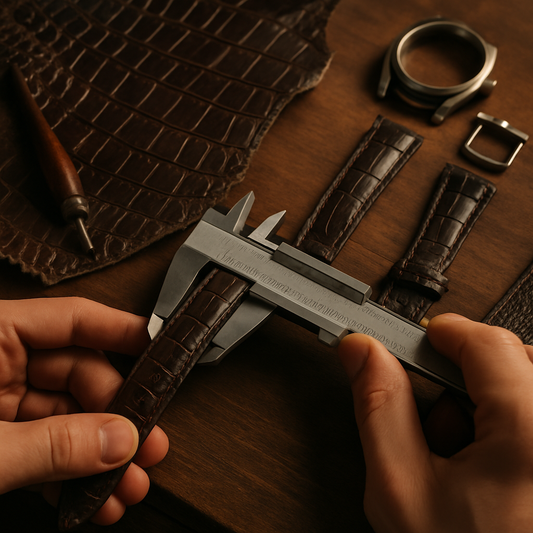
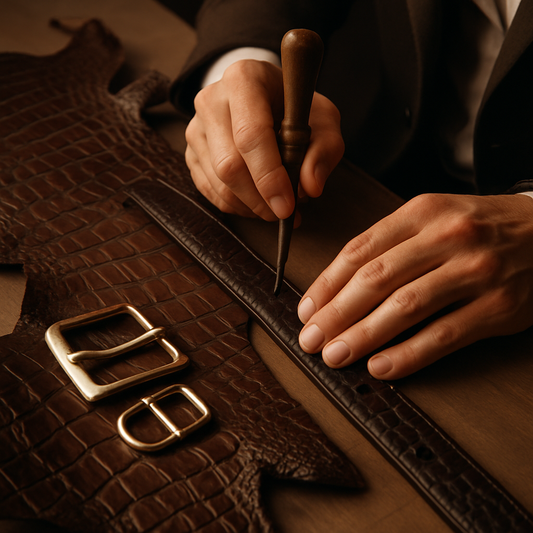
Start with the Right Crocodile Leather Section
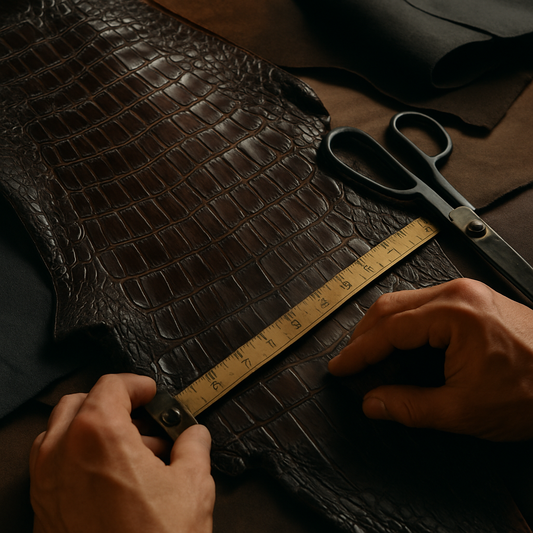
For a business loafer, the belly or pattern area is usually the most useful part of a crocodile hide. This section has regular, balanced scales and provides more usable leather for the vamp—the area across the top of the foot. A balanced scale layout helps a pair look intentional from left shoe to right shoe, especially under office lighting.
Flank sections can have more variation in scale size and direction. That variation needs careful placement. On a business shoe, pronounced asymmetry across the vamps can distract from the silhouette. Use the most visually balanced cutting area for the vamp, with less central areas used where curves, seams, or smaller panels naturally break up the pattern.
Do not judge a hide by animal size alone. The usable cutting area matters more: scars, scratches, holes, and scale-slip issues in the pattern area can limit where clean shoe panels may be cut. A larger hide with several marks across its usable belly can yield less suitable vamp material than a smaller, cleaner hide.
Choose a Restrained Business Silhouette
The most office-ready crocodile loafers for men tend to have a simple upper: a penny-loafer strap, a subtle apron seam, or a plain slip-on vamp. These forms provide enough uninterrupted space to show the scale structure while avoiding excess hardware, contrast stitching, or decorative overlays.
For Formal Office Settings
- Choose black crocodile loafers with a closed, clean upper and a dark sole.
- Wear them with charcoal, navy, or black suits; the dark shoe keeps the lower half of the outfit visually quiet.
- Use a fine-gauge dark sock that covers the ankle when seated.
- Favor a moderate toe shape rather than an exaggerated point or a wide squared toe.
For Business-Casual Workplaces
- Choose dark brown, espresso, or muted burgundy-brown finishes.
- Pair them with navy wool trousers, grey flannel trousers, or tailored cotton chinos.
- A dark brown crocodile loafer can work with an unstructured blazer when the trouser hem has a clean break above the shoe.
- Keep belts understated; a smooth dark leather belt is often less visually busy than a heavily patterned matching belt.
For Client Dinners and Evening Events
- A polished black pair works with a dark suit or a black dinner jacket when the loafer design is restrained.
- Deep brown can suit navy or mid-grey tailoring in less formal evening settings.
- Let the crocodile be the textured element; heavily patterned shirts, bright socks, and large metal buckles can crowd the outfit.
Verify Genuine Crocodile Leather
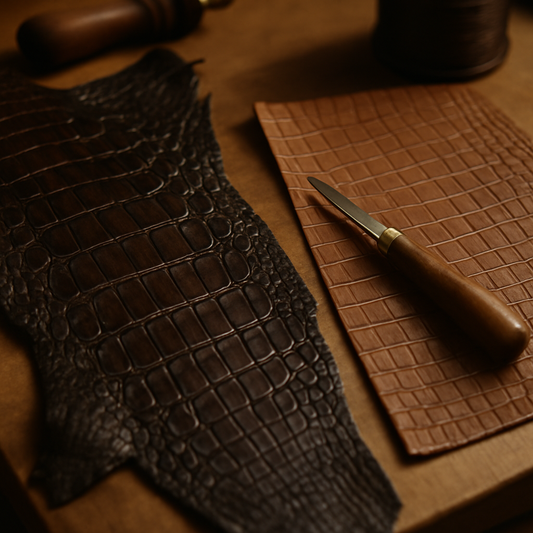
Crocodile loafers should be distinguished from crocodile-embossed or croc-print loafers. Embossed leather has a pressed imitation pattern, while genuine crocodile leather has individual natural scales with variation in size and contour.
Species wording also deserves care. Product descriptions sometimes use “genuine alligator/crocodile” loosely, although alligator and crocodile are different materials. Crocodile leather often shows a small visible sensory pore near the centre of individual scales, while alligator scales are typically smoother. This detail should be assessed alongside the seller’s species description, hide documentation, and finish.
CITES paperwork concerns lawful trade compliance for crocodilian materials. It is useful to ask a seller about the declared species and applicable documentation, but a permit or certificate by itself does not establish the visual grade, construction standard, or condition of a finished shoe.
Understand Hide Grade Before Comparing Prices
Hide grading usually focuses on visible defects in the belly and flank or pattern area. One maker’s grade names may differ from another’s, so ask what the grade means in practical terms: where marks appear, how much clean cutting area is available, and whether the visible vamp panels are selected as a pair.
A higher visual grade generally provides a cleaner, less-marked cutting area. That can improve pattern control on the vamp, but it should not be confused with durability by itself. A lower visual grade may show scars or other natural marks, while the shoe’s long-term wear also depends on leather preparation, construction, sole attachment, fit, and how it is used.
The price of crocodile loafers for men can reflect several concrete factors:
- Species: crocodilian species differ in hide characteristics, availability, and trade requirements.
- Hide grade: cleaner belly and pattern areas provide more usable cutting area and reduce waste.
- Usable area: a loafer needs panels large enough for matching vamps, not merely small offcuts with attractive scales.
- Scale matching: aligning the left and right vamps by scale size, direction, and visual density requires selective cutting.
- Construction: the upper, lining, insole, sole, and their assembly affect comfort, repair options, and shape retention.
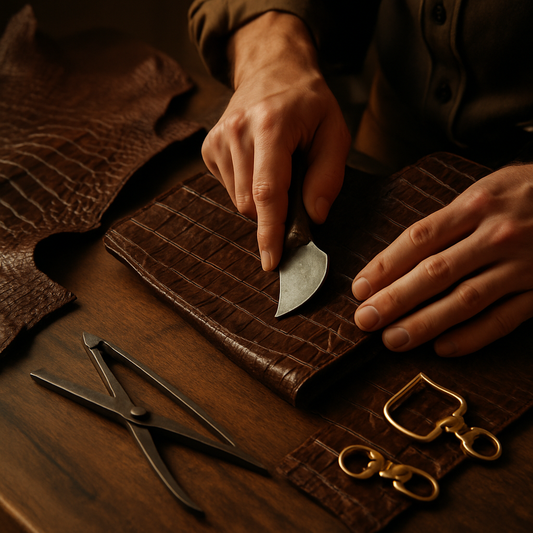
- Handwork: hand lasting, edge finishing, stitching, or pattern matching can add labour where the design requires it.
Fit Matters as Much as the Leather
Loafers do not have laces to fine-tune the fit, so the heel, instep, and forefoot need to be assessed before purchase. The shoe should hold the heel through a normal walking stride without pinching the toes or pressing hard across the instep. A new loafer may settle slightly with wear, but purchasing a pair that already feels sharply tight across the vamp is risky.
In-person fitting and remote measurements are equally useful when handled carefully. For an in-person try-on, test both shoes late in the day, stand, walk, and check whether the heel lifts or the vamp presses uncomfortably. For a remote order, provide foot length and width in centimetres, your usual EU, US, or UK size, the brand and size of a shoe that fits well, and notes on a wide forefoot, high instep, narrow heel, or orthotic use.
Length alone is not enough. A customer with a wide fit may need more forefoot room even at the same heel-to-toe length, while a high instep may need a loafer with a more accommodating throat and vamp shape. Ask whether the stated size is based on the last’s actual dimensions rather than relying only on a size conversion chart.
Care for Polished Crocodile Loafers
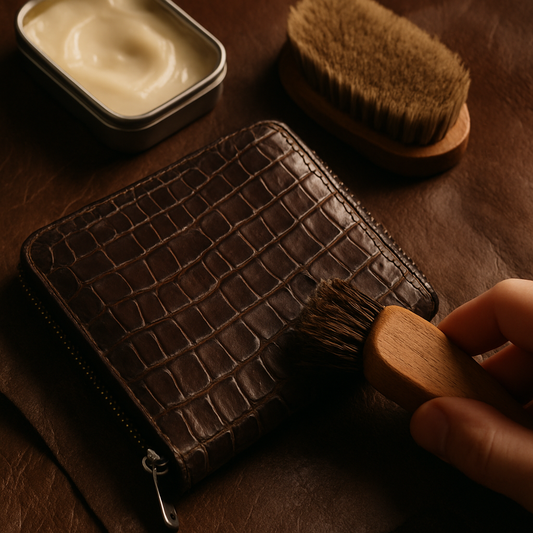
After wear, wipe the shoes with a soft dry cloth to remove surface dust, then let them air away from direct heat. A dry cloth is preferred because repeated moisture can affect the finish, especially around scale edges and seams.
Use a lightly damp cloth only when dry wiping does not remove a mark, and test any leather-care product in an inconspicuous area first. Excess water, harsh cleaners, alcohol-based products, and heavy wax layers can change the surface appearance or collect between scales. Conditioning should respond to the leather’s actual dryness and finish condition rather than follow a fixed calendar schedule.
Use shoe trees that support the toe box and help manage moisture after wear. If the shoes are soaked, blot rather than rub, insert trees only after excess moisture has eased, and allow them to dry gradually away from radiators or strong sun.
Questions to Ask Before Buying
Is the visible vamp cut from the belly or pattern area?
This question helps clarify why the scale layout looks balanced and whether the most usable hide section was allocated to the shoe’s focal area.
How are the left and right vamps matched?
Ask about scale size, direction, and density across the pair. Good matching does not require identical scales, but the shoes should look visually related when viewed together.
Is the shoe genuine crocodile, embossed leather, or another crocodilian species?
A clear material declaration is more useful than a broad “exotic leather” description. It also helps you compare finish, care needs, and price on an informed basis.
What information is needed for a remote size recommendation?
Foot length, width, usual EU/US/UK sizing, instep notes, and reference shoes provide a stronger starting point than selecting by one size number alone.
Choose for Restraint, Not Spectacle
The strongest business crocodile loafer is usually the one that shows good material selection without turning the whole outfit into a display of texture. Dark neutral color, a polished but controlled finish, balanced belly-scale placement, and a properly fitted low-profile last maintain a professional appearance while allowing genuine crocodile leather to shine.
If you are comparing crocodile with alligator, review our nubuck alligator loafers for men. Alligator loafers, nubuck alligator loafers, and alligator driving shoes should be evaluated by their verified species, finish, and intended use rather than treated as interchangeable with crocodile business loafers. For sizing details or material questions, contact CrocodileViet through WhatsApp.