
Custom Backless Alligator Loafers: Size, Color, Finish and Personalization Guide

Share
Custom Backless Alligator Loafers: A Guide to Size, Color, Finish and Personalization
Custom backless alligator loafers are defined by four practical decisions: the foot measurements, the alligator belly cut, the leather color and finish, and the details added to the slip-on design.
What “custom” means for backless alligator loafers
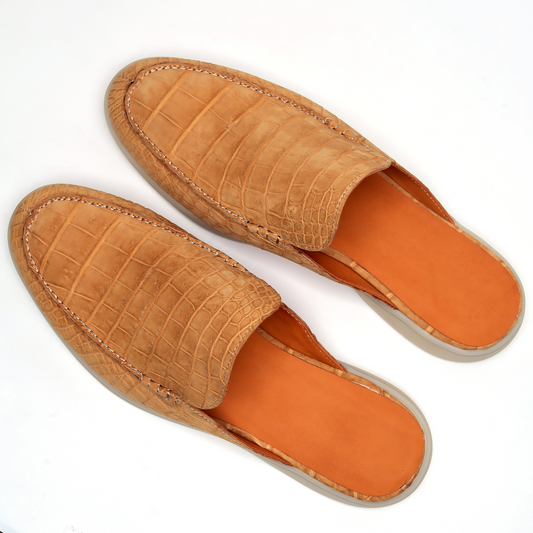
Backless loafers, also called alligator mules for men, combine a loafer-style front with an open heel. That construction makes the topline, vamp length, width and instep position especially important because the shoe must stay secure without a rear counter holding the foot in place.
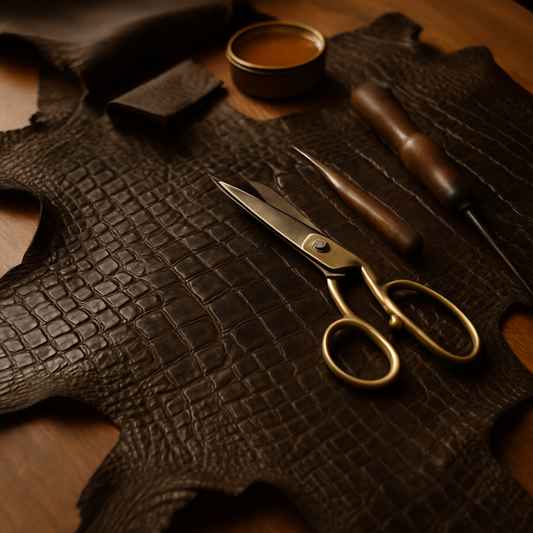
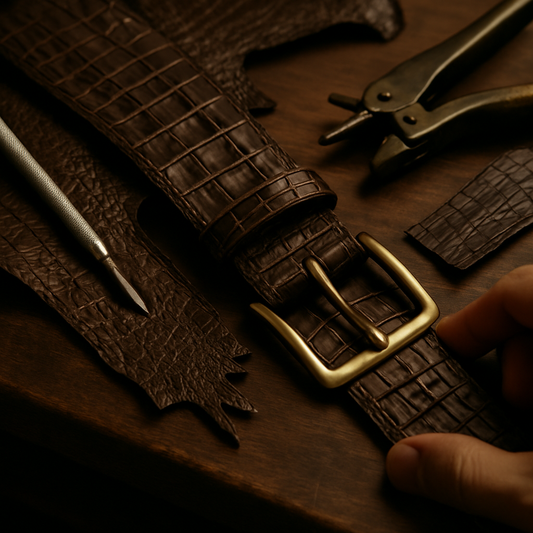
At CrocodileViet, we manufacture our leather goods in-house, so a custom discussion can focus on the actual shoe pattern and leather panel rather than only on a stock size. The reason this matters is that a backless shoe has less structure around the heel: a small change in vamp length or opening width can affect how the foot sits during walking.
The term “alligator” should also be kept separate from crocodile. Alligator belly leather commonly has a regular, balanced scale pattern, while crocodile belly scales can vary more by species and often show visible integumentary sensory-organ pores, also called ISOs. Alligator skin commonly has an umbilical scar, a feature crocodile generally lacks. These traits help with material identification, but one visual feature by itself does not prove species or authenticity.
Choosing the right alligator cut
For backless loafers, the main leather area is usually selected from the belly or adjacent flank so the vamp has a flatter surface and a more balanced scale arrangement. Belly leather is different from hornback leather. Hornback comes from the ridged, bony back and creates a raised central texture, while belly leather is typically smoother and more suitable for a restrained loafer profile.
Not every belly section has the same appearance. Some hides contain bony or buttoned areas that interrupt a smooth scale layout. For a custom pair, ask which part of the hide will be used for the visible vamp, whether the scale direction will run symmetrically from shoe to shoe, and whether the assessment covers the exact panels used for your order.
At our workshop, the reason to discuss the shoe panels rather than only the hide grade is that a supplier may grade just the midsection while excluding the head and tail. The label therefore may not describe every part of the hide. A grade can also refer to scars, scratches, shading or scale deformities in the usable belly and flank area, but grading names differ between suppliers and tanneries.
Size and fit: length, width and instep
A backless alligator loafer should be sized by foot measurements and the intended amount of heel movement, not by length alone. Begin with both feet measured while standing, since one foot may be longer or wider. Record:
- Heel-to-toe length in millimeters or centimeters.
- Width across the widest part of the forefoot.
- Instep circumference or height, especially for a high-instep foot.
- Heel width and the point where the heel begins to narrow.
- The usual size in EU, US and UK systems, including whether that size is from a dress shoe, sneaker or boot.
EU, US and UK numbers do not convert perfectly between brands. A person who usually wears EU 42 may need a different internal length in another last, so the measurement in millimeters is more useful than a size number by itself.
Wide feet and high insteps
Width affects comfort at the ball of the foot, while instep height affects how much of the foot enters the loafer. A wide foot may need a broader last rather than simply a longer shoe. Adding length can leave excess space behind the heel without solving pressure across the forefoot.
For a high instep, provide an instep measurement and a photo taken from above while standing. The vamp opening can then be discussed in relation to the foot rather than treated as a standard opening. A low instep may need a closer topline so the mule does not feel loose during a normal step.
Remote measurements for a custom order
If you are ordering from another country, send measurements for both feet, photographs with a ruler for scale, and the model or size of a shoe that fits well. Include a note about where an existing pair feels tight or loose. A short video of walking can also help show whether the heel lifts excessively, although it does not replace measured length and width.
For international orders, confirm the measurement format before sending it. State whether dimensions are in centimeters or millimeters and whether the foot was measured in socks or barefoot. This reduces the chance of confusing an internal shoe measurement with a foot measurement.
Color options for custom backless alligator loafers
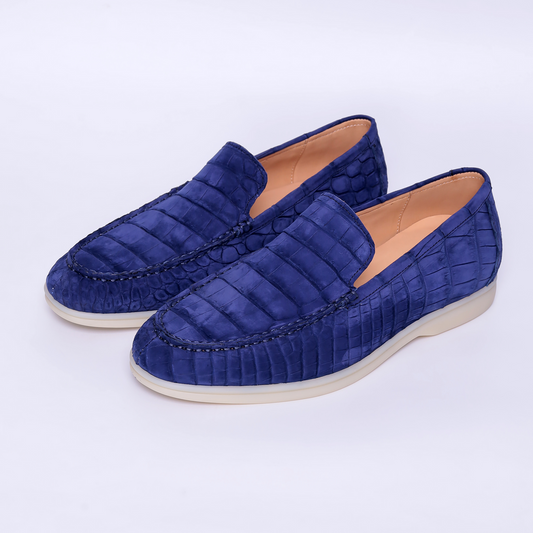
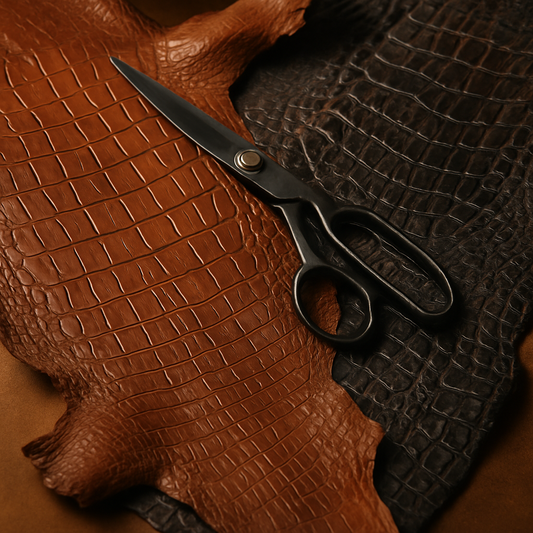
Color should be chosen with the scale pattern and the rest of your wardrobe in mind. Black gives the shoe a formal direction and works with charcoal, navy and tailored evening clothing. Dark brown or espresso pairs naturally with blue, cream, olive and medium-grey trousers. Tan and cognac show more variation across the scales and suit denim, linen and lighter cotton tailoring.
Color names can differ between workshops, so request a current sample or photograph taken in neutral daylight rather than relying only on a name such as “brown” or “tan.” Lighting, monitor settings and the scale curvature can change how the shade appears.
Dye can be applied evenly to alligator and crocodile belly leather, but the finished result still depends on the base hide and surface treatment. A natural-looking tan, a deeper solid shade and a two-tone effect will not present the scales in the same way. If a specific color is important, confirm that the workshop can produce that color for the selected leather before placing the order; stock or availability should not be assumed.
Understanding finish: matte, nubuck and sheen
“Finish” describes the surface treatment, not the species or grade. A smooth polished surface reflects more light, while a matte treatment reduces reflection and makes the scale relief appear quieter. Nubuck has a brushed, velvety surface created by working the grain side, so nubuck alligator mules require different handling from a smooth finished pair.
A nubuck surface can make tan or lighter colors appear soft and muted. A polished finish can deepen the visual contrast between adjacent scales. Ask whether the requested finish is smooth, matte, brushed or lightly lustred, and ask how the finish will affect the scale edges, color depth and maintenance.
Finish and durability should not be confused with visual grade. A higher-looking grade does not automatically mean the shoe will resist every form of wear, and a matte finish does not by itself indicate weak leather. Construction, use, moisture exposure, flexing and care all influence how the finished pair develops over time.
Personalization options to discuss before production
Personalization can include the color, surface finish, apron or vamp shape, stitching color, sole material, welt appearance, lining choice and initials. The available choices depend on the pattern and the materials selected. For a backless loafer, small changes should be reviewed together because changing the vamp shape may also alter the opening and the way the shoe holds the foot.
- Scale placement: Ask whether the central scales will be aligned across both vamps and whether the visible pattern will be balanced from left to right.
- Topline: Confirm the opening height and edge shape, particularly if the shoe will be worn without socks.
- Color: Request a reference image or sample under daylight if matching a belt, watch strap or existing shoes.
- Finish: State whether you want a smooth, low-sheen, polished or nubuck surface.
- Initials: Confirm placement and size before production, since monogramming can affect the visual area of the vamp.
- Sole and heel: Discuss sole thickness and heel height because they influence the shoe’s proportions and walking feel.
For a design reference, see Navy Backless Alligator Loafers: Styling, Care and Buying Tips. If you are comparing online ordering requirements, 7 Things to Check Before You Buy Alligator Mules For Men Online covers additional questions to ask before confirming a pair.
Price factors for a custom pair
The price of custom backless alligator loafers depends on specific inputs rather than on the word “custom” alone. Relevant factors include:
- The size and usable area of the selected alligator belly or flank section.
- The grade convention used by the supplier and the number of visible defects in the shoe panels.
- The complexity of the pattern, including special vamp shapes or unusual proportions.
- The requested tanning, dyeing and surface finish.
- Leather lining, sole, heel and other component choices.
- Hand-applied personalization such as initials or decorative stitching.
- Whether a new pattern or adjustment is needed for unusual length, width or instep measurements.
- International shipping, taxes, customs charges and documentation requirements.
Ask whether the quoted grade applies to the complete hide or only the midsection, and ask which parts will be visible on the shoe. This gives a more useful basis for comparing quotes than grade labels alone.
Care for alligator and nubuck alligator mules
After wearing the loafers, remove surface dust with a clean, dry cloth. That is the safest default for routine care because unnecessary moisture or aggressive rubbing can change the appearance of the finish. Let the shoes air in a dry, ventilated place if they have been exposed to perspiration or light dampness.
For smooth alligator, use only a product confirmed as suitable for exotic leather and test it on a concealed area first. For nubuck alligator mules, avoid ordinary smooth-leather creams and use a soft nubuck brush or the care method supplied for that finish. Do not set a fixed cleaning schedule: inspect the surface and respond to actual dust, marks and use instead.
Keep the pair away from prolonged soaking, direct heat and tightly packed storage. If the leather becomes wet, blot rather than scrub and allow it to dry naturally. A shoe tree that fits without stretching the backless opening can help support the vamp between wears.
How to style backless alligator loafers
For office or dinner wear, black or dark brown alligator loafers work with tapered wool trousers and a clean shirt or lightweight jacket. Tan or cognac pairs can be worn with navy trousers, cream chinos or relaxed tailoring. With jeans, keep the hem neat enough to show the open-heel construction without letting the trouser leg bunch heavily over the vamp.
Because mules expose the heel, the rest of the outfit benefits from clear proportions: cropped trousers, a modest break or a straight hem can all work depending on the shoe shape. Wear them with or without socks according to the setting and the interior finish, but avoid treating one styling method as mandatory.
Documentation for international orders
CITES controls international trade in listed wildlife products; it is not a simple authenticity certificate. American alligator is listed in CITES Appendix II, and crocodilian skins in trade use tamper-resistant identification tags. U.S. Fish and Wildlife states that untagged skins cannot be exported, so an international custom order should be checked against the requirements of both the shipping country and the destination.
Ask what documentation and tag information accompany the leather shipment, and confirm whether your destination has additional import rules. Requirements can vary by country and by the route used for delivery.
Frequently Asked Questions
How should I measure for backless alligator loafers when ordering remotely?
Measure both feet while standing and provide heel-to-toe length, forefoot width and instep circumference. Include your usual EU, US and UK sizes, photographs with a ruler, and notes about where an existing pair fits poorly. Measurements in millimeters or centimeters are more useful than a size conversion alone.
Is alligator belly leather better than hornback for a backless loafer?
Belly leather is usually more suitable for a flatter, smoother loafer appearance because it has less of the ridged, bony texture found on hornback. The right choice still depends on the intended design, since bony or buttoned belly areas may also interrupt a smooth finish.
Does a higher alligator grade guarantee a more durable loafer?
No single grade label provides that guarantee. Suppliers use different grading conventions, and grades commonly describe defects such as scars, scratches, shading and scale deformities in a selected area. Durability also depends on construction, use, moisture exposure and care.
Can I order a custom color or nubuck finish for alligator mules?
That depends on the leather and finish available for the requested pattern. Alligator belly leather can take dye evenly, while nubuck requires a brushed surface treatment. Confirm the color, finish and availability with the workshop before placing the order rather than assuming every variation is in stock.
Request a custom pair
Review the natural tan nubuck alligator mules as a starting reference for the backless shape and finish. For measurements, color, personalization and international documentation, contact CrocodileViet through WhatsApp.