
Navy Backless Alligator Loafers: Styling, Care and Buying Tips

Share
Navy Backless Alligator Loafers: Styling, Care and Buying Advice
Backless alligator loafers are slip-on shoes with an open heel, and a navy finish gives the alligator leather a darker, more restrained appearance than tan or natural shades.
For this design, the material, scale layout, heel security, and fit all affect how the shoes look and feel in daily use. Navy can work with tailored clothing, denim, and warm-weather separates, but the outfit should leave enough visual space for the alligator belly pattern to remain visible. The advice below focuses specifically on navy backless alligator loafers rather than general crocodilian footwear.
What to check in navy alligator leather
The belly is the primary area used for assessing and sizing an alligator hide. Its scales usually form a regular, balanced pattern, which is particularly noticeable on an open-back loafer because the vamp is exposed from several angles. In our workshop, belly leather is used for this type of visible upper because its flatter scale arrangement helps control the pattern across the toe and vamp rather than placing irregular back or tail texture in the most prominent area.
Look at the scale rows from the centre of each shoe toward the sides. A well-planned pair should have a deliberate visual relationship between the left and right shoes, although natural leather will not produce mechanically identical pieces. Scale matching affects the price because it can require more usable hide area and more cutting control.
Alligator identification should not rely on one visual or tactile clue. Alligator commonly has a regular belly pattern and may show an umbilical scar, while crocodile often varies more by species and can show visible sensory pores, sometimes called ISOs. These details can help with identification, but none of them alone proves the species or authenticity. If a product is described as crocodile leather mules, that is a different material claim from alligator and should be supported by appropriate product documentation.
Visual grade also does not equal durability. A grading label mainly describes the number, position, or concentration of visible defects in the graded belly area. Defects can include scars, scratches, shading, and scale deformities; a darker or brighter navy colour does not automatically indicate a higher grade.
How alligator grade and size affect buying decisions
Alligator grading labels vary by supplier and tannery, but a commonly used convention runs from Grade 1 to Grade 5. Grade 1 generally indicates a belly area with no visible defects, while lower grades allow progressively more defects or defect clusters. Ask the seller which grading system is being used instead of assuming that “Grade 1” has the same meaning across every source.
Hide size is a separate measurement. Alligator hides are commonly sized by belly width in centimetres at the widest point. That measurement should not be confused with grade: a wider hide may provide more cutting room, but it does not automatically have fewer defects or produce a stronger shoe.
For a navy pair, ask about these concrete price factors:
- Species: Confirm that the upper is alligator rather than another crocodilian leather.
- Belly grade: Ask how defects are distributed across the sections used for the vamps and straps.
- Usable area: A hide can be large while still offering limited clean, well-positioned material for two matching uppers.
- Scale matching: Similar scale flow across both shoes usually requires more selective cutting.
- Construction: The sole, lining, insole, heel structure, and edge finishing all influence the finished cost.
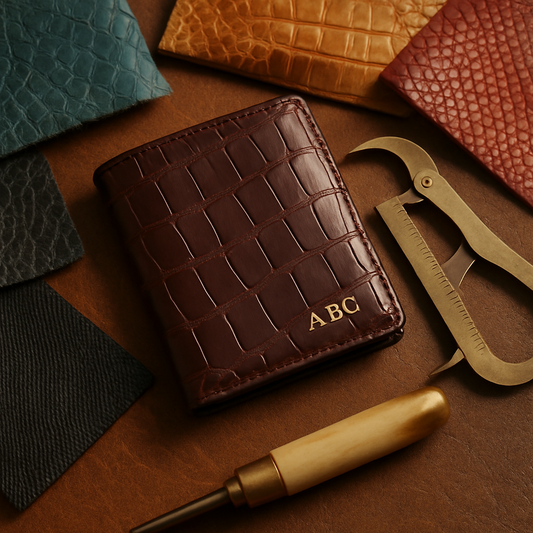
- Handwork: Hand-cutting, pattern placement, sewing, and finishing time should be discussed specifically rather than hidden behind a general quality label.
There is no responsible universal price for navy backless alligator loafers without knowing the species documentation, hide grade, usable area, construction, and amount of handwork. A lower price may reflect a different grade, a smaller or less closely matched cut, simpler construction, or a different material altogether.
Fit and sizing for backless loafers
An open heel changes the fit problem. The shoe must hold the forefoot securely without relying on a closed counter around the heel. If the vamp is too short, the toes may press into the front. If it is too loose, the foot can slide forward and the shoe may lift during walking.
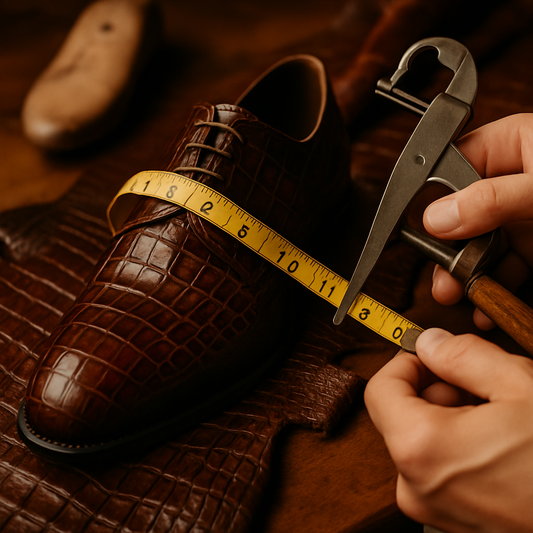
Compare the maker’s measurements with both feet measured while standing. Record foot length, ball girth, instep girth, and the widest forefoot measurement. Use the larger foot as the starting point, then check whether the pattern accommodates the smaller foot without excessive movement.
Size conversions should be checked rather than guessed:
- EU: Useful as a broad reference, but the same EU number can differ in internal length and width between makers.
- US: Confirm whether the chart uses men’s sizing and whether the listed number is based on length or a particular last.
- UK: Do not convert from US sizing by memory alone; compare the maker’s own chart.
Wide feet need more than a larger length. A longer size can leave excess space behind the toes while still pressing at the ball of the foot. Ask for the last width, forefoot circumference, and vamp opening. A high instep also matters because the upper must pass over the foot without creating a pressure point. For a low instep, an open-back loafer may feel loose even when the length is correct.
Remote measurements deserve the same importance as an in-person try-on. Send a standing outline or measured dimensions only if the workshop requests them, and include photographs of the foot from above and from the side when permitted. Mention bunions, a high instep, different left-and-right foot lengths, or a preference for socks. For in-person fitting, walk on a clean surface and check whether the toes grip, the vamp presses, or the heel lifts excessively. A backless shoe needs controlled movement, not a rigid squeeze.
Styling navy backless alligator loafers
Office and tailored clothing
- Wear them with grey trousers and a white or pale blue shirt for a clear contrast against the navy leather.
- Use navy trousers only when the fabric and shoe colour are visibly different; charcoal or mid-grey can separate the two more effectively.
- Choose a belt or watch strap that relates to the shoe’s darkness without requiring an exact colour match.
Smart-casual outfits
- Pair the loafers with stone chinos, an Oxford shirt, and a lightweight overshirt.
- Dark denim can work with navy leather when the jeans are a different texture and value from the shoes.
- For a relaxed setting, use an unstructured jacket in olive, beige, or textured grey to prevent the outfit from looking too formal.
Warm-weather dressing
- Try them with cream trousers, linen-blend trousers, or tailored shorts where the open heel is appropriate for the setting.
- Choose no-show socks if the shoe’s interior allows them and the heel remains secure.
- Keep the rest of the outfit relatively quiet so the navy colour and scale pattern do not compete with several strong prints.
Colour coordination is flexible with navy. Brown, tan, grey, cream, olive, burgundy, and denim can all work, depending on the contrast between the garments. The leather’s texture, the formality of the trousers, and the setting matter as much as colour.
Care for navy alligator loafers
After wearing the shoes, remove dust with a clean, dry cloth. This should be the default method because unnecessary moisture can affect the surface finish, especially around scale edges and seams. Brush lightly rather than pressing into the natural texture.
If a mark remains, use a barely damp cloth only as a last resort, test it on a concealed area first, and wipe without soaking the leather. Do not use household detergent, alcohol-based cleaner, rough brushes, or an untested cream. Products made for smooth cow leather may not be suitable for finished alligator.
Let damp shoes dry at room temperature away from radiators, hairdryers, direct sunlight, and other concentrated heat. Use shoe trees if the maker confirms that they fit the backless shape without stretching the vamp. Avoid storing the loafers under heavy items, since pressure can flatten or distort the scale layout.
There is no fixed conditioning schedule that suits every navy alligator finish. Condition only when the surface shows a genuine need and use a product approved for the specific finish. Too much product can darken the navy unevenly, soften the structure, or collect around the scales. If the finish becomes cloudy, sticky, cracked, or uneven, stop applying products and ask the workshop for material-specific advice.
Questions to ask before ordering
Is a higher visual grade automatically stronger?
No single grading label establishes durability. Grade commonly describes visible defects in the belly area, while durability also depends on hide selection, tanning, thickness, pattern cutting, construction, and use.
Can navy alligator loafers be worn without socks?
They can be, provided the interior, fit, and setting are suitable. Check whether the lining rubs, whether the foot slides forward, and whether moisture can be managed between wears.
Are alligator mules for men the same as crocodile leather mules?
No. “Alligator” identifies a particular crocodilian material, while crocodile refers to different species with potentially different scale patterns, pores, grading practices, and documentation requirements.
What paperwork should accompany the purchase?
Protected crocodilian species may require CITES-related compliance paperwork and evidence of legal sourcing. CITES concerns regulated trade and documentation; it does not by itself prove that a product is authentic.
Are nubuck alligator mules suitable for the same care routine?
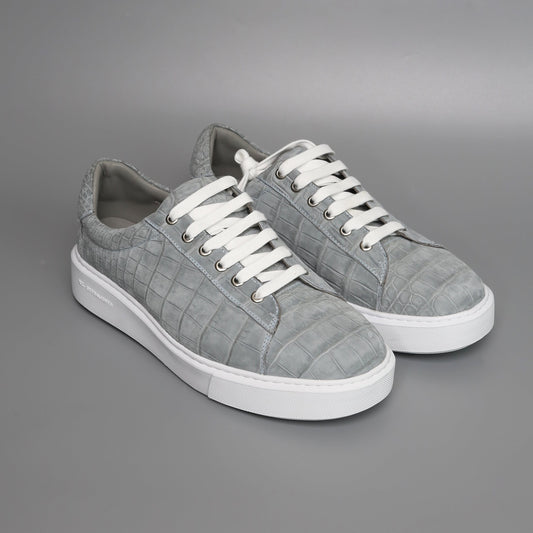
No. Nubuck alligator mules have a different surface from polished or coated alligator. They may need different brushing and cleaning methods, so follow the maker’s instructions instead of applying a standard smooth-leather conditioner.
See a handmade alligator mule option
To review a CrocodileViet slip-on design and its construction details, visit our handmade alligator mule product page. For navy colour availability, measurements, or material questions, contact CrocodileViet through WhatsApp.