
7 Things to Check Before You Buy Nubuck Alligator Leather Online

Share
7 Things to Check Before Buying Nubuck Alligator Leather Online
Before buying nubuck alligator leather online, verify that “nubuck” describes a grain-side buffed finish and that “alligator” identifies the species.
Online listings often combine species, finish, grade, and product terms in a single phrase. Those details describe different parts of the leather, so separating them helps you compare listings accurately. The same checks apply whether you are buying a hide, a small leather good, or nubuck alligator shoes.
1. Confirm that nubuck describes the finish
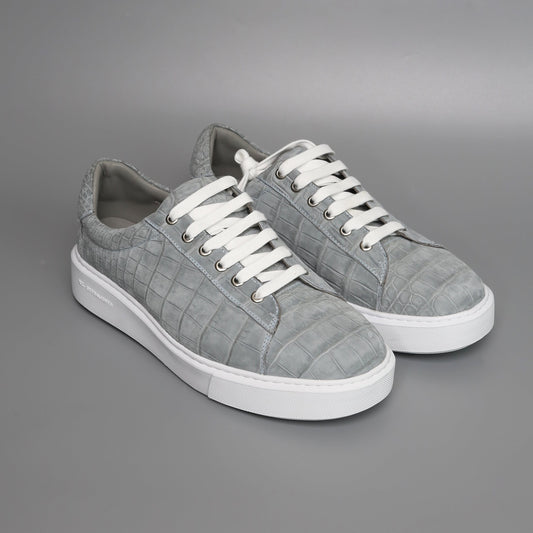
Nubuck is a surface finish, not an animal species or a quality grade. It is made by buffing the grain side of the hide to raise a short, velvety nap. The result has a softer, brushed appearance than glazed alligator leather, but the word “nubuck” alone does not explain the hide’s species, origin, grade, or construction.
A reliable listing should state the terms separately, such as:
- Species: alligator
- Finish: nubuck
- Hide section: belly, flank, or another specified area
- Product: leather, shoes, loafers, or mules
Be cautious with descriptions that use “nubuck alligator leather” without explaining whether the item is genuinely made from alligator hide or merely has a similar brushed appearance. Ask for a close photograph of the surface and request confirmation that the grain side was buffed to create the nap.
2. Check the species instead of relying on the scale pattern alone
Alligator and true crocodile are different materials, even though sellers sometimes use the names loosely. Alligator belly scales commonly show a regular, balanced pattern and a quicker transition from larger belly scales to smaller flank scales. Crocodile scale rows often appear more even across the hide and commonly show visible sensory pores, known as integumentary sensory organs or ISOs.
These visual clues can help, but they do not establish species by themselves. Hide placement, cutting, lighting, dye, and the nubuck finish can change how the scales appear. On a small wallet panel or finished shoe, pores may be difficult to see.
A visible elongated, web-patterned umbilical scar supports an alligator identification. Its absence on a cut piece does not establish that the leather is crocodile or another species. Ask the seller for the species stated on the product documentation and for clear photographs of the actual item rather than relying only on a stock image.
3. Ask which hide section and surface area you are seeing
Scale layout changes across an alligator hide. Belly leather generally offers a more regular arrangement, while flank areas can show smaller or less balanced scales. A product may also combine or cut around different portions of the hide, especially on shoes, straps, and smaller accessories.
For online purchases, request:
- A photograph of the complete hide or the finished item
- A close-up of the scale rows
- The position of the leather on the original hide, if the seller provides that information
- The measurements of the visible alligator panel
This matters for nubuck alligator loafers and mules because the vamp is the most visible section when worn. A listing showing one attractive belly panel may not represent the scale placement on the actual pair. At CrocodileViet, we manufacture our leather goods in-house so the hide placement can be discussed as part of the product specification; asking about it helps match the visible panel to your expectations.
4. Separate grade from finish
Grade and finish answer different questions. A grade generally concerns defects and their position across areas of the hide. Nubuck, glazed, matte, and crust describe processing or surface condition. “Crust” commonly means unfinished leather awaiting further treatment, rather than a grade.
There is no universal alligator grading scale used by every supplier or tannery. Labels such as first grade, select, or similar terms can vary in meaning. Instead of treating a label as a complete assessment, ask the seller:
- Which grading standard is being used?
- What types of marks or defects are included in that grade?
- Where are those marks located on the actual item?
- Are the photographs of the exact hide or only representative images?
A higher visual grade does not automatically mean greater durability. Durability also depends on hide thickness, tanning, the nubuck treatment, lining, construction, use, and maintenance. A clear explanation is more useful than an isolated grade label.
5. Inspect the actual photographs and ask about color variation
Nubuck has a raised nap that can reflect light differently as it is brushed in different directions. Two photographs of the same panel may therefore show slightly different tones. Screen settings, studio lighting, dye lots, and the texture of the nap can also affect the displayed color.
Ask for photographs taken in neutral light, including:
- The full front and back of the item
- Edges, corners, and areas near stitching
- Close-ups of the nubuck surface
- Any visible marks, scars, holes, or changes in scale size
For shoes, request images of both left and right uppers. Natural hide variation means the two sides may not look identical. That is different from a mismatch caused by using unrelated panels or displaying a sample image instead of the pair being sold.
6. Verify origin, traceability, and international paperwork
American alligators are listed in CITES Appendix II. International export or re-export generally requires the appropriate CITES permit or certificate, and the exact requirements can also depend on the destination country’s laws.
Before paying an overseas seller, ask for:
- The stated species and origin
- Relevant documentation or a traceable reference number
- Confirmation of who handles export paperwork
- Photographs of the exact product and its tags, where applicable
A trade tag can support provenance, but the tag alone does not prove every claim about species, origin, or legality. CITES paperwork concerns regulated trade and does not by itself prove that a product is genuine. Keep copies of the listing, invoice, messages, and documents in case the destination customs authority requests them.
7. Match the purchase to your use, measurements, and care habits
For a finished item, price should be assessed through several concrete factors: the quantity of alligator leather, the visible hide section, scale regularity, defects, lining, sole and hardware materials, construction method, finishing work, and documentation. A higher price does not automatically indicate a better grade, while a lower price may reflect a smaller leather panel or a different construction rather than a bargain.
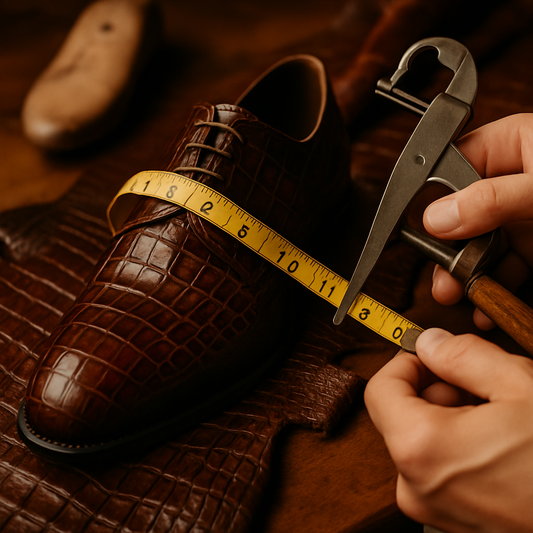
If you are buying nubuck alligator shoes, measure both feet in the socks you plan to wear. Record foot length, the widest part of the forefoot, and the instep circumference. Compare those measurements with the seller’s sizing chart, including EU, US, and UK conversions. A buyer with a wide fit or a higher instep should ask about the last shape and opening depth rather than relying on the numeric size alone. If you are ordering from a distance, ask whether remote measurements or photographs of the foot can help with the recommendation.
Care should begin with a dry cloth for loose dust. Brush the nubuck gently in one direction with a suitable soft nubuck brush, and avoid applying ordinary leather polish because it can flatten or alter the nap. Let damp leather dry naturally away from direct heat. There is no useful fixed cleaning schedule: inspect the surface according to how often the item is worn, the weather, and the type of contact it receives.
For styling, nubuck alligator shoes usually work well with textured but quiet fabrics such as wool trousers, cotton chinos, brushed cotton, or denim. A darker pair can support business-casual clothing, while a lighter shade may work with relaxed tailoring and warm-weather trousers. Nubuck alligator mules suit less formal outfits because the open-back shape changes the overall level of formality. Match the shoe color with the outfit’s broader palette rather than trying to duplicate the exact shade of a belt or bag.
Frequently Asked Questions
Is nubuck alligator leather a separate species?
No single species is called nubuck. Nubuck describes leather whose grain side has been buffed to create a short nap. The listing should identify alligator as the species and nubuck as the finish.
How can I distinguish alligator from crocodile online?
Look for several clues together: alligator commonly has a regular, balanced belly pattern, a quicker transition toward smaller flank scales, and sometimes a visible umbilical scar. Crocodile often shows sensory pores on the belly scales and may have more even-looking rows. None of these visual features should be treated as the sole proof of species, particularly on a small or finished item.
Does a higher alligator grade mean the leather will last longer?
Not necessarily. Grade generally concerns defects and their location, while durability also depends on tanning, thickness, finish, construction, use, and care. Since grading labels vary by supplier or tannery, request the grading standard and photographs of the actual item.
What should I request before importing nubuck alligator shoes?
Request the stated species and origin, photographs of the exact pair, measurements, documentation or a traceable reference number, and confirmation of who handles any required CITES and destination-country paperwork. A tag or document supports traceability but does not alone prove every product claim.
For a ready-made option, view CrocodileViet’s nubuck alligator leather slip-on loafers for men. For questions about measurements, hide details, or current product information, contact CrocodileViet through WhatsApp.