
Alligator Leather Shoes: Style Guide for 2026–2027

Share
Alligator Leather Shoes: A Style Guide for 2026–2027
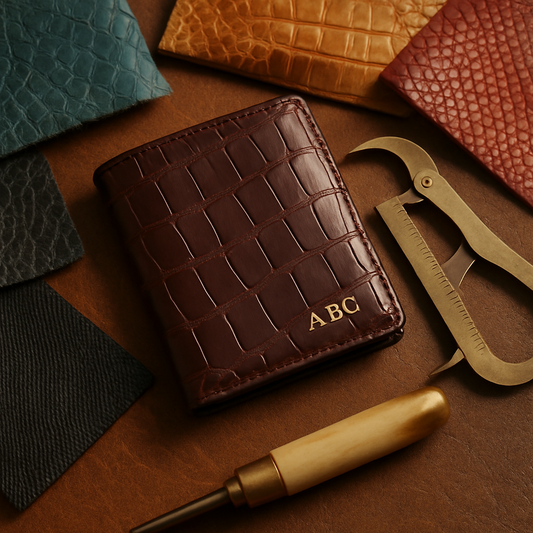
Alligator leather shoes commonly show a regular belly pattern of rectangular scales, giving the finished shoe a more balanced surface than many other crocodilian leathers.
This guide focuses specifically on genuine alligator leather shoes: how to read the hide, choose a shoe shape, assess price factors, check fit, style the pair for different settings, and care for the leather. Alligator should not be confused with crocodile or caiman, which can differ in scale layout, flank structure, pores, and trade labeling. Embossed calfskin with a pressed reptile pattern is also not genuine alligator skin.
What makes alligator leather shoes visually distinctive?
The belly area of an alligator hide is valued for its comparatively regular scale arrangement. The central scales are often rectangular or tile-like, while the pattern becomes less regular as it approaches the flanks. On a shoe, this structure can create a measured visual rhythm across the vamp, quarters, or straps.
Alligator skin also commonly shows an umbilical scar, which crocodile generally lacks. Its presence can be a normal feature of the hide rather than evidence of poor workmanship. A sensory pore or single visual trait should not be treated as proof of authenticity; identification depends on the material, documentation, construction, and traceability together.
At CrocodileViet, belly sections are considered for shoe panels when the design calls for balanced rectangular scales. Their flatter surface and more controlled pattern make it easier to position the hide across a vamp or strap without an abrupt change in scale direction. The choice is about visual control and panel layout, not an automatic promise of greater durability.
How to read an alligator hide before buying shoes
Grade and visible defects
For American alligator, commercial grading usually focuses on the belly rather than grading the entire back or tail in the same way. A commonly used system runs from Grade 1 to Grade 5, based on defects in the belly panels, but grading labels vary by supplier and tannery.
Possible defects include scars, scratches, shading, and scale deformities. Their location matters as much as their number. A small mark near an edge may have less effect on a shoe than a similar mark placed in the center of the vamp, where the eye naturally focuses.
Visual grade should not be confused with durability. A hide with fewer visible marks may suit a clean formal design, while a lower visual grade can still produce a serviceable shoe when the maker places the panels intelligently and constructs the upper correctly.
Usable area and belly width
Alligator hides are commonly described by belly width in centimeters, measured across the smoother belly scales between the flank scutes. This differs from conventional leather descriptions based mainly on total square-foot area.
Width affects which shoe designs are practical. A narrow belly section may work for smaller shoe sizes, narrow straps, or panels with limited coverage. Larger shoes, broad apron-toe designs, and continuous vamp layouts require enough usable width to avoid joining pieces in visually prominent areas.
Scale matching and panel placement
A pair of genuine alligator shoes does not necessarily have identical scales from left to right. The maker instead aims for a coherent relationship in scale direction, size, color, and placement. Matching is especially visible on the two vamps, where unequal scale progression can distract from the shoe’s shape.
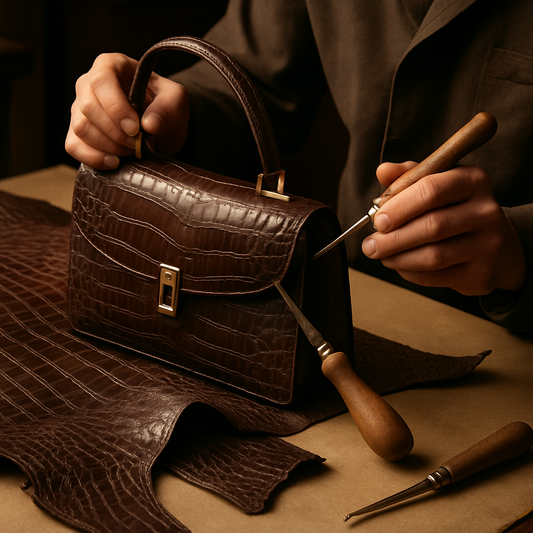
Handmade alligator shoes also require decisions about where natural features should sit. A scar may be placed near a seam, under a facing, or on a less visible quarter when the hide allows. This reduces visual interruption without pretending that natural skin has factory-made regularity.
Price factors for alligator leather shoes
There is no responsible single price for alligator leather shoes without reviewing the design and the hide. The main cost factors include:
- Species and legal sourcing: genuine American alligator and other alligator classifications can carry different sourcing and trade requirements.
- Hide grade: fewer prominent belly defects can increase the usable value of a panel, although grade terminology differs between suppliers.
- Usable area: the hide must provide enough width and length for the selected shoe size and panel layout.
- Scale matching: matching two vamps, a pair of straps, or multiple panels increases material planning and cutting work.
- Construction: the last, sole structure, lining, welt or other joining method, and finishing materials all affect labor and cost.
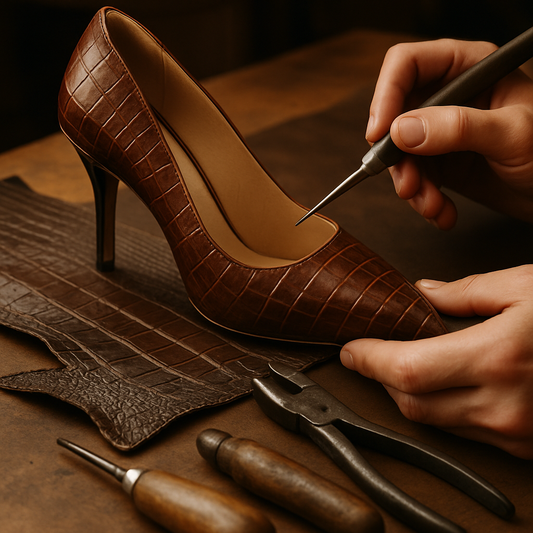
- Handwork: cutting around scale direction, aligning paired shoes, shaping the upper, and finishing edges require more time than a simple stamped or printed surface.
- Design complexity: wholecut shapes, multi-panel patterns, apron toes, monk straps, and decorative perforations create different levels of material use and assembly work.
Ask for a quotation based on the actual design, measurements, selected color, available hide, and required documentation rather than relying on a generic “alligator shoe” price.
Choosing the right shoe shape
Formal lace-up shoes
Oxford and clean derby shapes give the belly-scale pattern a relatively uninterrupted surface. These styles suit business tailoring, ceremonies, and formal dinners. A restrained toe shape usually lets the scale layout remain the main material feature instead of competing with excessive decoration.
Loafers
Loafers expose a broad vamp, making scale direction and center placement particularly important. They work well with tailored trousers, wool trousers, and relaxed suiting. A darker finish can make the shoe easier to use in formal settings, while a lighter or warmer tone can suit daytime clothing.
Monk straps and ankle boots
Monk straps introduce hardware across the alligator surface, so the buckle position and strap width should relate to the scale size. Ankle boots need enough hide length around the quarters and shaft; a design may therefore use several panels rather than one continuous section.
Fit, sizing, and measurements
Alligator leather shoes should be fitted by foot measurements and shoe construction, not by assuming that a familiar size will transfer perfectly between brands. A useful request includes your usual EU, US, and UK sizes, the brand or last you normally wear, foot length, forefoot width, heel width, and any difference between your left and right foot.
- Length: measure from the back of the heel to the longest toe while standing.
- Width: measure around the broadest part of the forefoot, especially if you need a wide fit.
- Instep: describe a high or low instep, since loafers and monk straps can feel different from lace-up shoes in this area.
- Toe shape: state whether you prefer a rounded, almond, or narrower toe profile; internal space depends on the last, not only the listed size.
- Fit preference: mention whether you wear thin dress socks, thicker socks, or use an insole.
In-person try-on can reveal pressure points, but remote measurement is equally useful when it is recorded carefully. For remote orders, send measurements in centimeters, photographs of both feet on a level surface, and details of a well-fitting shoe’s length and width. A remote fitting discussion should not be treated as a secondary option; it is the primary fitting method when visiting the workshop is not practical.
How to style genuine alligator shoes
Office and business clothing
- Pair dark brown or black alligator lace-ups with navy, charcoal, or medium-gray tailoring.
- Use a restrained shirt and tie pattern when the scales are large or strongly contrasted.
- Choose trousers with enough break to sit cleanly over the shoe without covering the vamp completely.
Weddings and formal events
- Wear black alligator shoes with black, charcoal, or deep navy evening-oriented tailoring.
- Use dark brown with navy, mid-gray, or brown tailoring when the event permits a less formal combination.
- Keep the belt or other leather accessory close in color, while allowing a small tonal difference if an exact match is unavailable.
Smart-casual settings
- Loafers can sit well with tailored chinos, wool trousers, and an unstructured jacket.
- Warm brown shades can work with cream, olive, tan, denim, and muted blue clothing.
- Let either the shoe texture or the clothing pattern lead; pairing several strong patterns can make the scale layout difficult to read.
Care for alligator leather shoes
After wear, remove surface dust with a clean, dry cloth. This is the default care method because unnecessary moisture can affect the finish and can encourage problems if it remains around seams or the sole edge.
If the shoe has light dirt that a dry cloth cannot remove, use a barely damp cloth as a last resort, then wipe gently and allow the shoes to dry naturally away from direct heat. Do not soak the leather, use household cleaners, or place wet shoes against a radiator or strong heater.
Use shoe trees that support the shape without forcing the vamp or pressing sharply into the scale pattern. Rotate wear when possible so the leather can dry between uses. Conditioning should be based on the leather’s appearance, handling, and maker’s recommendation rather than a fixed calendar schedule; too much product can soften the finish or leave an uneven surface.
Documentation and genuine material checks
Commercial alligator products can fall under CITES controls, and shoes are treated as manufactured leather products within these trade frameworks. Legal trade depends on the required harvest or traceability documentation and on matching the product to the relevant tag or permit record where applicable.
CITES documentation addresses legal trade and traceability; it does not by itself prove that a particular shoe is genuine or establish its grade. Ask how the material is identified, which documentation accompanies the product, and whether the details correspond to the finished pair.
Frequently asked questions
Can embossed leather be sold as alligator leather?
Embossed calfskin can imitate reptile scales through a pressed pattern, but it is not genuine alligator skin. Product descriptions should identify the material clearly rather than using “alligator” for every crocodilian-looking surface.
Does alligator leather stretch like ordinary shoe leather?
Alligator uppers can change slightly with wear, but the amount depends on the tanning, lining, construction, last, and fit. A shoe that is substantially too tight should not be expected to expand into a different size.
Is a higher alligator grade automatically stronger?
A higher visual grade generally indicates fewer or less prominent belly defects under that supplier’s grading method. It does not automatically mean greater strength, because durability also depends on hide thickness, tanning, panel placement, stitching, sole construction, and wear conditions.
What should I send for a remote fitting?
Send your EU, US, and UK size references, standing foot measurements, forefoot width, instep description, photographs, and the measurements of a comfortable shoe. Also state whether you need a wide fit or have different left and right foot dimensions.
Browse CrocodileViet’s alligator and crocodilian shoe collection at crocodileviet.com/collections/shoes. For design, sizing, material, or documentation questions, message CrocodileViet on WhatsApp.