
7 Things to Check Before You Buy Alligator Sneakers Online

Share
7 Checks Before Buying Alligator Sneakers Online
A genuine alligator sneaker listing should identify the upper as alligator leather or alligator skin; a printed or embossed scale pattern alone does not establish that the material is genuine.
Buying online means judging material, construction, fit, and legal shipping from written details and photographs rather than from a physical inspection. These seven checks help separate a well-specified pair from a listing that uses “alligator” only as a style description.
1. Check exactly what part of the sneaker is made with alligator
Read the material description for the upper, not only the product title. A pair may use alligator leather across the visible vamp and quarters, or it may combine a smaller alligator panel with calf leather, textile, rubber, or another material. Those constructions can look very different in person and have different prices.
Ask the seller to specify:
- Whether the visible scale panels are genuine alligator leather or an embossed substitute
- Which sections use alligator: the vamp, side panels, tongue, heel counter, or overlays
- Whether the lining, insole, outsole, and trim are made from other materials
- Whether the surface is smooth alligator, a nubuck finish, or another treated finish
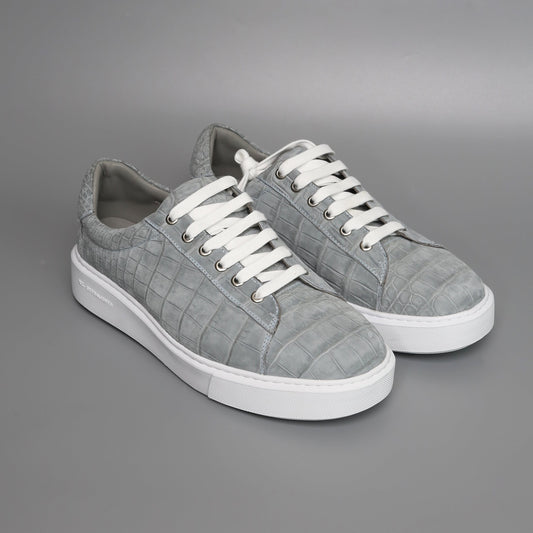
“Nubuck alligator sneakers” describes a surface treatment rather than a separate species. The nap can soften the reflection from the scales, so photographs taken under different lighting may make the same pair appear lighter or darker. Ask for close images in natural light and a written description of the finish.
A scale photograph can support the description, but one visual characteristic should not be treated as proof of authenticity. Wildlife-trade documents address legal movement and compliance; they do not by themselves prove that every visible panel is genuine alligator.
2. Check the belly pattern, scale layout, and hide section
Alligator belly leather usually shows a regular, balanced scale pattern, with rectangular scales arranged more evenly across the central panels. That layout is one reason belly sections are frequently selected for footwear: the pattern reads clearly over the vamp and looks controlled across a pair.
Look for photographs of both shoes, not just one close-up. Check whether the scale rows continue naturally from one panel to the next and whether the left and right shoes have a visually compatible arrangement. Exact mirroring is not expected from a natural hide, but large differences in scale size or direction deserve a question before purchase.
The belly or midsection is also important because many alligator grading systems assess that area rather than the back or tail. A mark outside the graded belly section should not automatically be used to judge the hide grade. Ask which hide area supplied the visible panels and whether the images show the actual pair rather than a representative sample.
Listings sometimes use “crocodile leather sneakers” and “alligator sneakers” interchangeably, although the materials are not identical. Crocodile leather varies more by species, often shows visible sensory pores called integumentary sense organs (ISOs), and generally has a less regular pattern. Alligator often has an umbilical scar, while crocodile lacks one. These clues can prompt useful questions, but none should be treated as a stand-alone authentication test.
3. Check the grade without confusing appearance with durability
In a common alligator grading convention, Grade 1 indicates a belly area without defects, while lower grades allow more marks or clusters of defects. This numbering is not universal: grading labels and the way suppliers describe them vary by tannery and supplier.
Ask the seller to explain the stated grade in writing. Useful questions include:
- Is the grade assigned to the complete hide or only the belly and midsection?
- Are the visible marks natural scars, healed damage, pores, color variation, or finishing effects?
- Does the grade apply to both shoes or only to the hide before cutting?
- Are the photos of the exact pair being sold?
A cleaner visual grade may produce more even panels, but visual grade is not the same as durability. Wear also depends on leather thickness, backing, panel placement, stitching, flex points, sole construction, and how the sneakers are used. A higher grade does not remove the need to inspect construction.
4. Check the price against the actual material and construction
There is no responsible single price for alligator sneakers online because the cost changes with several named factors:
- Species and material: Confirm that the price refers to genuine alligator leather rather than an embossed alternative.
- Hide grade: A cleaner usable belly section can cost more, although grading terms vary.
- Usable area: Larger panels require enough hide with suitable scale size and fewer interruptions.
- Scale matching: Matching the visible scale flow across left and right shoes takes more usable material and planning.
- Construction: Ask how the upper is joined to the lining, tongue, counter, and sole, and which parts are leather or synthetic.
- Handwork: If hand-cutting, hand-skiving, or hand-stitching is claimed, ask which operations are actually done by hand rather than accepting the phrase as a general label.
At CrocodileViet, selecting a belly section for a visible sneaker panel has a practical reason: the regular scale spacing gives the vamp a more controlled visual rhythm and reduces abrupt changes across the main surface. The usable area still has to be evaluated around the pattern, flex points, and panel shape; a large hide does not automatically provide a suitable pair of uppers.
Before paying, ask whether the quoted price includes the complete pair, taxes, shipping, duties, and any documentation required for cross-border delivery. Do not rely on a “luxury exotic leather sneakers” label without a material breakdown.
5. Check sizing with measurements, not only a size label
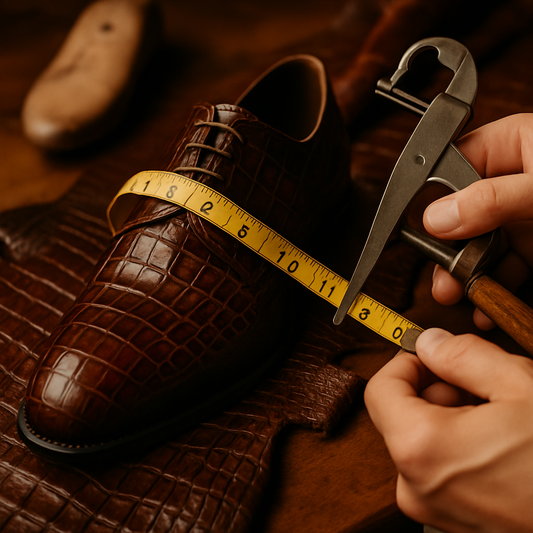
Online sneaker sizing is more reliable when the seller provides insole length, outsole length, forefoot width, opening circumference, and information about instep height. EU, US, and UK numbers are not fully interchangeable between brands, so compare the seller’s measurements with a pair you already wear comfortably.
Measure remotely if you cannot try the shoes in person:
- Stand on paper wearing the socks you expect to use.
- Measure from the longest toe to the back of the heel on both feet.
- Measure the widest part of each foot.
- Note the instep height or circumference if your foot is high-volume.
- Send both sets of measurements to the seller and ask which size and width they recommend.
In-person fitting remains useful, but remote measurements should be treated as equally important rather than as a last resort. Ask specifically about wide-fit options, toe-box shape, heel slip, and whether the upper has room over the instep. A sneaker that fits in length can still pinch across the forefoot or press against the instep.
Confirm the exchange policy before ordering, particularly if the shoes are made to a requested measurement. Ask whether returns are accepted after indoor fitting and whether the seller covers a size exchange or only accepts unworn pairs.
6. Check the finish, care requirements, and product photographs
Alligator leather can show small natural variations in scale shape, color, and surface texture. Those variations are different from construction faults, but the listing should still show enough detail to judge the pair. Look for photographs of the vamp, sides, heel, tongue, outsole edge, interior, and both shoes together.
For nubuck alligator sneakers, ask how the nap should be maintained and whether brushing is suitable for the particular finish. Keep the answer specific to the product rather than assuming that a generic suede routine applies to every treated alligator surface.
Basic care starts with a dry, soft cloth to remove loose dust after wear. Use moisture only as a last resort, applied lightly and locally; soaking, aggressive rubbing, household cleaners, and direct heat can change the finish or stress the leather. Ask the workshop or seller which product is compatible before applying conditioner, protector, or a brush, and follow the condition of the leather rather than a fixed calendar schedule.
Give the shoes time to air between wears and store them away from strong heat, prolonged sunlight, and damp storage. If the surface becomes stained, a specialist familiar with exotic leather is safer than experimenting with an untested cleaner.
7. Check shipping, CITES-related compliance, and the final order terms
Alligator leather is a regulated wildlife product under CITES. Shoes made with alligator, caiman, or crocodile leather can be controlled wildlife items when shipped or carried across borders, so a buyer should not assume that an ordinary parcel route is permitted.
Before ordering internationally, ask:
- Which country is shipping the sneakers and which country will receive them?
- What species and material are declared on the commercial and customs documents?
- Who is responsible for permits, declarations, duties, and import restrictions?
- What happens if the destination authority requests additional documents?
- Are the product photos, size, color, material description, and return terms recorded on the order?
Compliance documents support lawful trade; they should not be presented as automatic proof of authenticity. Requirements can differ by route and destination, so check with the relevant wildlife and customs authorities before payment. A seller who gives a clear material description and explains the documentation process is easier to evaluate than one who provides only a broad exotic-leather claim.
How to style alligator sneakers after the purchase
Styling depends on the finish, color, and amount of visible scale. Use the sneakers as one textured element rather than adding several competing exotic patterns.
- Casual daytime: Pair a low-profile design with dark denim, straight-leg trousers, or cotton chinos and a plain knit or overshirt.
- Smart-casual work settings: Wear a restrained-color pair with tapered wool trousers, an unpatterned shirt, and a lightweight jacket.
- Travel: Choose flexible trousers and simple layers, while checking destination rules before carrying the shoes across a border.
- Evening: Let a darker pair sit under tailored trousers with a clean shirt or fine-gauge knit; keep belts and bags quiet if the scales are strongly visible.
Color coordination can be based on temperature and contrast rather than an exact belt match. Brown alligator can sit beside navy, olive, cream, or charcoal; black can work with grey, denim, or muted earth tones. The scale pattern, silhouette, and setting matter more than forcing every accessory into the same material.
Final buying checklist
- The listing names genuine alligator leather and identifies where it appears on the sneaker.
- The photographs show the actual pair, belly scale layout, panel joins, and finish.
- The grade is explained and not treated as a universal durability rating.
- The price accounts for species, usable hide area, scale matching, construction, and handwork claims.
- Measurements cover length, width, instep, and the relevant EU, US, or UK size conversion.
- Care instructions match the surface finish, especially for nubuck.
- Shipping, returns, and CITES-related documentation are clear for the destination country.
To view one CrocodileViet alligator sneaker specification, see the nubuck alligator leather sneakers for men. You can also contact CrocodileViet through WhatsApp to discuss material placement, measurements, finish, and shipping documentation before ordering.