
What Makes Luxury Crocodile Dress Shoes Worth Buying? Quality, Craft and Longevity

Share
What Makes Luxury Crocodile Dress Shoes Worth Buying? Quality, Construction, and Service Life
Luxury crocodile dress shoes derive much of their value from the usable belly panel, where flatter scales can be arranged across the vamp for a clean, balanced dress-shoe appearance.
The term luxury crocodile dress shoes should refer to more than a high price or a glossy finish. It concerns the species and source of the leather, the area of hide selected, the condition of that cutting area, how the scale pattern is placed on the shoe, and how the finished shoe fits and is constructed. Crocodile leather can serve for many years, but its service life depends on these decisions as well as rotation, storage, moisture exposure, and maintenance.
Why the Belly Cut Matters in Crocodile Dress Shoes
Crocodile skin is not visually consistent from one area of the hide to another. For formal footwear, the belly is generally the key area because its scales lie flatter than those on the back. This lets a maker place a more orderly field of scales across the vamp—the portion visible over the top of the foot—and along the quarters.
The back cut, often called hornback, has raised ridges and a much stronger surface texture. It has a place in casual footwear or highly expressive designs, but its relief can compete with the clean lines expected from an Oxford, Derby, loafer, or formal slip-on. A belly-cut upper is usually better suited to business tailoring, evening wear, and ceremonies because the scale surface reads more evenly from a normal viewing distance.
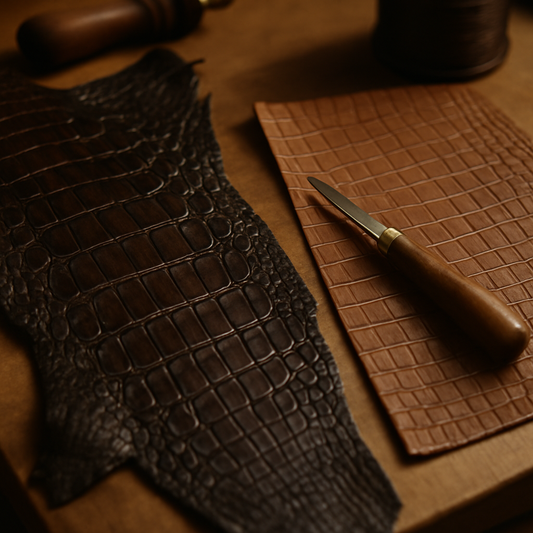
Within crocodile leather, species still changes the result. Scale size, shape, spacing, and the overall rhythm of the pattern can vary substantially by species. Some crocodile belly skins show smaller, tighter scales, while others have a more open pattern. Crocodile belly leather also often shows small sensory pores, sometimes called ISOs, within the scales. These pores are one identification feature, not standalone proof of a leather’s species, origin, or legality.
At CrocodileViet, manufacturing footwear in-house makes it possible to coordinate hide placement with the shoe pattern before the upper is cut. That matters because a centered, visually balanced scale field on each vamp is more convincing than a random placement that puts large, interrupted, or mismatched scales in the most visible area.
What Separates a Strong Hide Selection From a Merely Attractive One
A crocodile hide can look striking on a full panel yet be unsuitable for a pair of dress shoes. Footwear requires usable sections large enough for the vamp and quarters, with scale character that works across both shoes. Marks, healed scars, holes, loose scales, and uneven dye absorption can limit where a section may be cut.
Leather grades commonly focus on the usable belly and flank areas rather than the hide as a whole. A higher visual grade generally means fewer visible defects in the main cutting area. Lower-graded material may still be useful for smaller components or less exposed parts of a shoe, but it may not offer the uninterrupted panel needed for a full dress-shoe vamp.
Grade names should be read cautiously. Tannery and merchant labels are not universal standards, and two suppliers may describe similar hides differently. A meaningful assessment asks where imperfections are located, how much uninterrupted belly area is available, and whether the two shoes can receive comparable scale placement. Visual grade is also separate from durability: a nearly mark-free panel may be visually valuable, while long-term wear still depends on construction, fit, and care.
Where the Price of Crocodile Leather Shoes Comes From
There is no responsible fixed price for genuine crocodile shoes for men because the material and work requirements vary widely. Rather than treating “quality” as one vague category, examine the specific sources of cost.
| Decision factor | Why it affects value | What to ask or inspect |
|---|---|---|
| Species | Species influence scale size, pattern character, supply, and the amount of suitable material available for footwear. | Ask which crocodile species is used and whether its scale pattern suits the intended shoe style. |
| Hide grade | Fewer defects in the belly and flank cutting areas can provide cleaner vamp panels. | Ask how the seller defines its grade and whether marks occur in visible shoe areas. |
| Usable area | A hide may contain limited flat belly leather large enough for matching shoe components. | Look for scale continuity across both vamps rather than judging only one photographed shoe. |
| Scale matching | Pairing comparable scale size and direction between left and right shoes requires planning and can create more cutting waste. | Check whether the visual weight of the two vamps is similar. |
| Construction | The upper, lining, sole attachment, heel work, and internal structure affect wearability and future repair options. | Ask how the sole is attached and what repair work may be practical later. |
| Handwork | Pattern alignment, closing work, edge finishing, and shoe finishing can require skilled manual control. | Inspect the scale placement, upper symmetry, edges, and the transition between leather and sole. |
Handmade crocodile shoes are not automatically better simply because “handmade” appears in a product description. The useful question is which operations are performed by hand and what result they produce. In crocodile footwear, manual pattern control has practical value where the maker needs to avoid a scar, preserve an attractive scale run, or balance the left and right vamp panels.
Construction Should Support the Leather, Not Merely Display It
Crocodile leather is valued for its scale structure and surface character, but a dress shoe must also manage flexing at the forefoot, pressure at the instep, and abrasion around the sole edge. The shoe’s shape and internal build therefore matter as much as the appearance of the upper.
Inspect whether the vamp sits smoothly over the last, whether the shoe holds its intended shape, and whether the lining and collar feel free of rough or bulky points. A very stiff upper can be uncomfortable through the flex point, while an excessively soft build may provide insufficient support. The right result depends on the model and the wearer’s foot, not on one construction label.
For a formal Oxford, the cleaner and more continuous belly-scale presentation is often the main visual priority. For a Derby, additional opening at the laces can be useful for a higher instep. Loafers remove lacing adjustments entirely, so the instep and heel hold deserve particular scrutiny. A shoe that looks refined in photographs but lifts at the heel or presses sharply across the instep is unlikely to earn frequent wear.
Fit and Sizing: Treat Measurements as Part of the Purchase
Fit is a practical part of value because crocodile leather should not be bought with the expectation that serious sizing errors will disappear through wear. The best approach is to compare foot length, forefoot width, instep volume, heel shape, and the last used for the shoe.
EU, US, and UK sizes are conversion systems rather than identical measurements. A wearer who routinely buys one numerical size may still need a different size depending on the last, toe shape, and brand. For this reason, the stated size should be checked against internal length and width where possible.
- Length: Leave appropriate room ahead of the longest toe without allowing the foot to slide forward.
- Width: Check the ball of the foot rather than relying only on overall length. A wide foot may need a roomier last or width option.
- Instep: A high instep can create pressure beneath laces or across a loafer’s throat, even where length is correct.
- Heel hold: Minor movement can occur in a new shoe, but persistent lifting changes comfort and can accelerate lining wear.
In-person try-on provides immediate information about pressure, heel hold, and walking flex. Remote measurement is equally important for buyers who cannot visit: measure both feet while standing, record the longer foot, note width at the ball, and mention high insteps, wide feet, orthotic use, or prior fit issues. Sending these measurements before ordering gives the maker a more useful basis than a size number alone.
Styling Luxury Crocodile Dress Shoes Without Overworking the Outfit
Crocodile belly leather has enough pattern on its own, so the surrounding outfit can be selected to give the shoes visual space.
Business and formal office wear
- Black crocodile dress shoes can work with charcoal, black, or deep navy suits where the shoe texture is visible but restrained.
- Brown tones can suit navy, mid-grey, tobacco, and brown tailoring, particularly with a belt close in color and finish.
- A plain shirt, restrained tie pattern, and smooth-woven suit fabric generally keep attention on the scale pattern rather than creating competing textures.
Weddings and evening events
- A black formal shoe can sit well beneath a dark suit for a reception, dinner, or formal ceremony.
- Deep brown or burgundy-toned crocodile shoes can add texture to a tailored navy or earth-toned outfit where the dress code permits color.
- For tuxedo-level formality, assess the event’s expectations first; a highly textured shoe may read differently from traditional smooth formal footwear.
Smart-casual occasions
- A crocodile loafer or less formal lace-up can be worn with tailored trousers and a fine-gauge knit.
- Dark denim with a structured jacket can accommodate a more visible scale pattern, provided the trouser hem does not bunch heavily over the shoe.
- Hornback styles, if chosen, generally suit more casual outfits than conservative business suiting because of their raised texture.
Care That Helps Crocodile Shoes Stay Wearable
After wear, remove loose dust with a dry, soft cloth and allow the shoes to air away from direct heat. A dry cloth is the default for routine cleaning because unnecessary moisture can affect the finish and the leather’s surface. Use a slightly damp cloth only as a last resort for localized dirt, then let the shoes dry gradually at room temperature.
Avoid soaking crocodile leather, leaving it in a hot car, placing it beside a heater, or drying it with direct artificial heat. These conditions can contribute to drying, finish stress, and loss of flexibility. If the shoes become substantially wet, blot rather than rub, maintain their shape with suitable shoe trees or paper, and let them dry slowly.
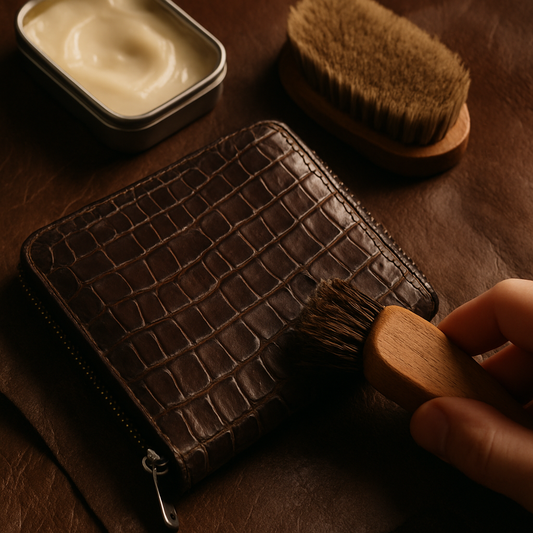
Conditioning should be based on the leather’s condition, climate, frequency of wear, and the product’s finish rather than a fixed calendar schedule. Use products intended for exotic leather cautiously and test any treatment on a discreet area where possible. Heavy wax buildup, aggressive brushing, and household oils can alter the surface appearance.
Rotation also matters. Allowing shoes to rest between wears helps moisture from the foot dissipate and reduces repeated stress on the same flex points. With sound construction, appropriate fit, rotation, and sensible care, crocodile leather shoes can remain wearable for many years.
Documentation and Responsible Buying
Crocodilian leather trade is regulated, and legal commerce depends on the species and source documentation required for the relevant transaction and destination. CITES controls are relevant to international trade in many crocodilian materials, including skins from farmed, ranched, or captive-origin sources. Such documentation addresses trade compliance; it should not be treated as a standalone test of authenticity or as a substitute for examining the leather and seller information.
For a purchase involving cross-border shipping, ask what documentation is relevant to your destination before placing an order. Requirements can differ by country, species, shipment type, and current regulations.
Questions Buyers Commonly Ask
Are visible sensory pores a reliable way to identify crocodile leather?
Visible pores can be consistent with crocodile belly leather, but one visual feature alone does not establish species, authenticity, source, or legal status. Material assessment is stronger when it combines scale structure, leather examination, and appropriate seller documentation.
Does a higher hide grade mean the shoe will wear longer?
A higher visual grade commonly indicates a cleaner usable cutting area with fewer obvious defects. Wear life also depends on the shoe’s construction, fit, sole condition, how often it is worn, and how it is cared for.
Can crocodile dress shoes be worn regularly?
They can be part of a regular wardrobe if they fit correctly and are rotated rather than subjected to continuous wear. Their suitability for daily use also depends on weather, walking conditions, and the shoe’s construction.
What should I provide for a remote sizing consultation?
Provide standing measurements for both feet, including length and ball width, plus your usual EU, US, or UK size, preferred fit, instep height, and any need for a wide fit. Photographs of your feet beside a measuring guide can also clarify proportions.
Choose With the Visible Details in Mind
A worthwhile crocodile dress shoe combines a suitable belly cut, balanced scale placement, a hide grade appropriate to the visible panels, and a construction that supports your actual walking needs. The material earns its place through these tangible choices—not through a label alone.
View CrocodileViet’s crocodile leather shoes to compare available styles and scale presentations. For sizing or material questions, contact CrocodileViet through WhatsApp with your foot measurements and intended use.