
Chanel’s Chocolate-Brown Alligator Pumps Put Dark Exotic Leather in the Spotlight

Share
Chanel’s Chocolate-Brown Alligator Pumps Put Dark Exotic Leather in Focus
Chanel’s Spring 2026 coverage describes chocolate-brown alligator pumps with white leather stripes across the upper.
That runway image places chocolate brown alligator shoes within a wider conversation about dark exotic footwear: how the color changes the reading of a textured hide, how alligator can be distinguished from crocodile, and what buyers should inspect before ordering a pair. The coverage supports the color-and-material description, but it does not establish that every dark brown exotic shoe is alligator or that the Chanel pumps are currently available.
Why chocolate brown changes the look of alligator shoes
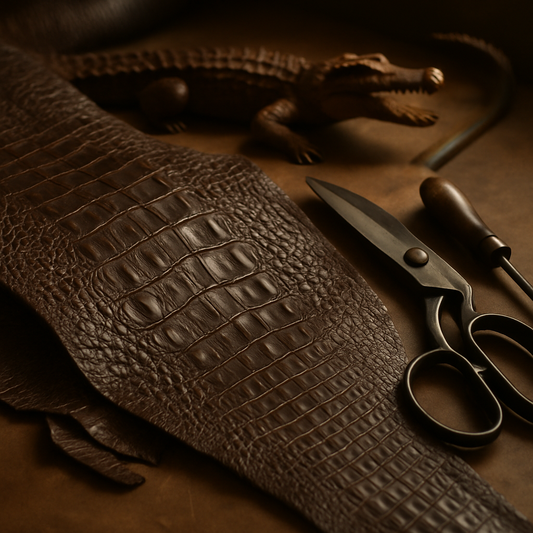
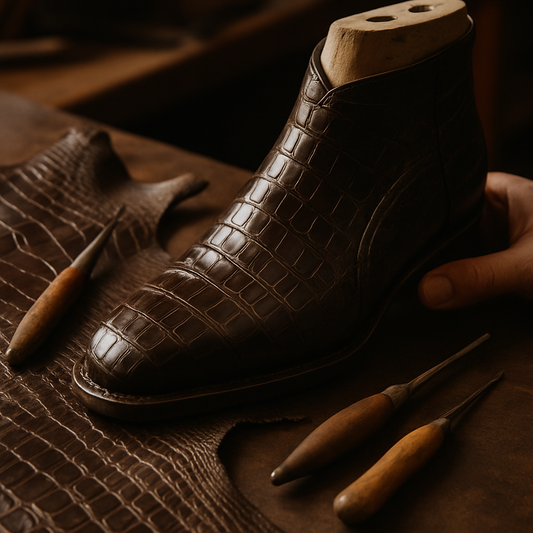
Chocolate brown sits between black and lighter tan shades. It keeps the scale pattern visible while appearing less stark than black, especially under indoor lighting. On a dress pump, the color can make the upper read as polished and formal without relying on a high-contrast finish.
The white leather stripes reported across the Chanel upper create a clear visual break against the brown base. That contrast makes the scale layout easier to notice, whereas a very dark, uninterrupted upper can make individual scales less apparent from a distance. For buyers considering dark brown exotic leather shoes, the important point is that color and pattern work together: a brown dye does not erase the structure of the hide.
What alligator leather contributes to the design
Alligator belly leather is commonly valued for its comparatively regular, balanced scale pattern. The transition from larger belly scales to smaller flank scales tends to happen more quickly than it does on crocodile leather. Crocodile often shows a more gradual change in scale size and may display tiny sensory pores, known as integumentary sensory organs or ISOs, on the scales.
An elongated, webbed umbilical scar can also identify alligator skin, while crocodile leather lacks that feature. However, a finished shoe may not include the relevant area, and the absence of a visible scar does not establish the species. One visual detail should not be treated as proof of authenticity.
“Belly” and “hornback” describe different hide sections rather than different animals. Belly refers to the smoother, more evenly scaled area commonly used for luxury goods. Hornback comes from the raised, ridged back section. A chocolate-brown alligator pump made from belly leather therefore has a different surface character from a hornback shoe, even though both may be made from alligator.
How to assess the leather beyond the color
Color is the first visible feature, not the complete assessment. Look at the scale layout across the vamp, toe, quarters, and heel area. Balanced spacing can create a composed appearance, while abrupt changes, visible scars, scratches, shading, or scale deformities may affect the grade or price.
Published grading systems are not universal. One commonly cited framework uses grades 1 through 5, with Grade 1 representing the cleanest belly area. In that framework, the assessment concerns the belly and excludes the back and tail, so a Grade 1 label does not mean every part of the hide is free from marks. Other suppliers and tanneries use different labels, subdivisions, or defect criteria.
For that reason, ask what a seller’s grade means, which section was assessed, and whether the description applies to the entire finished upper or only the original belly panel. Visual grade also concerns surface presentation and defects; it is not the same thing as durability.
Price factors for chocolate brown alligator shoes
A reliable price assessment should include more than the word “quality.” Relevant factors include:
- Usable belly width: Alligator hides are commonly sized by belly width in centimeters. A wider usable area can affect how efficiently a pattern is cut.
- Defect placement: Scars, scratches, shading, and scale deformities matter according to where they fall in the panels used for the shoe.
- Hide section: Belly leather and hornback leather have different appearances and cutting requirements.
- Pattern layout: A design that needs closely matched scales across both shoes may require more selective cutting than a less symmetrical layout.
- Shoe construction: The last, upper design, lining, sole, heel, finishing, and labor all influence the final price.
- Supplier grading: Since grading labels vary, a numerical grade has meaning only when the seller explains its system.
Trade documentation can also matter. CITES treats shoes as manufactured crocodilian leather products, while applicable controls depend on the species and circumstances. For American alligator skins exported from the United States, the U.S. Fish and Wildlife Service requires a legal-acquisition finding, and harvest tags support traceability. Those rules concern regulated skin trade and should not be simplified into a claim that a finished pair must carry the original tag.
Fit and sizing for alligator pumps
Leather type does not determine shoe size. Measure foot length and width, then compare those measurements with the maker’s last and size chart. Check the conversion across EU, US, and UK sizing because the same numerical size does not represent identical dimensions in every system.
Width deserves particular attention in pointed pumps. A narrow toe shape can reduce usable space even when the nominal size is correct. Buyers with a wide forefoot should ask for the actual ball-of-foot width and toe-box shape rather than relying on a standard width label. A high instep can also create pressure across the vamp, especially when the upper has limited stretch.
For remote orders, send measurements from both feet, including length, ball circumference, instep circumference, and heel width. Photographing the foot beside a ruler can add context, but measured dimensions and the maker’s fit advice are more useful than choosing a size based on a familiar brand alone.
How to style chocolate-brown alligator pumps
Chocolate brown works naturally with cream, ivory, camel, navy, charcoal, and medium denim. For an office outfit, pair the pumps with a charcoal trouser suit and a brown leather belt in a close shade. With a cream dress, the shoes can ground the outfit without the hard contrast created by black footwear.
The white stripe detail reported on the Chanel pumps calls for restraint elsewhere. A plain ivory blouse, dark brown bag, or small white accessory can echo the upper without competing with it. For evening wear, chocolate brown pairs well with deep green, burgundy, or black, provided the surrounding pieces do not introduce several unrelated patterns.
Do not assume that one color works equally well with every finish. A glossy surface reflects more light and makes scale edges more prominent; a softer finish gives a quieter reading. The right pairing depends on the shoe’s actual sheen, pattern layout, and design details.
Care for dark alligator footwear
Start with a dry, soft cloth after wear to remove surface dust. If the shoes become damp, let them dry at room temperature away from direct heat, radiators, and strong sunlight. Keep their shape with an appropriate shoe tree or clean stuffing, and store them so the uppers are not pressed against rough or dyed materials.
There is no useful fixed care schedule for every pair. Frequency depends on wear, humidity, perspiration, and the finish applied to the leather. Use only a conditioner or product specifically confirmed as suitable for alligator, and test it on a concealed area first. Avoid household creams, alcohol-based cleaners, and aggressive brushing, which can alter the color or surface finish.
If chocolate-brown dye begins to look uneven, or if the upper develops creasing, cracking, or a sticky surface, professional assessment is safer than adding more product. A workshop can first identify whether the issue concerns dirt, finish, moisture, or the leather itself.
Related reading
For a broader look at construction and buying considerations, read What Makes Luxury Alligator Dress Shoes Worth Buying? Quality, Craft and Longevity.
Frequently Asked Questions
Are Chanel’s chocolate-brown pumps proof that all dark brown exotic shoes are alligator?
No. The reported Chanel Spring 2026 pumps are described as chocolate-brown alligator with white leather stripes, but color alone cannot identify species. Alligator and crocodile differ in scale transitions and surface features, and documentation is more reliable than one visual trait.
How can alligator belly leather differ from crocodile leather?
Alligator belly leather tends to show a more regular, balanced scale pattern and a quicker transition from large belly scales to smaller flank scales. Crocodile usually changes scale size more gradually and often shows visible sensory pores, or ISOs, on the scales.
Does Grade 1 mean the entire alligator shoe is flawless?
Not necessarily. In one published 1–5 framework, Grade 1 describes the cleanest assessed belly area, while the back and tail are excluded. Grading labels and inspection methods vary by supplier or tannery, so the assessment should be defined before comparing prices.
What should I measure when ordering chocolate brown alligator pumps remotely?
Measure both feet for length, ball-of-foot width or circumference, instep circumference, and heel width. Compare those figures with the maker’s EU, US, and UK size information, and ask about the toe-box shape and last if you need a wide fit or have a high instep.
View chocolate-brown alligator footwear
See CrocodileViet’s available designs in the alligator and crocodile shoe collection. For measurements, leather details, or ordering questions, contact CrocodileViet through WhatsApp.