
Chanel’s Brown Alligator Pumps Put Exotic Leather Shoes in the Spring 2026 Conversation

Share
Chanel’s Brown Alligator Pumps Bring Exotic Leather Shoes Into the Spring 2026 Conversation
Chanel’s Spring 2026 accessories coverage features chocolate-brown alligator pumps with white leather stripes across the upper.
That image places alligator leather pumps in a wider discussion about how exotic hides are being used in dress footwear. It does not mean every shoe in the collection uses alligator, but it does show how a distinctive hide can become part of a clearly defined color and styling direction.
What the Chanel example shows about brown alligator shoes
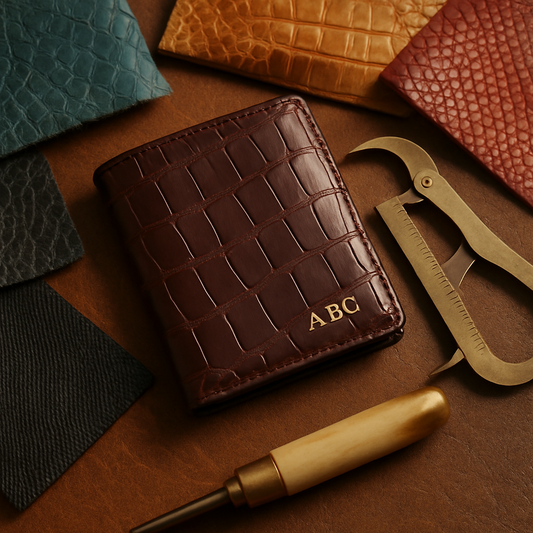
The reported design combines a dark brown alligator upper with contrasting white stripes. Brown is particularly useful for alligator footwear because it shows scale transitions without the sharp contrast created by black and white, while still offering more visual character than a flat leather surface.
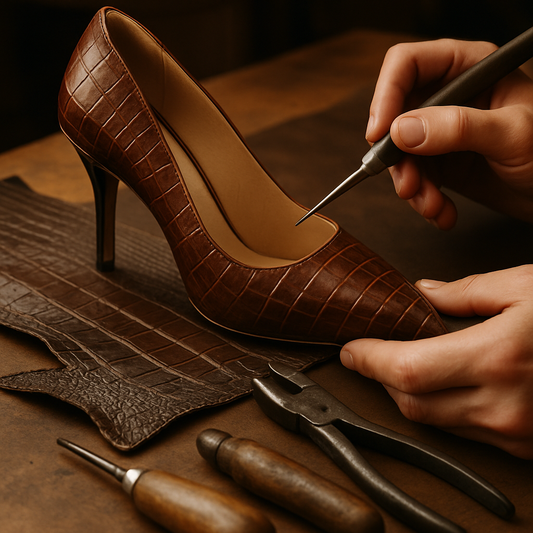
For a workshop making alligator leather pumps, the design raises a practical question: how should the hide be cut so the scale pattern supports the shoe rather than competing with it? The answer depends on the shoe’s shape, the visible panels, and the section of hide selected for each component.
Alligator belly leather generally presents a regular, balanced scale pattern, although individual hides can show variation. The scales should not be described as perfectly uniform. Crocodile leather can vary more noticeably by species and may retain small sensory pores, often called integumentary sense organs or ISOs, after tanning. These details can help with examination, but scale appearance alone does not establish the species.
Alligator belly and hornback are different presentations
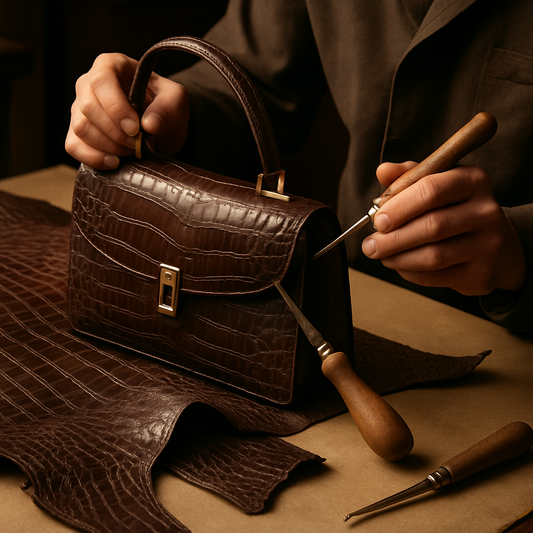
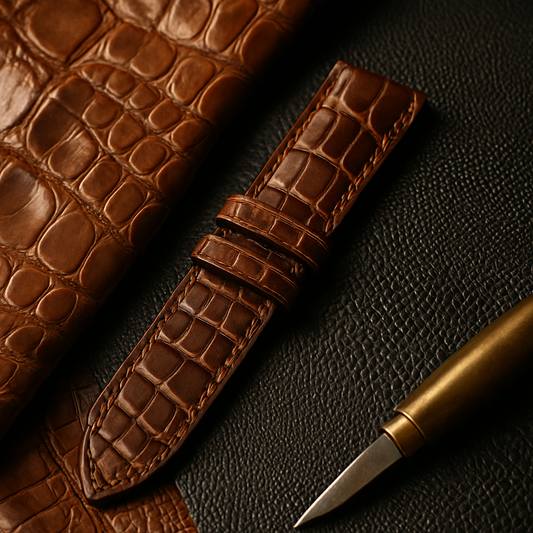
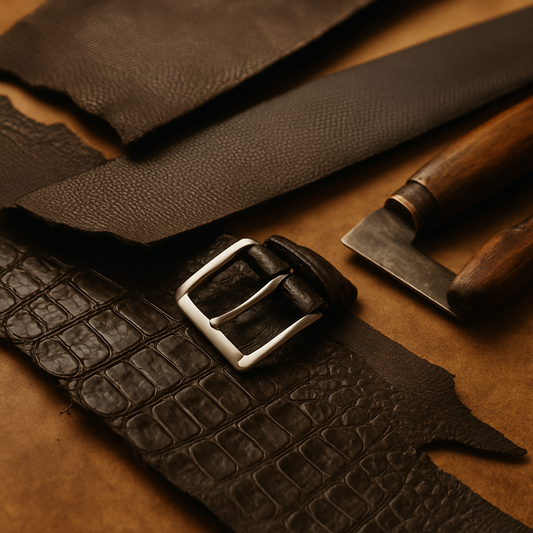
“Belly” and “hornback” describe hide cuts or visual presentations, not separate animals. Belly leather comes from the ventral area and is commonly used where a flatter surface and more regular pattern suit dress shoes. Hornback emphasizes the raised dorsal scutes along the back, producing a more pronounced ridge-like appearance.
That distinction matters when comparing luxury alligator footwear with other exotic leather pumps. A buyer asking for “alligator” should also ask which hide section is being used. A belly-cut pump and a hornback-style shoe can have very different textures, silhouettes, and styling effects even when the species is the same.
An alligator belly may also show an umbilical scar, while crocodile leather generally lacks that feature. Neither point should be used in isolation as proof of authenticity. Species identification can require documentation, supplier information, and examination by someone familiar with crocodilian leather.
Hide grade does not equal finished-shoe durability
Hide grades commonly relate to the location and extent of visible defects. One published grading convention places hides without visible defects at Grade 1 and assigns progressively lower grades as defects appear across different hide quadrants. However, grading labels vary by supplier and tannery, so the number alone has no universal meaning.
A lower hide grade does not automatically produce poor brown alligator shoes. A maker may position pattern pieces to avoid visible marks or place less consistent sections in areas that are not prominent. Conversely, a high grade does not remove the need to examine construction, lining, sole attachment, heel stability, and finishing.
At CrocodileViet, we assess the usable hide area against the shoe pattern because this shows how much of the leather will actually appear on the finished pump. It also helps prevent a buyer from judging the whole shoe by a grade label without understanding where visible marks may sit.
What affects the price of alligator leather pumps?
The price of exotic leather pumps depends on several concrete factors:
- Usable hide area: Larger, clearer sections can provide more consistent uppers with fewer joins.
- Scale placement: A pattern that follows the vamp and quarter cleanly may require more selective cutting and create more material waste.
- Hide section: Belly, flank, and hornback presentations differ in texture and cutting requirements.
- Construction: The upper material is only one part of the cost; the last, lining, insole, heel, outsole, and finishing also affect the result.
- Color treatment: Dark brown, contrast effects, and surface finishing can require different dyeing or finishing work.
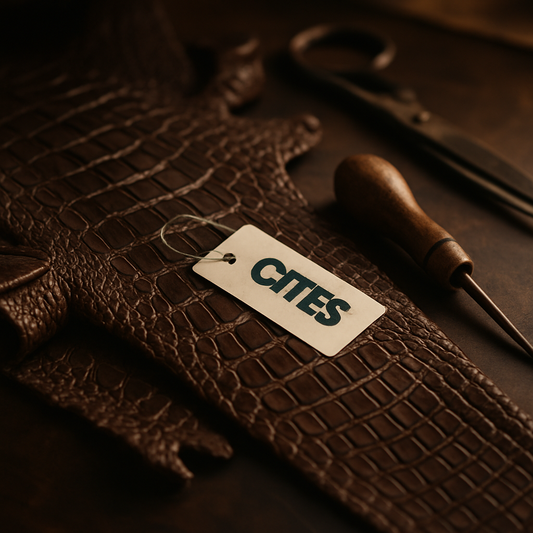
- Documentation and sourcing: Listed crocodilian species and products may be subject to CITES controls, with requirements depending on species, source, and destination.
For that reason, “alligator” by itself is not enough to compare two prices. Ask what hide section is used, how the hide is graded, which components are included, and whether the seller can identify the species and applicable documentation.
Fit and sizing for exotic leather pumps
Start with foot length and width rather than relying only on a familiar size label. EU, US, and UK numbers are not directly interchangeable across every maker, and a pointed pump can feel shorter than a round-toe style at the same nominal size.
Width is equally important. A wide forefoot may need a wider last, while a high instep can create pressure across the vamp even if the toe length is correct. Alligator leather may soften with use, but it should not be selected on the assumption that a tight shoe will expand into a reliable fit.
For remote measurements, send both foot lengths, the widest forefoot measurement, the instep circumference, and a tracing if requested. Measure at the end of the day, when feet are often slightly larger. Also specify whether you normally wear thin hosiery, thicker socks, or no socks with the pumps.
For more background on construction and buying criteria, see What Makes Luxury Alligator Dress Shoes Worth Buying? Quality, Craft and Longevity.
Care for brown alligator shoes
Use a dry, soft cloth as the default first step after wear. This removes surface dust without adding moisture or product unnecessarily. Store the pumps away from direct heat, strong sunlight, and damp areas, and use supports that help the shoe hold its shape without stretching the upper aggressively.
Do not apply ordinary smooth-leather polish automatically. Alligator finishes can react differently to creams, waxes, and oils, especially when the product settles between scales. If the surface becomes marked, ask the maker or a specialist what treatment suits that particular finish.
There is no useful fixed cleaning schedule for every owner. Frequency should reflect wear, climate, perspiration, and exposure to rain or dust. If the shoes become wet, blot them gently and let them dry at room temperature rather than placing them near a heater.
How to style brown alligator shoes
Chocolate-brown pumps can work with cream tailoring, navy trousers, charcoal suiting, denim in a clean dark wash, or a brown-and-white outfit that echoes the contrast seen in the Chanel example. White stripes or other light details are easiest to integrate when another accessory, shirt, or trim repeats that lighter color.
For a restrained outfit, keep the clothing pattern quiet and let the scale texture provide the surface interest. For a more fashion-led combination, use the pumps with a structured garment in a related brown family, but vary the textures so the outfit does not look like a single matching set.
If you are comparing color options, Navy Alligator Skin Shoes: Styling, Care and Buying Tips covers a cooler alternative and its practical care considerations.
Frequently Asked Questions
Are Chanel’s Spring 2026 shoes all made from alligator?
No conclusion that every shoe in the collection uses alligator is supported by the reported coverage. The specific example is a chocolate-brown alligator pump with white leather stripes across the upper.
Can scale shape prove that a shoe is made from alligator?
No. Alligator belly leather often has a regular, balanced pattern, while crocodile appearance varies by species and may include visible sensory pores. An umbilical scar may appear on alligator belly leather, but species identification should also involve documentation and qualified examination.
Does a lower hide grade mean the finished pumps will be weak?
Not necessarily. Grades generally describe the location and extent of visible hide defects, and grading systems vary by supplier. Cutting can avoid some defects, while the shoe’s construction and materials also affect its performance.
What should I provide for a remote fitting?
Provide both foot lengths, the widest forefoot measurement, instep circumference, usual EU, US, or UK size, and information about hosiery. A foot tracing can also help the maker assess length and width.
View alligator leather pumps
Browse CrocodileViet’s shoe collection at alligator leather pumps and crocodile leather shoes. For sizing, hide details, or a remote measurement review, contact CrocodileViet through WhatsApp.