
Alligator Watch Strap: Style Guide for 2026–2027

Share
Alligator Watch Strap: Style Guide for 2026–2027
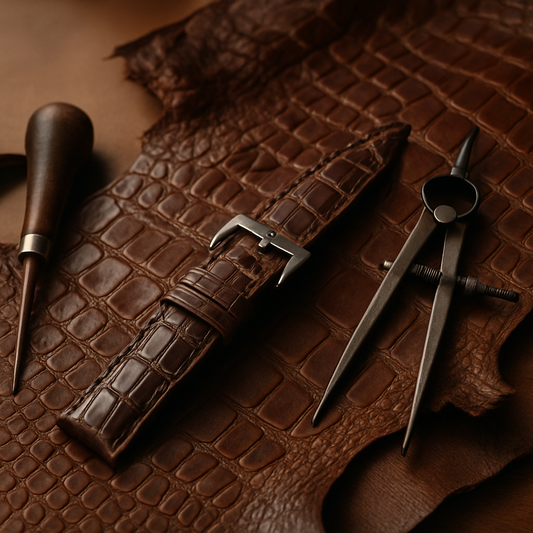
An alligator watch strap is made from alligator hide, while a crocodile watch band comes from a different animal and should not be treated as the same material.
What this style guide covers
This guide focuses on choosing, wearing, sizing, pricing, and caring for an alligator watch strap during 2026–2027. It covers the visible hide section, scale layout, color coordination, strap dimensions, custom measurements, and the documentation issues that can accompany traded crocodilian skins.
Start with the hide section
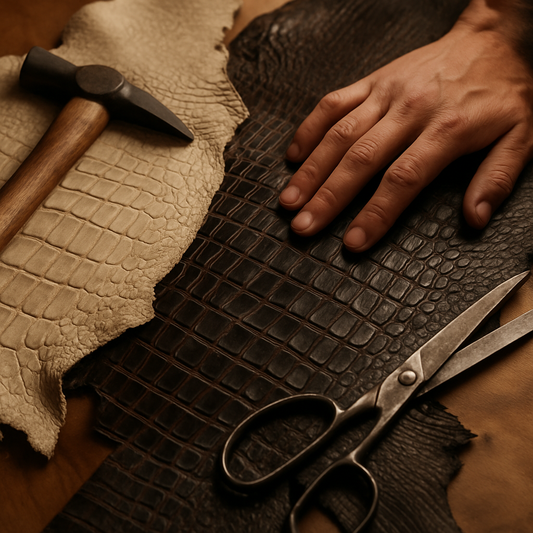
“Belly,” “flank” or “side,” and “tail” describe where a piece was cut from the hide. They are not universal grading labels. Belly leather is commonly selected for watch straps because its scales usually form a comparatively regular, balanced layout with a smooth surface. Some pattern variation is still normal.
Flank and tail sections generally show more variation in scale shape and spacing. That can suit a casual strap or a design where a less regular surface is intentional. The right choice depends on the watch case, strap width, and the visual effect you want rather than on the section name alone.
In our workshop, we assess the actual piece for scale arrangement, visible marks, and color consistency before matching it to a strap design. This matters because a supplier’s “Grade I,” “Grade II,” or “Grade III” label does not follow one global alligator-leather standard. A visual grade also describes appearance, not durability by itself.
Alligator and crocodile are different materials
The American alligator (Alligator mississippiensis) is a different animal from crocodile species such as the saltwater crocodile (Crocodylus porosus). A crocodile watch band can have a different surface character depending on the species. Crocodile hides often show visible sensory pores, commonly called ISOs, and their scale pattern varies more by species.
Alligator belly leather often has a visible umbilical scar, while crocodile generally lacks this feature. These details can help with visual identification, but one surface trait should not be treated as proof of authenticity. Caiman is also a separate crocodilian leather; its belly scales may absorb dye in a blotchy way, so it should not be described simply as alligator or crocodile.
Internationally traded American alligator and several other crocodilian species are subject to CITES controls. Skins used in international trade may require traceability tags, permits, or supporting documents depending on the species, origin, and shipment circumstances. Personal-use allowances are not blanket permission for commercial shipments, and requirements can differ between countries.
Style directions for 2026–2027
A black alligator leather watch band works naturally with black, charcoal, navy, and formal tailoring. Dark brown can coordinate with brown shoes, belts, warm-metal cases, and lighter business suits. Tan or lighter shades bring more contrast to a casual watch, especially with denim, cotton trousers, or an unstructured jacket.
Match the strap’s visual weight to the watch. A broad, strongly patterned belly cut can suit a larger case, while a restrained scale layout often sits more comfortably on a slim dress watch. Contrast stitching can make the strap feel more relaxed; closely matched stitching keeps the case and dial as the main focus.
For business wear, a dark strap with a restrained finish usually works across more clothing combinations. For weekends, a lighter color, flank section, or contrast edge can introduce texture without requiring a change of watch. These are styling guidelines rather than fixed rules: the case finish, dial color, wardrobe, and personal preference all affect the result.
How to check fit and measurements
| Measurement | What to check | Why it matters |
|---|---|---|
| Lug width | Measure the distance between the watch lugs in millimeters. | The strap must match the case opening so it sits securely without forcing the leather. |
| Buckle width | Check the width at the buckle end as well as the lug end. | Many straps taper, and the buckle must match the strap’s narrower end. |
| Length | Measure your wrist circumference and note your preferred hole position. | Two-piece straps have a long side and a short side; the correct split affects comfort and appearance. |
| Thickness | Compare the strap thickness with the watch case and spring-bar clearance. | A thick strap may not pass cleanly between tight lugs or sit well against a slim case. |
Watch straps do not use EU, US, or UK shoe sizing. “Wide fit” and “instep” are footwear measurements, so they do not describe wrist-strap fit. For a wider wrist, length is the relevant adjustment; for a smaller wrist, the hole range and short-side length deserve closer attention.
If you are ordering remotely, send the lug width, buckle width, wrist circumference, current strap length, and photos of the watch from the side and front. A photo of the current strap laid flat with a ruler can also help. For a custom alligator watch strap, include whether you wear the watch above or below the wrist bone and which hole position feels most comfortable.
What affects the price?
The cost of an alligator watch strap depends on several concrete factors:
- Hide section: Belly cuts with a regular, balanced scale layout may require more selective matching than flank or tail sections.
- Strap dimensions: Greater length, wider lug measurements, and additional thickness use more material.
- Pattern and color: Strong color consistency and a requested scale arrangement can narrow the usable part of a hide.
- Construction choices: Lining material, edge treatment, padding, stitching, and buckle selection affect the finished specification.
- Customization: Unusual dimensions, a special taper, monogram placement, or a non-standard buckle may require additional workshop planning.
- Compliance and shipping: International orders may involve documentation or shipment conditions linked to the species and destination.
Rather than using a grading label as a shortcut, compare the scale layout, surface marks, color consistency, dimensions, and construction details of the actual strap.
Care for an alligator watch strap
Wipe the strap with a clean, dry cloth after wearing it. This removes surface moisture and body oils without adding unnecessary product. Keep the leather away from prolonged water exposure, perspiration buildup, perfume, solvent, and direct heat.
Let the strap dry at room temperature if it becomes damp. Do not use a hair dryer or place it against a radiator. There is no useful fixed care schedule for every wearer: a strap worn daily in a humid climate needs more frequent wiping than one used occasionally in dry conditions.
Store the watch with the strap relaxed rather than sharply folded. If the lining becomes persistently damp, develops an odor, or shows surface changes, stop applying household creams and ask the workshop or a leather specialist about suitable treatment for that specific lining.
Frequently Asked Questions
Is an alligator watch strap the same as a crocodile watch band?
No. Alligator and crocodile are different animals and different leather sources. Crocodile may show more species-related pattern variation and visible sensory pores, while alligator belly leather often has a regular, balanced scale arrangement and may show an umbilical scar.
Does a higher alligator leather grade guarantee a stronger strap?
No single global grading system applies to all alligator leather. Supplier or tannery labels mainly require context, and visual grade is not the same as durability. Assess the actual hide, construction, lining, stitching, and intended use.
How do I measure for a custom alligator watch strap?
Measure the lug width, buckle width, wrist circumference, current strap length, and preferred hole position. Also provide the watch case photos and note whether you prefer a shorter or longer tail. These details are more useful than EU, US, or UK shoe sizing.
Can I ship an alligator watch strap internationally?
Possibly, but requirements depend on the species, origin, destination, and trade circumstances. CITES-related tags, permits, or documents may apply, and personal-use rules do not automatically cover commercial shipments.
Choose an in-house alligator watch strap
View the CrocodileViet watch strap collection to compare available designs and specifications. For measurements, customization, or documentation questions, contact CrocodileViet through WhatsApp.