
7 Things to Check Before You Buy Alligator Leather Boots Online

Share
7 Checks to Make Before Buying Alligator Leather Boots Online
The belly cut is usually the most sought-after part of an alligator hide for boots because its scales form a smoother, more regular pattern than the flanks and back.
Buying alligator leather boots online requires more than enlarging a product photograph. You need to identify the exact leather, inspect the scale layout, understand the grade, check the boot measurements, and separate material quality from construction quality. The seven checks below are designed for that process.
1. Confirm that the boots use genuine alligator leather
Start by asking the seller to identify the exact species and cut. In industry language, “alligator leather” can sometimes be used broadly for several crocodilian leathers, so a careful listing should state whether the upper is made from alligator rather than using a general reptile-leather label.
Also check whether the listing describes alligator-grained leather. That term commonly refers to a non-reptile hide embossed with an alligator-like pattern. It should not be treated as the same material as a genuine alligator skin.
Trade documentation or an applicable CITES-related tag can help identify legally sourced crocodilian skin. It is evidence connected with regulated trade, not a standalone guarantee that every claim in a product listing is accurate. Ask to see the relevant documentation when the seller says it is available, and compare the material description with close-up photographs of the actual boots.
Visual clues can support your assessment, but one feature should not be treated as proof by itself. Alligator belly leather commonly has a balanced scale arrangement and may show an umbilical scar. Crocodile leather tends to vary more by species and often displays visible sensory pores, known in the trade as ISOs. These details can help with identification, but seller documentation and a clear species declaration matter as well.
2. Inspect the cut, scale layout, and placement on the boot
For most dress and western boot designs, the key question is whether the visible vamp and shaft use belly cut, flank, back, or a combination. Belly cut refers to the smoother underside of the hide. Hornback refers to the back cut, where raised scutes or ridges run along the spine. These are cut-and-pattern descriptions, not quality grades.
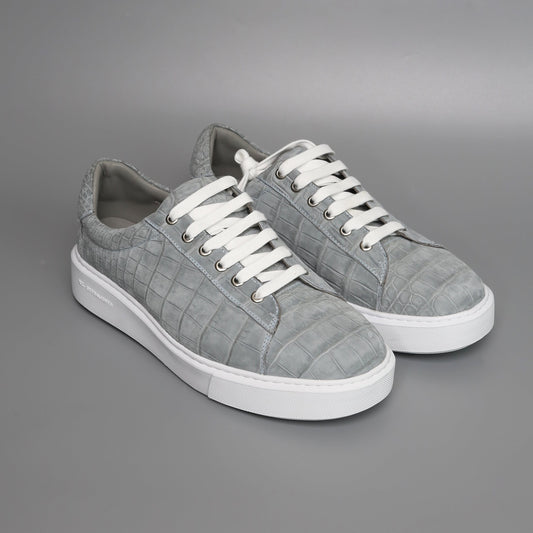
Alligator belly scales are comparatively regular, but they are not perfectly uniform. On a well-planned pair, the scale direction should follow the boot’s shape rather than turning abruptly across the vamp. The transition from larger belly scales toward smaller flank scales can also be visible, especially on taller shafts. That transition is not automatically a defect; the question is whether it looks intentional and balanced on both boots.
At CrocodileViet, we favor belly sections for designs that need a clean, balanced vamp because the flatter scale structure gives better pattern control across the part most visible during wear. We inspect how the scales sit near the toe, vamp, and quarter rather than treating “belly” as a complete description of the finished boot.
Request photographs of both boots together, the toe from above, the vamp from several angles, and the outer and inner shafts. A single front-facing image can hide mismatched scale direction, abrupt transitions, or a noticeable difference between the left and right boot.
3. Understand the hide grade without confusing it with durability
Alligator grading systems commonly assess the belly or midsection of the hide, not every part of the animal. A widely used convention places hides with fewer visible defects in the highest grade and lowers the grade as defect clusters appear across more quadrants of the belly. Defects may include scars, scratches, shading, or irregular scaling.
Grading labels vary by supplier and tannery, so “Grade 1” should not be treated as a universal standard. Ask the seller which grading system is being used and what part of the hide it covers. A high visual grade may mean a cleaner surface, but it does not by itself tell you how durable the sole, heel, lining, welt, stitching, or internal structure will be.
For online comparison, ask these specific questions:
- Does the stated grade apply to the belly only or to the finished boot upper?
- Are natural scars or scale variations shown in the photographs?
- Are both boots cut from the same hide or from hides selected for visual similarity?
- Which areas contain the most visible defects?
- Is the grading description supplied by the tannery, the workshop, or the retailer?
A small natural mark does not automatically make a boot unsuitable. The practical issue is whether the mark is placed on a highly visible area, affects the leather surface, or has been concealed in a way that differs between the two boots.
4. Check the construction, not only the leather surface
The upper is only one part of an alligator boot. Ask for details about the sole construction, heel attachment, lining, toe shape, shaft structure, and stitching. These components affect comfort, repairability, and how the boot holds its shape.
For handmade alligator boots, clarify what “handmade” describes. It may refer to hand-cutting, hand-lasting, hand-welting, hand-stitching, or simply workshop assembly. The phrase has more value when the seller explains the actual construction rather than using it as a general label.
Look for close-up photographs of the welt or sole edge, the stitching around the vamp, the heel block, and the inside of the shaft. Uneven stitching can be a visual issue, while loose threads, gaps at the sole edge, or poorly aligned heel components may point to a construction concern. Ask whether the sole can be replaced or repaired and whether the workshop supports future service.
At CrocodileViet, our material decisions are tied to the boot pattern: belly sections are useful where scale flatness and visual alignment matter, while the construction still has to support the upper around the toe, instep, and ankle. A clean hide cannot compensate for an unsuitable last or weak sole assembly.
5. Compare the price using concrete cost factors
Alligator boot prices can differ substantially because the cost is not determined by leather species alone. Before comparing two listings, separate the following factors:
- Species: Confirm that both products use genuine alligator leather rather than comparing alligator with another crocodilian or embossed cowhide.
- Hide grade: A cleaner belly area generally reduces visible marks, but the supplier’s grading definition must be checked.
- Usable area: Tall shafts and large boot sizes require more suitable hide, and the usable section may be smaller after natural defects are excluded.
- Scale matching: Matching the left and right boot, aligning the vamp, and controlling transitions can increase cutting time and material use.
- Construction: Welted or replaceable-sole designs may involve different labor and component costs than simpler sole assemblies.
- Handwork: Cutting, pairing, shaping, stitching, finishing, and inspection each influence the final price when performed as separate workshop operations.
- Customization: Changes to toe shape, shaft height, width, lining, or hardware can require a different pattern and additional fitting work.
A low price is not automatic evidence of poor leather, and a high price is not automatic evidence of a better boot. Ask what the quoted price includes, whether it covers one pair made to listed measurements, and whether duties, delivery, alterations, or after-sales repairs are separate.
6. Verify the fit with measurements, including width and instep
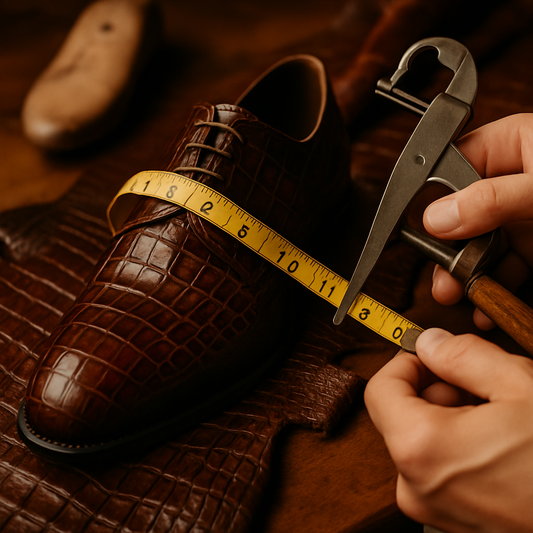
Online boot fitting should use measurements as a primary method, not as a backup for trying the boots in person. In a shop, you can assess length, heel movement, pressure across the instep, and the feel of the toe box. Online, those same checks need to be translated into measurements and clear questions.
Ask the seller for the recommended size in the sizing system used by the workshop, then compare it with your foot measurements rather than relying only on a familiar label. EU, US, and UK sizes can differ between brands and lasts. Record both feet because one may be longer or wider than the other.
- Length: Measure from the back of the heel to the longest toe while standing.
- Width: Measure across the widest part of the forefoot, especially if you need a wide fit.
- Instep: Measure around the highest part of the foot; this is important for boots that feel restrictive over the top of the foot.
- Ball circumference: Provide this when the workshop requests a more detailed fitting profile.
- Ankle and shaft: Measure these when buying tall boots or a close-fitting shaft.
Send measurements from both feet and state the socks you expect to wear. Include photographs of your measuring method if the workshop requests them. A seller who asks about width, instep, foot asymmetry, and intended socks is collecting information that a size number cannot provide.
For an in-person fitting, check that your toes can move, the instep is secure without painful pressure, and the heel movement is within a comfortable range. For a remote fitting, ask for the last measurements, insole length, shaft circumference, and width information where available. Do not assume that a boot marked “wide” will suit every wide foot; width at the ball and room over the instep are separate measurements.
7. Plan care and styling before you place the order
Basic care for alligator leather boots
After wear, remove surface dust with a dry, soft cloth. Use a slightly damp cloth only as a last resort for a specific mark, and keep moisture away from prolonged soaking. If the boots become wet, let them dry naturally away from direct heat and keep their shape with suitable boot supports.
Use only a leather-care product that is specifically suitable for alligator or comparable exotic leather, and test it on a concealed area first. Product instructions vary, so a fixed conditioning schedule is less useful than checking the surface for dryness, stiffness, or loss of suppleness. Heavy application can change the appearance of the scales or leave residue in the natural texture.
Styling by setting
- Office or business clothing: Pair brown or black alligator boots with tailored trousers, a plain belt in a related tone, and a restrained shirt or jacket. Keep the rest of the outfit low in pattern so the scale layout remains the main texture.
- Smart-casual clothing: Wear dark denim or straight-leg chinos with a knit polo, overshirt, or unstructured jacket. A less formal toe shape can work well in this setting.
- Western-inspired clothing: Match the boot height and shaft shape with denim, a western shirt, or a simple leather belt. Hornback details create a stronger visual line than a smooth belly vamp, so use fewer competing textures.
- Cold-weather outfits: Combine the boots with wool trousers, a solid overcoat, or a textured knit. Keep the hem clear of the shaft so the boot pattern is not hidden or crowded.
For shoppers searching terms such as crocodile leather boots men or crocodile Chelsea boots, check the species line carefully before ordering: a crocodile listing does not establish that the boot is made from alligator leather, and a Chelsea silhouette does not describe the material.
Questions to send before ordering
- What exact species and cut are used for the upper?
- Are the photographs of the actual pair or representative images?
- Which grading system is being used, and which section of the hide was graded?
- How are the left and right boots matched for scale direction and color?
- What are the insole length, forefoot width, instep measurement, and shaft circumference?
- What documentation is supplied for regulated crocodilian leather?
- Can the sole, heel, or upper receive future repair service?
Browse CrocodileViet’s alligator and crocodile boot collection to compare available designs and materials. For species, measurements, or construction questions, contact CrocodileViet through WhatsApp before ordering.