
Handmade Alligator Shoes vs Lizard Leather: Which Is Better? — Part 3

Share
Handmade Alligator Shoes vs. Lizard Leather: Which Should You Choose? — Part 3
Handmade alligator shoes use crocodilian hide with larger belly scales and smaller flank scales, while lizard leather comes from lizards and must be identified by its actual species.
That difference gives the comparison a clear starting point: alligator and lizard are separate materials, not interchangeable labels for textured leather. The better option depends on the shoe’s intended use, the scale layout you want, your budget, fit requirements, and how much material variation you are comfortable with.
Alligator and lizard leather are not the same material
Alligator leather comes from an alligator species, commonly the American alligator (Alligator mississippiensis). Lizard leather comes from lizards, and its properties should be assessed according to the actual species and construction rather than grouped under a broad “reptile leather” category.
That distinction matters when comparing handmade alligator shoes with lizard footwear. A description that only says “reptile leather” does not tell you whether the upper is alligator, crocodile, lizard, or another material. Ask for the species identification and the hide section used for the upper.
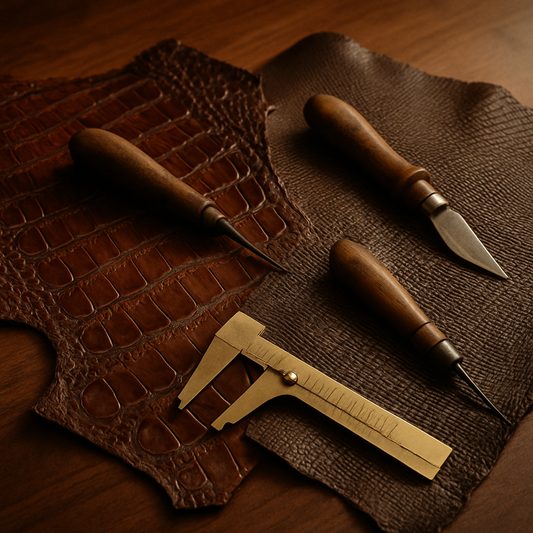
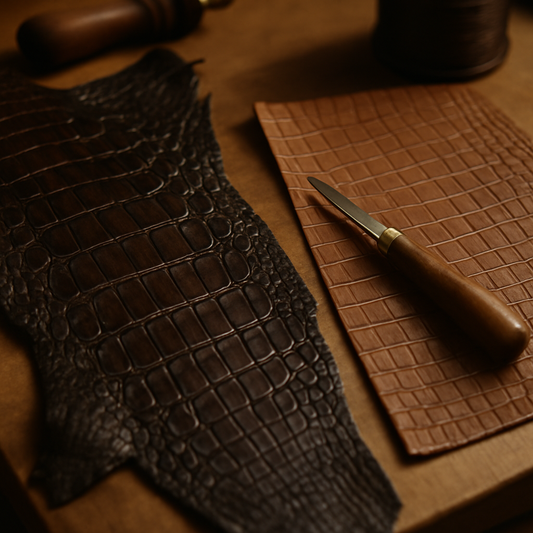
Alligator belly leather usually has a comparatively regular, balanced scale pattern, with larger tiles through the central belly and smaller, more pebbly scales toward the flanks. The cut affects the finished shoe: a central belly cut creates a different visual effect from a flank-heavy panel. “Belly-cut” therefore describes a section of the hide, not the entire alligator hide.
Handmade alligator shoes vs. lizard leather
| Decision factor | Handmade alligator shoes | Lizard leather shoes |
|---|---|---|
| Material identity | Made from alligator hide, a distinct crocodilian material. | Made from lizard hide; the specific lizard species should be stated. |
| Visible pattern | Often shows a balanced belly layout with larger central scales and smaller flank scales. | Pattern and scale characteristics depend on the lizard species; the available evidence does not support one general pattern description for all lizard leather. |
| Visual variation | Scale size, scars, shading, and the selected hide section influence the final appearance. | Species, cut, finish, and panel placement influence the final appearance. |
| Best buying question | Ask about the alligator species, hide section, grading method, and panel placement. | Ask for the actual lizard species and how the leather is being used in the shoe. |
| Formal styling | Large, readable belly scales can suit dress shoes where the upper is intended to be the visual focus. | A suitable option depends on the species, scale appearance, color, and the design of the shoe. |
Why the alligator belly section matters
For alligator leather shoes, the belly often receives the most attention because its scales are larger and more balanced than those on the flank. A shoe made with matched central panels can show a clear line of scales across the vamp, while a design using smaller flank sections may look more textured and less geometric.
Scale layout is not simply a matter of choosing the largest possible tiles. The vamp, quarters, heel counter, and other panels each place different demands on the hide. A maker must work around natural scars, scratches, shading changes, and irregular scales while keeping the shoe visually coherent.
At CrocodileViet, we manufacture our leather goods in-house, which lets us assess the relationship between the hide section and the intended shoe design before the upper is completed. The reason is practical: a scale layout that looks attractive on a loose skin may not align well across a vamp, toe, or pair of matching shoes.
Do alligator and crocodile have the same appearance?
No single visual feature should be used as proof of material authenticity, but alligator and crocodile do have useful differences for an initial inspection. Alligator belly scales are commonly comparatively regular and balanced. Crocodile scales tend to vary more by species and often show visible integumentary sensory-organ pores, also called ISO pores.
Alligator may also show an umbilical scar, while crocodile generally lacks that feature. These observations can help you ask better questions, but they do not replace species documentation, supplier information, or traceability.
For international trade, CITES regulates the movement of listed wildlife products and does not by itself prove that a particular pair of shoes is authentic. American alligator is reported as an Appendix II species, so applicable import and export documents depend on the species, source, and trade route. A numbered tag may accompany a hide, but a tag is not a substitute for the permits and documentation required for the transaction.
How grading affects alligator leather shoes
Alligator grading is not a universal industry-wide scale. One supplier may describe midsection material from Grade 1, with no belly defects, through Grade 5, with more visible defects. Another supplier may use quadrant-based grades. A responsible comparison should identify the grading system and the supplier instead of treating a grade number as a universal measurement.
Grades generally describe visible defects such as scars, scratches, shading, and scale irregularities. They do not identify the species, and they do not automatically describe the overall quality or durability of a finished shoe. Some grading systems also exclude the head and tail from the rated area.
A lower visual grade can still work for a smaller panel or a design that places a natural mark away from the most visible area. Conversely, a high visual grade does not remove the need to assess the shoe’s construction, fit, finishing, and leather care requirements.
Price: what actually changes the cost?
The price of handmade alligator shoes reflects several concrete factors rather than a single grade label:
- Usable hide area: Larger, cleaner sections may be needed to cut a matched pair of uppers with fewer visible interruptions.
- Panel layout: A design requiring closely matched left and right shoes can use more of the hide than a design that accepts greater variation.
- Leather section: Central belly, flank, and other sections differ in scale layout and usable surface.
- Shoe design: Plain whole-vamp styles, patterned uppers, boots, and shoes with several panels place different demands on the material.
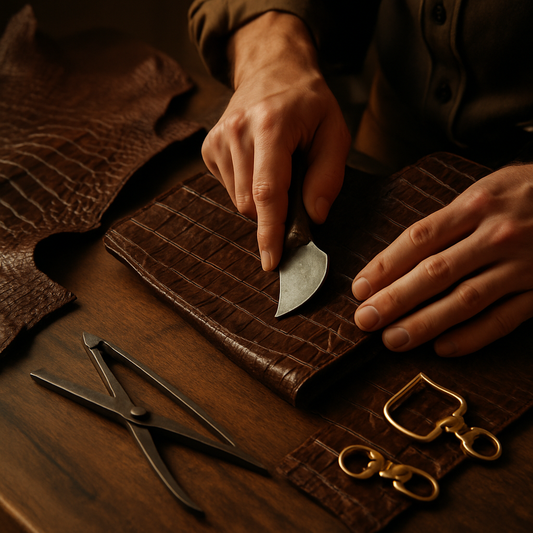
- Handmaking time: Cutting, assembling, shaping, and finishing a more detailed upper can require more labor than a simpler design.
- Fitting and finishing: Last shape, sole construction, hardware, lining, and finishing work also affect the final price.
Lizard leather may fit a different budget or design brief, but a lower price should not be interpreted as proof that the material is inferior. The species, cut, construction, and intended use need to be compared directly.
Fit and sizing for alligator dress shoes
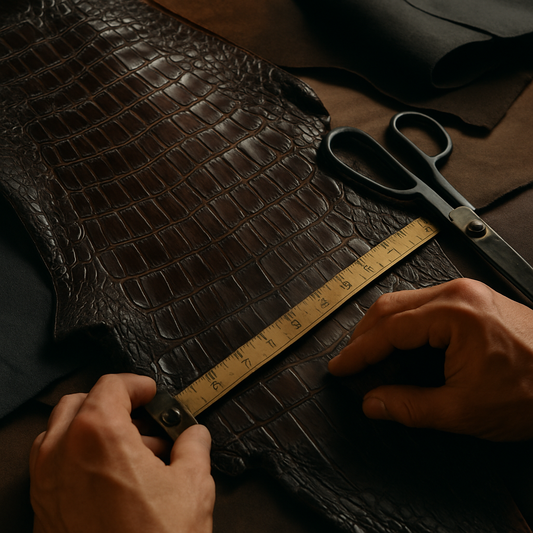
Leather type does not correct a poor fit. Before ordering, measure both feet for length and width, preferably at the end of the day when feet may be slightly larger. Record the longest foot, the broadest point across the forefoot, and the instep height.
Convert those measurements to the seller’s sizing system rather than assuming that an EU number corresponds exactly to a US or UK number. EU, US, and UK sizes use different scales, and width labels also vary between makers. Someone with a wide forefoot or high instep may need a different last, a wider fit, or a design with more room over the instep.
For remote measurements, send the requested length, width, instep, and any fit notes in the format provided by the workshop. Mention bunions, asymmetric feet, orthotics, or a preference for dress-sock thickness. A photograph can support a discussion, but measurements provide more useful information than a photo alone.
Care for handmade alligator shoes
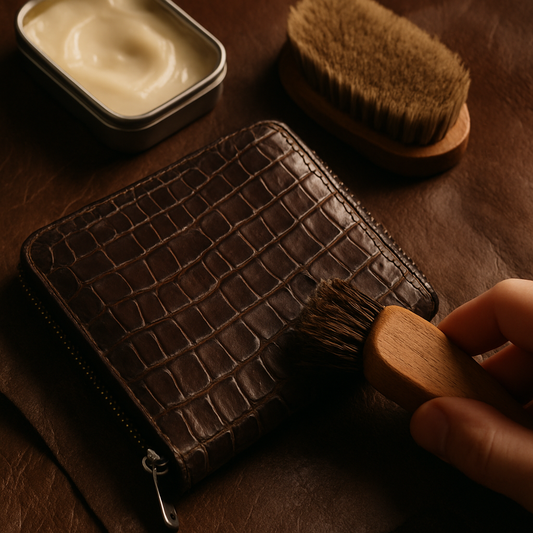
Start with a dry, soft cloth to remove dust after wear. This simple step helps prevent surface grit from rubbing against the finish. Keep the shoes away from direct heat, radiators, hairdryers, and prolonged damp conditions, since sudden drying can affect leather flexibility and finish.
Use products intended for the specific finish and material, and test a small concealed area before applying anything broadly. Heavy rubbing, excess conditioner, unsuitable wax, or aggressive cleaning can alter the appearance of the scales.
There is no useful fixed care schedule for every pair. Inspect the shoes based on wear, climate, exposure to moisture, and the condition of the finish. If the surface becomes dry, dull, stained, or unusually stiff, ask the maker which product is compatible with that leather.
Styling handmade alligator shoes and lizard shoes
Alligator belly scales are visually pronounced, so a plain shoe shape can let the material carry the design. Dark brown, black, and other restrained colors work with tailored trousers, while a lighter or colored pair can be coordinated with a quieter suit, solid shirt, and limited accessories.
For genuine alligator shoes for men, match the formality of the shoe to the setting rather than matching every accessory exactly. A belt in a related color family can connect the outfit, while a watch strap or bag can remain in a different texture to avoid an overly coordinated appearance.
Lizard leather can suit someone who prefers a different scale texture or a less prominent crocodilian identity. The right styling depends on the species, color, shoe shape, and clothing. Texture, finish, and scale size should be considered together before deciding whether a pair belongs in a formal, business, or relaxed wardrobe.
Which material should you choose?
Choose handmade alligator shoes if you want an alligator-specific material, a readable belly-scale layout, and a shoe selected around the character of that hide. Choose lizard leather when the identified lizard species, pattern, price, and shoe design suit your requirements more closely.
The most reliable comparison asks what the material is, which section was used, how the hide was graded, how the shoe was sized, and which documents apply to its trade route. Those questions are more useful than relying on a broad label such as “reptile leather” or assuming that visual grade predicts durability.
Frequently Asked Questions
Are handmade alligator shoes made from the same leather as crocodile shoes?
No. Alligator and crocodile are distinct crocodilian materials. Alligator commonly has a comparatively regular, balanced belly pattern and may show an umbilical scar, while crocodile varies more by species and often shows visible ISO pores.
Does a higher alligator grade mean the shoes will last longer?
Not necessarily. Grading labels vary by supplier and generally describe visible defects such as scars, scratches, shading, and scale irregularities. Durability also depends on construction, use, fit, storage, and care.
What should I measure when ordering alligator leather shoes remotely?
Measure both feet for length and width, then record the instep height and the widest part of the forefoot. Share the measurements with the requested EU, US, or UK size reference and mention wide-fit, high-instep, orthotic, or asymmetry needs.
Does a tag prove that alligator shoes are authentic and legal to import?
No. A numbered tag may accompany a hide, but it does not replace applicable CITES documents or other traceability information. Requirements depend on the species, source, and trade route.
View CrocodileViet’s handmade shoe collection to compare available designs and materials. For measurements, material questions, or remote fitting, contact CrocodileViet through WhatsApp.