
Wide Feet Loafers Sizing vs Lizard Leather: Which Is Better?

Share
Wide-Feet Loafer Sizing vs. Lizard Leather: What Matters Most?
For wide feet, a true wide-width loafer last and a forgiving toe box matter more than choosing lizard leather.
What This Comparison Actually Measures
This comparison is about two separate decisions: how a loafer should be sized for a broad foot, and whether lizard leather is a suitable upper material for that fit. Lizard leather can produce a fine, tightly scaled shoe, but its small overlapping scales do not compensate for a narrow last or cramped toe box.
In footwear terminology, “grain” refers to the outer surface of a hide, including its texture and markings. “Pattern scale” describes the visible texture units themselves. Therefore, “lizard grain” is often shorthand for the lizard’s scale pattern rather than bovine grain. Lizard leather is commonly associated with small, regular, overlapping scales and a more delicate surface appearance than crocodilian leather.
Wide-Foot Sizing Comes Before Material
A loafer for a wide foot should be selected by width category, not only by length. A longer standard-width shoe can create extra room at the front, but it may still pinch across the metatarsals, compress the little toe, or leave the heel slipping because the foot is not held in the correct position.
- Width: Look for a genuine wide-width last rather than relying on a standard width that may soften with wear.
- Toe box: A rounded or naturally shaped toe box gives the forefoot more usable space than a sharply tapered one.
- Instep: A high instep can make a slip-on loafer feel tight across the vamp even when the toe area is wide enough.
- Length: Allow functional space in front of the longest toe without using length to solve a width problem.
- Heel hold: A loafer should stay on the heel without forcing the forefoot forward into a narrow section.
Size labels also vary between makers. A wearer may compare EU, US, and UK sizes, but the number alone does not define the internal shape. The last, lining, toe profile, instep height, and width option all affect the fit.
Lizard Leather and Wide Loafers
Lizard leather is typically a fine, tight-scale exotic leather used for dress shoes, straps, and smaller panels. Its scale structure is well suited to a refined upper or a controlled accent, but it is not a substitute for full-coverage cowhide uppers when a wide-fit loafer needs substantial room across the foot.
The material itself should not be expected to stretch enough to correct an incorrect width. Soft leather may feel more forgiving during initial wear, but the right width category remains necessary. A wide foot generally benefits from a last built with additional forefoot volume rather than from choosing a more flexible-looking leather.
For a lizard loafer, construction also affects comfort. Seam placement, vamp height, lining thickness, the stiffness of the toe structure, and the amount of room built into the last can change how the shoe feels. These details should be assessed alongside the scale pattern, not after the material decision has already been made.
Decision Factors: Width or Lizard Leather?
| Decision factor | Why it matters for a wide foot | What lizard leather changes |
|---|---|---|
| Last width | Determines the actual room across the forefoot and ball of the foot. | Lizard leather does not replace a true wide-width last. |
| Toe-box shape | Controls pressure on the toes and the amount of usable front width. | Small scales can follow a shaped upper, but they do not create extra internal volume. |
| Instep height | Affects pressure from the loafer vamp and ease of entry. | Upper flexibility may influence feel, but excessive pressure can still occur. |
| Species and source | Does not determine width, but it affects material identification and documentation. | Monitor lizard and teju lizard are commercial footwear terms; the exact species matters. |
| Scale matching | Does not alter fit, but affects how panels meet across the shoe. | Scale size, direction, and regularity influence the finished appearance. |
How to Measure Wide Feet for Loafers
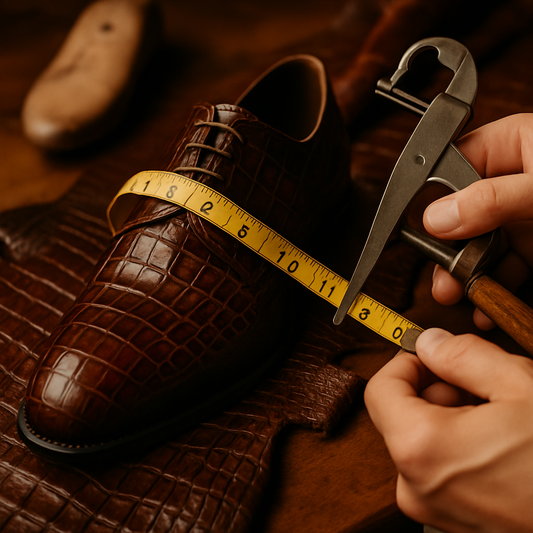
Measure both feet while standing, because body weight can increase foot length and width. Record the longer foot’s length, the widest forefoot circumference, the ball-of-foot circumference, the instep circumference, and the heel circumference. Also note whether one foot is wider or has a higher instep than the other.
For remote custom shoe measurements, photographs of the foot outline, a ruler in the same frame, and circumference measurements can provide useful supporting information. They should be taken on a firm, level surface with the foot carrying normal standing weight. A written description of pressure points from existing shoes is also valuable.
In-person try-on remains useful for checking heel movement, vamp pressure, toe contact, and whether the loafer opens comfortably. Remote measurements are equally important for a made-to-measure discussion because a brief fitting may not reveal how a slip-on behaves after walking. Neither method should rely only on the length number printed inside a shoe.
Price Factors in a Lizard Loafer
The price of a lizard loafer depends on more than the word “lizard.” Relevant factors include the exact species, hide grade, usable area, scale size, scale matching, panel placement, construction method, lining, sole, finishing, and the amount of handwork. A small-scale hide with limited usable sections may require more planning to place cleanly across a pair.
Visual grade describes surface appearance and pattern control; it does not establish durability by itself. Grading labels also vary between suppliers and tanneries, so a label should be read together with the hide’s actual surface, thickness, backing, and intended use.
Species documentation is another practical cost and compliance factor. Many commercially traded lizard species are listed under CITES Appendix II, where international trade is allowed but controlled through permits and quotas. Wild-sourced monitor lizard from Indonesia may be traded with source codes such as W or R for ranched material. CITES documentation addresses regulated trade; it does not by itself prove that a piece is genuine.
Care for a Lizard Loafer
Remove surface dust with a clean, dry cloth. If a mark requires more than dry wiping, use only a barely damp cloth as a last resort, then allow the shoe to dry naturally away from direct heat. Do not soak the scales or apply a product without checking that it is suitable for lizard leather.
Use shoe trees that support the loafer without forcing the vamp or widening the upper. Rotate wear where possible, and keep the shoes away from prolonged humidity and strong heat. Conditioning should respond to the leather’s condition and the product manufacturer’s instructions rather than follow a fixed calendar.
Styling a Wide Lizard Loafer
- Office wear: Pair a dark lizard loafer with tailored trousers, a structured jacket, and a fine-gauge shirt. Keep the trouser break clean so the scale pattern is visible without competing with loud checks.
- Business events: A restrained shirt, solid suit, and simple belt can keep attention on the shoe’s texture and shape.
- Smart-casual settings: Combine a lizard loafer with pressed chinos, an unpatterned knit, or a lightweight overshirt.
- Warm-weather dressing: Linen-blend trousers and a plain polo can work when the loafer’s color is echoed subtly in another accessory.
The styling should support the shoe’s scale pattern without using color or texture as a substitute for a comfortable width.
Bottom Line
For wide feet, sizing and last shape should decide the purchase first. Lizard leather can suit a dress loafer when its fine scale pattern, construction, and care requirements fit the intended use, but it cannot turn a standard narrow loafer into a wide one.
For a lizard loafer consultation, contact CrocodileViet with your foot length, width, instep, and preferred EU, US, or UK reference. You can also discuss measurements through WhatsApp.