
How to Choose Crocodile Loafers For Men for Business Wear — Part 2

Share
How to Choose Crocodile Loafers for Men for Business Wear — Part 2
For business wear, choose crocodile loafers by checking the stated species, the belly or flank cut, panel condition, construction, and fit rather than judging the leather from its scale pattern alone.
Start With the Species and Hide Area
“Crocodile” is not one single species designation. Commercial skins may come from different crocodilian species, so the product description should identify the material accurately instead of relying on the appearance of the scales.
Alligator and crocodile belly leather can both show rectangular scales. A regular or balanced pattern may suggest a belly cut, but scale shape and symmetry alone do not establish the species. Crocodile skins often show visible sensory pores, called integumentary sensory organs or ISOs, when the surface is clear enough to inspect. Alligator leather often has a distinctive star-shaped umbilical scar, while crocodile leather generally lacks that feature.
These clues support product inspection, but one visual trait should not be treated as proof of authenticity. Accurate labeling and traceable sourcing are more reliable foundations for buying crocodile loafers for men. International trade may also involve CITES documentation and secure identification tags, depending on the species, origin, and applicable listing. CITES regulates trade; it does not by itself prove that a finished shoe is authentic.
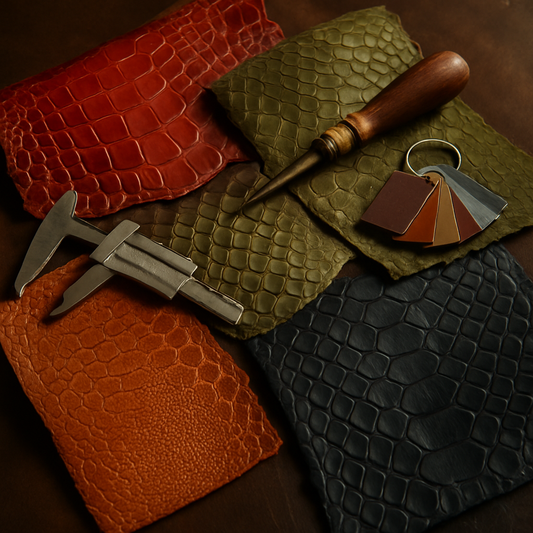
Hide-area terms also need to be read correctly. “Belly,” “flank,” and “hornback” describe parts or cuts of a hide, not universal grades. Belly leather is commonly chosen for its smoother central area and regular scale arrangement. Flank leather has smaller scales that change more across the surface, while hornback cuts retain a more pronounced central ridge.
Choose a Business-Appropriate Surface
A smooth belly panel usually gives a loafer a more orderly appearance with tailored trousers, a suit, or a structured jacket. Flank sections can offer more visible scale variation, which may work with relaxed business clothing but can look busier beside a heavily patterned shirt or jacket.
Nubuck alligator loafers have a brushed, low-sheen surface rather than the reflective finish associated with polished leather. That subdued texture can suit business-casual settings, especially with wool trousers, cotton chinos, or an unstructured blazer. For a formal office, check the workplace dress code before choosing nubuck, because the surface reads less formal than a smooth finished upper.
Alligator driving shoes are generally more relaxed because their moccasin-inspired shape, flexible sole, and casual profile are associated with leisurewear. They can work with chinos or tailored denim in a business-casual environment, but a structured crocodile loafer is usually easier to combine with a suit or formal trousers.
Assess Grade Without Confusing It With Durability
Hide grading generally reflects usable, blemish-free cutting yield and the severity of visible or internal defects. Higher grades typically contain fewer visible defects in the central belly area, while lower grades may show more marks or irregularities. Suppliers and tanneries can use different grading labels, so a grade name should be read alongside photographs, material details, and the finished shoe specifications.
Grade is not a universal measurement of durability, species, authenticity, or the overall quality of a completed loafer. A well-planned pair may use a sound section of a lower-labeled hide, while a higher-labeled hide still requires suitable pattern placement, stitching, lining, and sole construction.
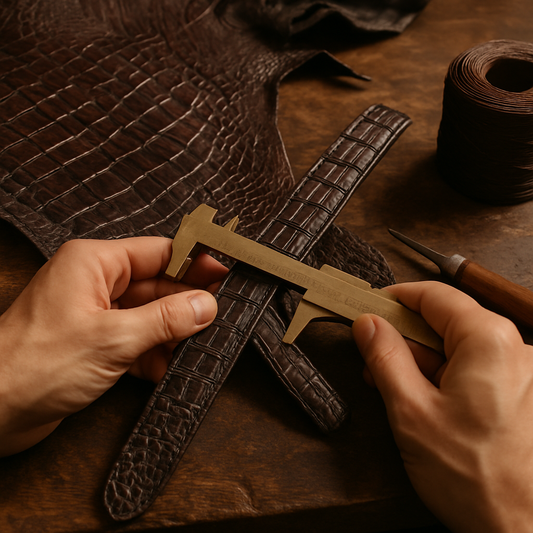
At CrocodileViet, we manufacture our leather goods in-house and inspect the usable surface before panel placement because defects and scale changes affect how cleanly the vamp and side sections can be cut. We also pay attention to color and pattern matching across the pair because mismatched panels are particularly visible on a loafer’s broad upper.
Compare the Main Business-Wear Decision Factors
| Decision factor | What to inspect | Business-wear implication |
|---|---|---|
| Species labeling | Named species, material description, and sourcing information | Helps separate accurately labeled leather from embossed or printed leather |
| Hide area | Regular central belly scales or changing flank scales | Belly often looks more ordered; flank can appear more casual and varied |
| Surface finish | Smooth polished leather, matte finish, or nubuck nap | Smooth surfaces usually suit formal tailoring; nubuck suits less formal offices |
| Panel condition | Visible scars, holes, scratches, scale damage, and color variation | Marks may be acceptable, but placement across the vamp affects the finished appearance |
| Construction | Upper shape, lining, sole flexibility, and stitching consistency | Determines whether the loafer supports formal trousers or casual business clothing |
Calculate Price From Concrete Factors
The price of crocodile loafers depends on more than the animal species. Relevant factors include the usable size of the hide, the amount of blemish-free belly area, the number of panels required, color consistency, surface finish, lining, sole material, hardware, labor, and the amount of leather lost during cutting.
A pair using broad, well-matched belly panels may require more selective cutting than a pair built from smaller or more varied sections. Nubuck finishing also produces a different surface and handling process from a smooth polished finish. Ask what the quoted price includes: the leather type, lining, sole construction, finishing, sizing options, and delivery terms. Avoid treating a higher price as automatic proof of better durability or a lower price as proof of poor workmanship.
Get the Fit Right Before Ordering
Loafers need a secure heel and enough length for the longest toe without pressing the front of the foot. Measure both feet while standing, record the length and width, and note whether one foot is larger. EU, US, and UK sizes do not convert identically across every maker, so use the workshop’s own size chart rather than relying only on a familiar number.
Width deserves equal attention. A wide foot may need a broader last, while a high instep can make a slip-on feel tight across the vamp even when the length is correct. If you are ordering remotely, send foot length, maximum width, instep measurement, usual dress-shoe size, and notes about fit problems from previous loafers. A tracing or additional measurements may help the workshop assess the shape more accurately, but remote sizing still has limits.
Do not select a larger size simply to gain instep room. Excess length can cause heel lift and creasing in the wrong place. Ask whether the model has a soft lining, removable insole, or adjustment allowance before placing an order.
Style Crocodile Loafers for the Office
Dark brown or black crocodile loafers can coordinate with navy, charcoal, and medium-gray trousers. Brown shades pair naturally with navy, tan, olive, and warm gray, while a lighter or more visibly varied hide works best when the rest of the outfit is restrained.
With a suit, keep the shirt and tie patterns controlled so the shoe texture does not compete with the tailoring. With chinos, an open-collar shirt, knit polo, or unstructured jacket can support nubuck alligator loafers or alligator driving shoes. Match the belt closely in color and surface when possible, but do not force an identical scale pattern if the accessories are made from different materials.
Care for the Leather
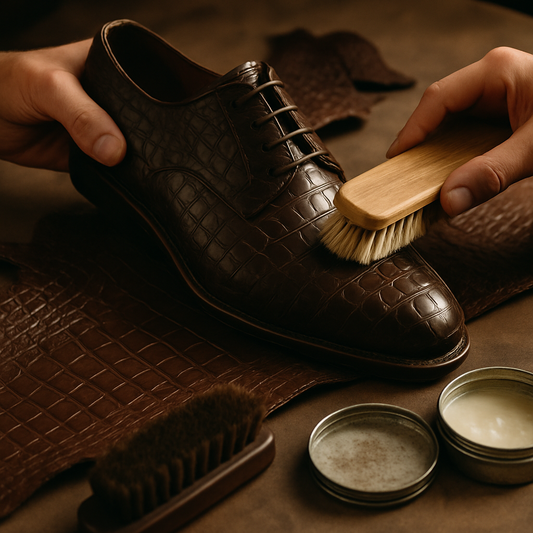
After wear, wipe the loafers with a dry, soft cloth to remove surface dust. Keep them away from radiators, direct high heat, solvents, and prolonged moisture. If the leather becomes wet, allow it to dry gradually at room temperature and avoid aggressive rubbing while the surface is damp.
Nubuck requires different treatment from smooth finished leather. Avoid applying ordinary high-shine wax to a nubuck upper because it can flatten or alter the nap. Use a product intended for nubuck only after checking the maker’s instructions, and test it on a concealed area first. Store the shoes with suitable shoe trees or supportive forms to reduce deep creasing, and rotate wear when possible so the leather can dry between uses.
Frequently Asked Questions
Can scale shape prove that a loafer is crocodile rather than alligator?
No single scale shape can establish the species because crocodile and alligator belly scales can both look rectangular. Visible crocodile sensory pores, an alligator’s star-shaped umbilical scar, accurate labeling, and traceable sourcing provide stronger evidence when available.
Are belly crocodile loafers better than flank crocodile loafers for business?
They serve different visual purposes. Belly leather commonly has a smoother central area with a regular, balanced pattern, while flank leather has smaller and more changing scales. Belly often suits formal tailoring, but construction, panel placement, and personal dress code also matter.
Are nubuck alligator loafers suitable for office wear?
They can suit business-casual offices because the brushed surface has a lower sheen than polished leather. For formal business dress, check the workplace standard and consider a smoother finish with a more structured loafer shape.
What measurements should I send when ordering crocodile loafers remotely?
Send standing foot length, maximum width, instep measurement, each foot’s usual EU, US, or UK size, and notes about wide-fit or heel-slip problems. A foot tracing can add useful information, but the workshop may still need to discuss the last and intended fit.
View the nubuck alligator leather slip-on loafers for men if you are comparing a lower-sheen option for business-casual dressing. For sizing or material questions, contact CrocodileViet through WhatsApp.