
Chanel’s Chocolate Alligator Pumps: How the Spring 2026 Runway Uses Exotic Leather

Share
Chanel’s Chocolate Alligator Pumps for Spring 2026: What the Leather Label Means
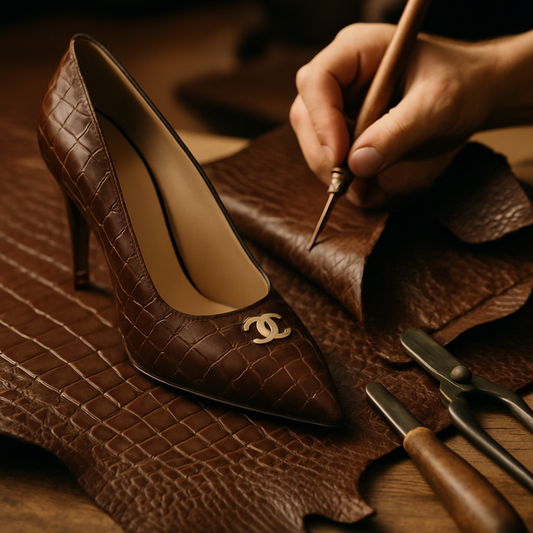
The Spring/Summer 2026 Chanel pumps reported as chocolate brown alligator are described separately from Chanel’s crocodile-embossed calfskin pumps, whose upper material is calfskin.
What the Chanel Spring 2026 material descriptions indicate
The phrase “Chanel alligator pumps Spring 2026” needs careful reading because two different material descriptions are being discussed. One report identifies a chocolate brown pump as alligator, while another Chanel listing describes a similar crocodilian pattern as embossed calfskin.
Those labels refer to different materials. Genuine alligator leather comes from an alligator hide, such as American alligator, Alligator mississippiensis. Crocodile leather comes from a different animal, commonly species such as Crocodylus porosus or Crocodylus niloticus. “Croc-embossed” means that a crocodilian-style pattern has been pressed into another leather, such as calfskin.
That distinction matters for shoppers comparing chocolate alligator shoes with a visually similar embossed pair. A printed or pressed pattern can reproduce the broad scale arrangement, but it does not make the base material alligator or crocodile hide.
| Label | Underlying material | What the buyer should verify |
|---|---|---|
| Alligator leather | Genuine alligator hide | Species and transaction documentation where required |
| Crocodile leather | Genuine crocodile hide | Species, source, and applicable trade paperwork |
| Crocodile-embossed calfskin | Calfskin with a pressed crocodilian pattern | That the product description identifies calfskin rather than genuine crocodilian leather |
How genuine alligator leather differs visually from crocodile
Alligator and crocodile should not be treated as interchangeable names for exotic leather. Alligator belly leather often has a regular, balanced scale pattern, with a sharper transition in scale size as the hide moves toward the flanks. Crocodile can vary more by species and may show visible sensory pores, sometimes called integumentary sensory organs or ISOs.
These features help with an initial visual assessment, but scale shape alone does not establish species or authenticity. Alligator may have an umbilical scar in the belly area, while crocodile generally lacks that feature. The location, clarity, and surrounding pattern still need to be assessed alongside the product description and documentation.
At CrocodileViet, we separate genuine alligator from embossed leather before discussing construction or price because the material affects cutting decisions, surface inspection, and the information a customer needs before buying. A crocodilian-looking pattern is not sufficient evidence of a genuine hide.
What “grade” means on an alligator shoe
Hide grading usually focuses on defects in the usable belly or primary pattern area. Scars, damaged scales, insect marks, holes, and irregular surface sections can reduce the amount of clean leather available for cutting. A higher grade commonly indicates a cleaner main cutting area than a lower grade.
However, grade numbers are not universal. Tannery and supplier criteria differ, and a label such as “Grade 1” does not promise a completely flawless hide or establish one industry-wide standard. Grading also should not be confused with durability. A cleaner visual area may command a higher price, but it does not automatically mean the finished shoe will outlast every lower-graded alternative.
For a pair of genuine alligator leather shoes, ask which part of the hide is used on the visible vamp, whether the grading refers to the full hide or the selected cutting area, and whether the supplier uses its own numbered system.
Why chocolate brown works on alligator pumps
Chocolate brown gives the scale pattern a lower-contrast presentation than black, allowing the belly layout and surface variation to remain visible without making the shoe visually loud. On a pump, the color can work with tailored trousers, cream or ivory dresses, warm grey suiting, dark denim, and camel outerwear.
For Spring 2026 accessories, the useful styling question is not whether brown can replace black in every outfit. Instead, match the warmth and depth of the brown to the rest of the clothing. Chocolate brown pairs naturally with tan, rust, burgundy, olive, navy, and soft neutrals. With cool charcoal or blue-grey clothing, a darker brown may look more cohesive than a reddish brown.
Keep the rest of the outfit relatively quiet if the shoe has a strong, clearly visible scale layout. If the alligator pattern is subtle, the pumps can support a printed dress or textured jacket without competing for attention.
Price factors for genuine alligator pumps
The price of luxury alligator pumps reflects several concrete factors rather than the word “alligator” alone:
- Usable belly area: A larger, cleaner section suitable for the vamp can reduce cutting waste.
- Scale arrangement: Regularity, size transition, and the placement of the scales affect the appearance of the finished pair.
- Visible defects: Scars, damaged scales, holes, and uneven sections influence how much leather can be used.
- Construction: The last, lining, sole, heel, edge finishing, and assembly labor all contribute to the final price.
- Color and finishing: Dye depth, surface treatment, and whether the color needs to be matched across both shoes can add work.
- Documentation and sourcing: Species, country, trade route, and required permits can affect lawful sourcing and transaction handling.
Because CITES requirements depend on the species, country, and route of trade, documentation should be checked for the specific product and transaction. CITES paperwork is not, by itself, proof that a shoe is genuine alligator; the material description and supply documentation must agree.
Fit and sizing for alligator pumps
Alligator leather does not remove the usual pump-fitting problems. Measure foot length and the widest forefoot area, then compare those measurements with the maker’s chart rather than relying only on an EU, US, or UK number. Size conversions vary between systems and lasts.
Width deserves particular attention. A wide forefoot may need a wider last, while a high instep can create pressure beneath the vamp even if the toe length is correct. A pointed pump often feels narrower than a rounder toe shape at the same nominal size.
For remote orders, send both foot lengths, both forefoot widths, and an instep measurement if requested. Mention whether one foot is larger, whether you usually need a wide fit, and which shoe size you wear in comparable dress shoes. This information gives the maker a more useful starting point than a single size label.
Care for chocolate alligator shoes
Use a dry, soft cloth to remove surface dust after wear. If the leather becomes wet, blot it without rubbing and let the shoes dry at room temperature away from direct heat. Heat can dry the leather unevenly and affect the finish.
Do not apply household polish, alcohol, or an untested conditioner simply because the product is marketed for smooth leather. Exotic leather finishes vary, and a product that works on ordinary calfskin may darken or mark an alligator surface. Test any approved product on a concealed area first, or ask the maker which treatment suits the specific finish.
Store the pumps in a breathable shoe bag, keep them away from prolonged humidity, and use support that does not press sharply into the vamp. There is no useful fixed care schedule: inspect the surface and finish whenever the shoes are worn, especially after exposure to rain or heavy dust.
Frequently Asked Questions
Are Chanel’s chocolate brown Spring 2026 pumps definitely made from alligator?
The reported chocolate brown pair is identified as alligator, but it should be distinguished from Chanel’s separately listed crocodile-embossed calfskin pumps. The individual product description and supporting documentation are the appropriate references for a specific pair.
Is crocodile-embossed calfskin the same as genuine alligator leather?
No. Crocodile-embossed calfskin is calfskin with a pressed crocodilian-style pattern. Genuine alligator leather comes from an alligator hide and should be described and documented as such.
Can scale shape prove that a pump is genuine alligator?
No. Alligator often shows a regular belly pattern and a sharper scale-size transition toward the flanks, while crocodile may show sensory pores. These are useful visual clues, not conclusive proof of species or authenticity.
Does a higher alligator grade mean the shoes will last longer?
Not necessarily. Grade generally concerns defects and the cleanliness of the usable cutting area. Durability also depends on tanning, construction, fit, finishing, and care, while grading systems vary by supplier or tannery.
To compare genuine alligator footwear made with attention to the hide section and shoe construction, view CrocodileViet’s alligator and crocodile shoe collection. For sizing or material questions, contact CrocodileViet through WhatsApp.