
Best Nubuck Alligator Mules for Men: What to Look For

Share
Best Nubuck Alligator Mules for Men: What to Look For
The best nubuck alligator mules combine verifiable alligator hide, a short grain-side nap, a stable open-back shape, and measurements that suit the wearer’s foot.
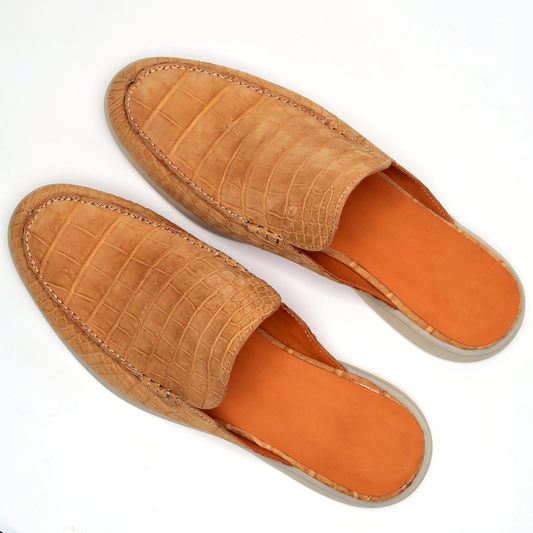
For this article, “nubuck alligator mules” means men’s backless slip-on shoes made from alligator leather finished as nubuck. A mule describes the shoe shape: it has an open back and may have a closed toe. A backless loafer is one common mule style, but the word “mule” does not identify a particular construction method.
1. Confirm that the material is genuine nubuck alligator
Nubuck is made by lightly sanding or buffing the grain side of a hide to create a short, velvety nap. Suede is generally made from the flesh side, so “nubuck” and “suede” should not be treated as interchangeable terms.
For an alligator mule, ask how the hide is identified and sourced. An embossed imitation material can copy a scale layout, but it is not alligator hide. A product described as genuine alligator leather should have a verifiable species claim and lawful sourcing documentation behind it.
Scale appearance offers useful clues but does not prove species by itself. Alligator belly leather usually has a regular, balanced scale pattern, while crocodile can vary more by species and may show visible sensory pores, often called integumentary sensory organs or ISOs. Alligator may also show an umbilical scar that crocodile generally lacks. Finishing and the placement of a cut can obscure these features, so traceable sourcing matters more than pattern alone.
2. Inspect the belly cut and scale layout
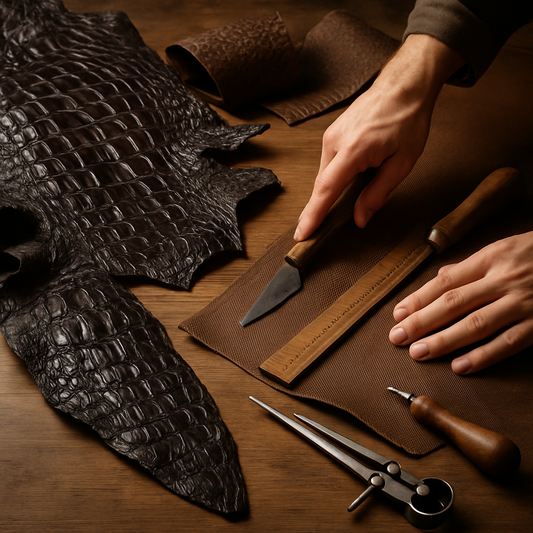
“Belly” and “hornback” describe different hide cuts. Belly leather is taken from the underside and generally provides the flatter, more regular scale surface associated with many men’s mules. Hornback retains the raised back scales and creates a more pronounced ridge across the shoe.
Hide size is commonly quoted by the horizontal width at the belly’s widest point. That measurement can help explain the available scale field, but it does not automatically indicate the finished shoe size. A larger hide may offer more room for pattern placement; it does not by itself prove better durability or a higher visual grade.
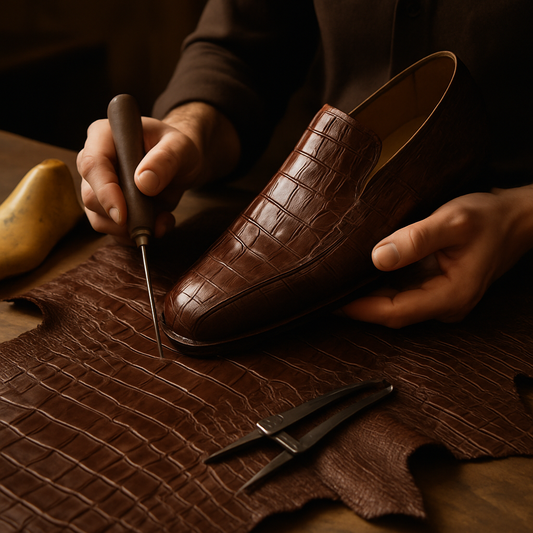
Look at how the scales run across the vamp, toe, and quarters. A balanced layout usually appears more deliberate than a shoe where the scale direction changes abruptly between panels. Minor variation is part of genuine hide, so the goal is coherent placement rather than a mechanically repeated surface.
3. Treat grading labels as supplier-specific
Alligator grading is not a universal consumer scale. One supplier may count defects across four hide quadrants, while another tannery or seller may use different categories. Grading can also involve subjective judgment.
Ask what a stated grade means before using it to compare nubuck alligator mules. Request clear photographs of the actual pair or ask whether the visible marks are natural grain variation, small scars, finish variation, or construction-related marks. A visual grade concerns appearance and selection; it does not establish the shoe’s durability.
| Decision factor | What to check | Why it matters |
|---|---|---|
| Species and sourcing | Verifiable alligator claim and traceable legal sourcing | Scale pattern alone cannot establish species |
| Hide cut | Belly or hornback | These cuts produce different surface relief and scale layouts |
| Nubuck finish | Short, even-feeling nap without a glossy coated surface | Confirms the material is being presented as nubuck rather than smooth leather or imitation |
| Fit | Length, width, instep height, and heel security | An open-back shoe needs enough hold without squeezing the forefoot |
4. Judge price by concrete factors
The price of alligator mules for men reflects several separate inputs. These include the amount and usable area of hide, the belly or hornback cut, scale placement, visible surface marks, the quality and consistency of the nubuck finish, the lining and sole materials, the complexity of the pattern, and the labor involved in producing the pair.
Size can affect material use, especially where a larger vamp needs a broader uninterrupted section of hide. A pair with carefully matched panels may require more selective cutting than one using smaller or less closely aligned sections. Country of manufacture, import duties, shipping, and documentation requirements can also affect the final price.
Do not read a high price as automatic proof of durability or authenticity. Compare the material description, actual-pair photographs, construction information, sizing support, and sourcing explanation together.
5. Measure for a secure mule fit
Start with foot length from the back of the heel to the longest toe, then measure the broadest part of the forefoot. Record the result in centimeters as well as your usual EU, US, and UK size. Size labels vary between makers, so a familiar number is a starting point rather than a complete fit specification.
Width deserves particular attention in a backless shoe. A wide foot may need additional forefoot room, while a high instep can make entry difficult even when the length is correct. The vamp should hold the foot without pressing hard across the instep. The heel should lift naturally as you walk, but excessive sliding can make the shoe unstable.
If you are ordering remotely, send foot-length and width measurements for both feet, preferably taken while standing and wearing the socks you expect to use. Include your usual EU, US, and UK sizes, note whether you need a wide fit, and describe any high-instep concern. The larger foot usually deserves priority when reviewing size advice.
For further online-purchase checks, see 7 Things to Check Before You Buy Alligator Mules For Men Online.
6. Care for the nubuck surface
Use a dry, soft cloth as the default first step for light dust. Brush the nap gently with a suitable nubuck brush only when needed, working with light pressure so the surface is not flattened or scuffed unnecessarily.
Keep the mules away from prolonged moisture, oily surfaces, and strong heat. If they become wet, blot rather than rub and let them dry at room temperature. Avoid household polish intended for smooth leather because it can darken or coat the nap. For a significant stain, ask the maker or a technician familiar with exotic nubuck before applying a cleaner.
There is no useful fixed care schedule for every wearer. Frequency depends on climate, walking conditions, and how often the pair is worn. Store the mules with their shape supported and give the nap time to recover between heavier uses.
7. Style nubuck alligator mules with the material in mind
Natural tan nubuck works well with navy, charcoal, olive, cream, denim, and medium-brown tailoring because its matte surface is less formal than polished alligator. Try the mules with tapered trousers that finish above or close to the shoe opening, allowing the backless shape to remain visible.
For a relaxed outfit, pair them with straight or lightly tapered denim and a plain knit shirt. With tailored trousers, a tucked shirt or lightweight jacket can connect the shoe’s structured scale pattern to the rest of the outfit. Avoid combining several highly textured accessories at once; a smooth belt and simple watch can keep the footwear as the main texture.
Color should also be assessed in the intended lighting. Nubuck absorbs and reflects light differently from glossy leather, so the same pair may appear deeper indoors and softer in daylight.
Frequently Asked Questions
How can I tell whether nubuck alligator mules use genuine alligator leather?
Look for a verifiable species claim, traceable lawful sourcing, and clear photographs of the actual material. Regular belly scales, visible pores, or an umbilical scar can support an assessment, but finishing and placement may obscure these features, so pattern alone is not conclusive.
Is nubuck the same as suede on alligator mules?
No. Nubuck is made by lightly sanding or buffing the grain side of the hide to create a short nap. Suede is generally produced from the flesh side, giving the materials different surfaces and terminology.
Should I choose belly or hornback alligator for men’s mules?
Belly and hornback are different cuts. Belly usually offers a flatter, more balanced scale surface, while hornback retains raised back scales and gives the shoe stronger surface relief. The better option depends on the appearance and texture you want.
What measurements should I send when ordering alligator mules online?
Send the standing length and widest forefoot measurement for both feet in centimeters, along with your usual EU, US, and UK sizes. Also state whether you need a wide fit or have a high instep, since an open-back shoe still needs secure vamp support.
View the nubuck alligator mules for men from CrocodileViet for product-specific material and sizing information. WhatsApp can be used to share remote measurements and ask about fit guidance.