
Best Handmade Alligator Boots for Men: What to Look For

Share
How to Choose the Best Handmade Alligator Boots for Men
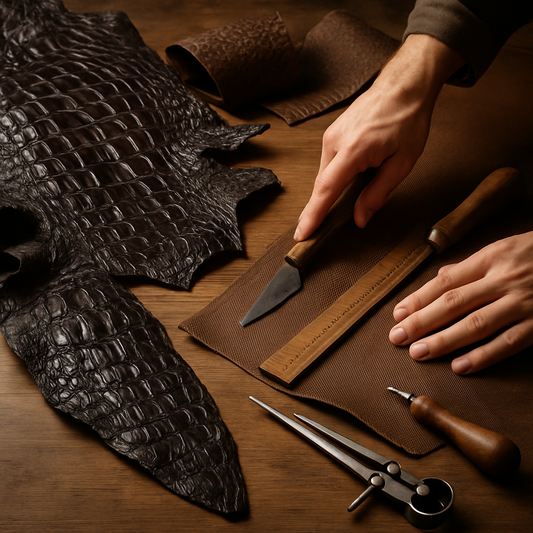
Start by checking the belly panel: genuine alligator leather commonly shows a balanced scale layout, an umbilical scar may be visible, and the panel should be matched sensibly across the boot.
“Handmade alligator boots” describes how the boots are produced, not a single leather grade, boot shape, or hide section. A well-informed purchase depends on the source of the leather, the scale pattern, panel placement, construction, fit, documentation, and the way you plan to wear the boots.
What “handmade alligator boots” should mean
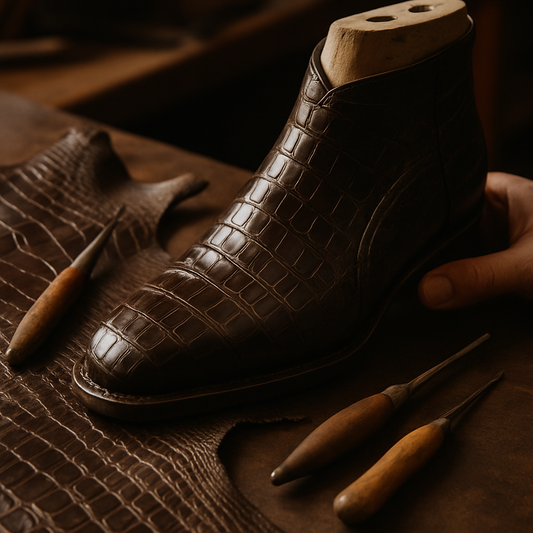
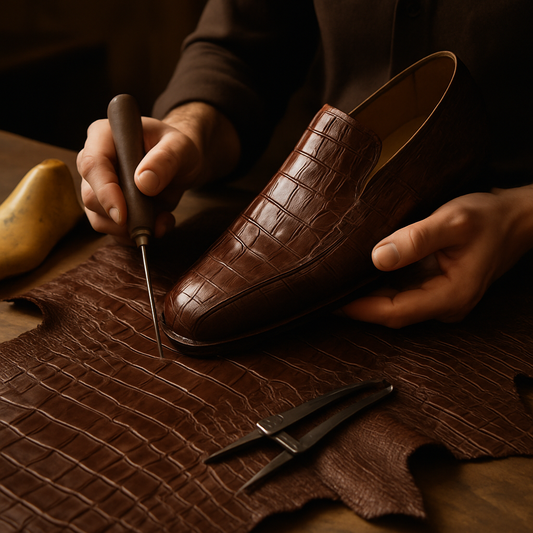
Handmade production can involve individual cutting, shaping, stitching, assembly, and finishing rather than treating the boot as a generic item made from preselected standard panels. However, the word handmade alone does not confirm that the boot uses alligator belly leather, that the hide has a high visual grade, or that the fit will suit your foot.
Ask which part of the hide appears on the vamp, quarters, shaft, and heel area. Belly, flank, and hornback are different cuts. Belly leather comes from the underside and usually has a regular, balanced scale pattern. Hornback comes from the ridged dorsal area and has a raised appearance. “Alligator” by itself does not identify the cut.
At CrocodileViet, our in-house manufacturing model lets us evaluate the hide and finished panels within the same workshop rather than treating the leather and boot as unrelated products. That matters because scale direction, panel size, and placement affect the finished appearance and how naturally the boot’s two sides correspond.
Inspect the alligator leather before judging the boot
Scale pattern and panel placement
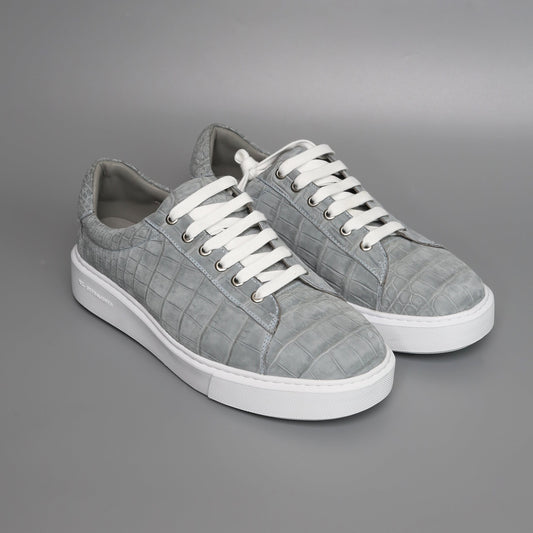
Alligator belly scales are comparatively regular and balanced, although the transition toward smaller flank scales can be noticeable. Look at the vamp first because it is one of the most visible sections. The scales should follow the shape of the foot without awkward breaks, excessive distortion, or an abrupt mismatch between the left and right boots.
A handmade boot does not need perfectly identical scales on both sides. Natural hides vary. The more useful question is whether the maker has placed the panels deliberately so that differences look natural rather than accidental.
Alligator and crocodile identification clues
An umbilical scar can be a useful alligator identifier. Crocodile leather often varies more by species and may show visible sensory pores, also called integumentary sensory organs or ISOs, across the hide. These pores are not confined to the head.
Neither one sensory feature nor one visual impression proves authenticity by itself. Tanning, finishing, lighting, and the particular hide can affect what you see. If a seller describes the boots as alligator, ask for the species information, source documentation, and a clear explanation of the leather section used.
Alligator belly and crocodile belly should not be treated as interchangeable descriptions. Crocodile leather boots for men may have different scale behavior and pore visibility, while hornback from either species will look different from belly leather because the cut itself is different.
Surface defects and grading
Leather grading commonly considers the number, size, and location of defects across the belly. Some suppliers assess the hide in four quadrants, with Grade 1 generally positioned as the highest grade in that supplier’s system. Grading labels are not universal, so request the seller’s definition before comparing one grade with another.
Visual grade also does not equal durability. A lower visual grade may show marks or irregularities while still producing serviceable leather, and a clean-looking panel can still be poorly fitted or badly maintained. Judge the hide’s appearance and the boot’s construction separately.
Decision factors for handmade alligator boots
| Factor | What to inspect | Why it matters |
|---|---|---|
| Hide section | Belly, flank, or hornback; ask where each panel is positioned | The cut determines the scale shape, texture, and visual character |
| Scale arrangement | Balanced belly scales, sensible left-right matching, and smooth transitions | Panel placement affects the boot’s visible proportions |
| Grading description | The supplier’s criteria, defects, and quadrant assessment | Labels vary and should not be compared without definitions |
| Fit information | Foot length, width, instep, size system, and wide-fit options | Leather cannot compensate for an unsuitable last |
| Legal documentation | Species information, tag details, and import paperwork where relevant | Regulated wildlife materials require traceability and lawful trade |
Price: what you are actually paying for
Do not assess the price of handmade alligator boots from the species name alone. Ask what the quoted price includes and compare like with like.
- Leather quantity and cut: A large, well-positioned belly panel can require more usable hide than smaller decorative sections. Hornback and flank panels create different material and cutting requirements.
- Visible surface: Boots with alligator across the vamp, quarters, and shaft use more exotic leather than boots with a small accent panel.
- Hide grading: Fewer visible defects and a cleaner central belly area can affect the material cost, but the supplier’s grading system must be explained.
- Construction: Last shape, sole type, heel, lining, stitching, finishing, and the level of hand assembly all contribute to the finished price.
- Fit service: Remote measurement review, wide-fit adjustments, or other custom specifications may affect the quote and production process.
- Documentation and delivery: Shipping, taxes, import requirements, and wildlife-leather paperwork can change the final amount paid.
Because prices and available variants change, request a current quotation for the exact style, leather cut, size, and destination. A higher price should be connected to identifiable material or construction factors rather than vague claims about quality.
Fit and sizing: measure more than your usual size
Alligator leather boots are commonly offered in standard men’s sizes, but a numerical size is not enough for a remote purchase. Provide your foot length and width, and state whether you normally wear EU, US, or UK sizing. These systems do not use the same numbers.
Also report your instep height, heel width, toe preference, and whether you need a wide fit. A high instep can create pressure at the vamp even when the length is correct. A broad forefoot may need a wider last rather than simply moving up to a longer size, because extra length can place the ball of the foot in the wrong position.
For remote measurements, measure both feet while wearing the socks you expect to use with the boots. Record heel-to-toe length and the widest part of the foot, and send a tracing or additional circumference measurements if the workshop requests them. The larger foot usually determines the practical fit. Ask how the maker converts your measurements into a last before ordering.
For pull-on styles, include calf circumference if the shaft is close-fitting. A Chelsea design has elastic side panels, but the opening and instep still need to accommodate your foot without excessive force. If you are comparing crocodile Chelsea boots with alligator styles, compare the last and shaft measurements rather than relying only on the leather name.
Construction details worth checking
Examine how the leather aligns around the vamp, toe, quarters, and shaft. The grain should not be forced into severe folds simply to cover an unsuitable shape. Ask whether the pair is made from matched panels or whether the design intentionally uses different sections.
Confirm the sole material and replacement options, the heel construction, the lining, and the closure system. These details affect daily use more directly than a grade label. A boot intended for office wear may need a different sole profile from one used on wet streets or for extended walking.
For a workshop-made order, ask which specifications are fixed and which can be adjusted. Useful questions include available width, toe shape, shaft opening, sole choice, and whether the workshop can review measurements before production. Do not assume that every handmade model can be changed in every dimension.
Care for alligator leather boots
After wearing the boots, remove surface dust with a dry, soft cloth. This is the safest default for routine care because it avoids adding moisture or products unnecessarily. If the boots become wet, let them dry at room temperature away from direct heat, radiators, and strong sunlight.
Use only a leather-care product confirmed as suitable for alligator or crocodilian leather. Test it on a hidden area first, since conditioners and polishes can alter color, sheen, or scale texture. Avoid soaking the leather, using household cleaners, or applying heavy wax without specific instructions from the maker.
There is no useful fixed care schedule for every wearer. Climate, frequency of use, perspiration, dust, and exposure to rain determine when the boots need more than dry-cloth cleaning. Store them with suitable support so the vamp does not collapse, and give the leather time to air between wears.
Styling handmade alligator boots for men
For business clothing, a darker alligator belly boot with a restrained toe shape can work with navy, charcoal, or medium-brown tailoring. Match the belt or other leather accessory by depth of color rather than trying to reproduce every scale pattern exactly.
With jeans, a simpler shaft and a less glossy finish usually sits naturally with dark denim, an overshirt, or a structured jacket. Let the boot remain the strongest textured item in the outfit; a plain trouser fabric gives the scales room to read clearly.
For a Chelsea style, keep the trousers narrow enough to fall cleanly over the shaft without bunching. A wider-leg trouser can also work when the hem is deliberately tailored, but an uncertain break may hide the boot’s panel placement. Brown alligator can suit earth-tone clothing, while black or deep burgundy pairs more easily with monochrome outfits.
Documentation and regulated trade
American alligator is listed in CITES Appendix II, which permits regulated international trade rather than unrestricted trade. U.S. exports require legal-acquisition findings and tagged hides. A required tag supports traceability, but CITES documentation should not be presented as proof of every claim about a product.
An alligator skin without the required U.S. tag cannot be exported from the United States. If you are buying or importing boots across borders, ask which documents accompany the shipment and whether your destination has additional requirements. Keep invoices, tags, and import paperwork with your purchase records.
For a broader online buying checklist, read 7 Things to Check Before You Buy Alligator Leather Boots Online.
Frequently Asked Questions
How can I tell whether handmade boots use alligator belly leather?
Ask for the hide section used on the vamp and request clear photographs of the scale layout. Alligator belly generally has a regular, balanced pattern, while hornback has raised dorsal ridges. An umbilical scar can also be a useful alligator clue, but one visual feature alone does not establish authenticity.
Is a higher alligator leather grade automatically more durable?
No. Grading commonly reflects visible defects and their location, often across four belly quadrants. Grade 1 is generally the highest label within a supplier’s system, but grading definitions vary, and visual grade should be judged separately from construction and care.
What measurements should I send for handmade alligator boots?
Send both foot lengths, the widest foot measurements, your usual EU, US, and UK sizes, instep information, and whether you need a wide fit. For pull-on or Chelsea styles, include calf or shaft measurements when requested. A tracing or circumference measurement can help with remote fitting.
What documents should I check when importing alligator boots?
Ask for species information, applicable tags, and export or import paperwork. American alligator trade is regulated under CITES Appendix II, and U.S. exports require legal-acquisition findings and tagged hides. Requirements can also depend on the destination country.
Choose the pair by leather, fit, and documentation
The strongest buying decision connects the visible hide section with practical measurements, construction details, care expectations, and lawful sourcing. Compare the exact boot specification rather than relying on the words handmade or alligator alone.
View CrocodileViet’s handmade boots collection to compare available styles. For sizing or material questions, contact CrocodileViet through WhatsApp before placing an order.